


Sensitive Teeth: Causes, Relief & When to See a Dentist

Key takeaways
- Sensitive teeth affect roughly 1 in 8 adults, the cause is almost always exposed dentin, from enamel erosion, gum recession, cracks, decay, or grinding.
- Desensitising toothpaste (potassium nitrate or stannous fluoride) genuinely works for exposed dentin, but needs 2–4 weeks of consistent use, not one or two tries.
- Don't brush immediately after eating something acidic, wait an hour to let saliva remineralise the enamel first.
- Pain that lingers more than 30 seconds after the trigger, or that comes from one specific tooth, means the nerve may already be involved, see a dentist rather than managing it at home.
- Never place aspirin directly on gum tissue, it causes a chemical burn. This home remedy still circulates online and causes harm.
- In-clinic options range from fluoride varnish and bonding (for mild-to-moderate cases) to root canal treatment (for nerve involvement), the right one depends entirely on the cause.
That sharp jolt when a sip of cold water hits a tooth, or when ice cream makes someone flinch mid-bite, is one of the most commonly reported dental complaints. Research published in the Journal of Dentistry estimates that dentin hypersensitivity, the clinical term for sensitive teeth, affects roughly one in eight adults at any given time, and many of them manage it quietly for months before doing anything about it.
The pain itself is brief, usually just a second or two, but it's the nerve inside the tooth responding to something it shouldn't be feeling at all. That happens when the outer protective layer has been compromised in some way, and there are more ways for that to happen than most people realise.
This guide covers what actually causes sensitive teeth, what genuinely helps at home, which everyday habits quietly make things worse without anyone noticing, and when that sensitivity is the tooth's way of signalling that something more serious needs attention. For patients in Chembur and surrounding areas like Ghatkopar, Govandi, Wadala, Sion, and Kurla, it also covers what professional sensitive teeth treatment actually involves and what to expect from it.
What Tooth Sensitivity Actually Feels Like and Why It Happens
The short version: sensitivity is almost always a sign that dentin has become exposed. Enamel is the hard outer shell of the tooth. Beneath it sits dentin, a softer layer packed with thousands of microscopic tubules that connect directly to the tooth's nerve. When enamel thins or gums pull back and leave the root exposed, those tubules lose their protection. Hot, cold, sweet, or acidic substances can then travel through them and fire the nerve, causing that familiar sharp, brief pain.
Understanding which part of the tooth is involved helps explain why different causes need different treatments.
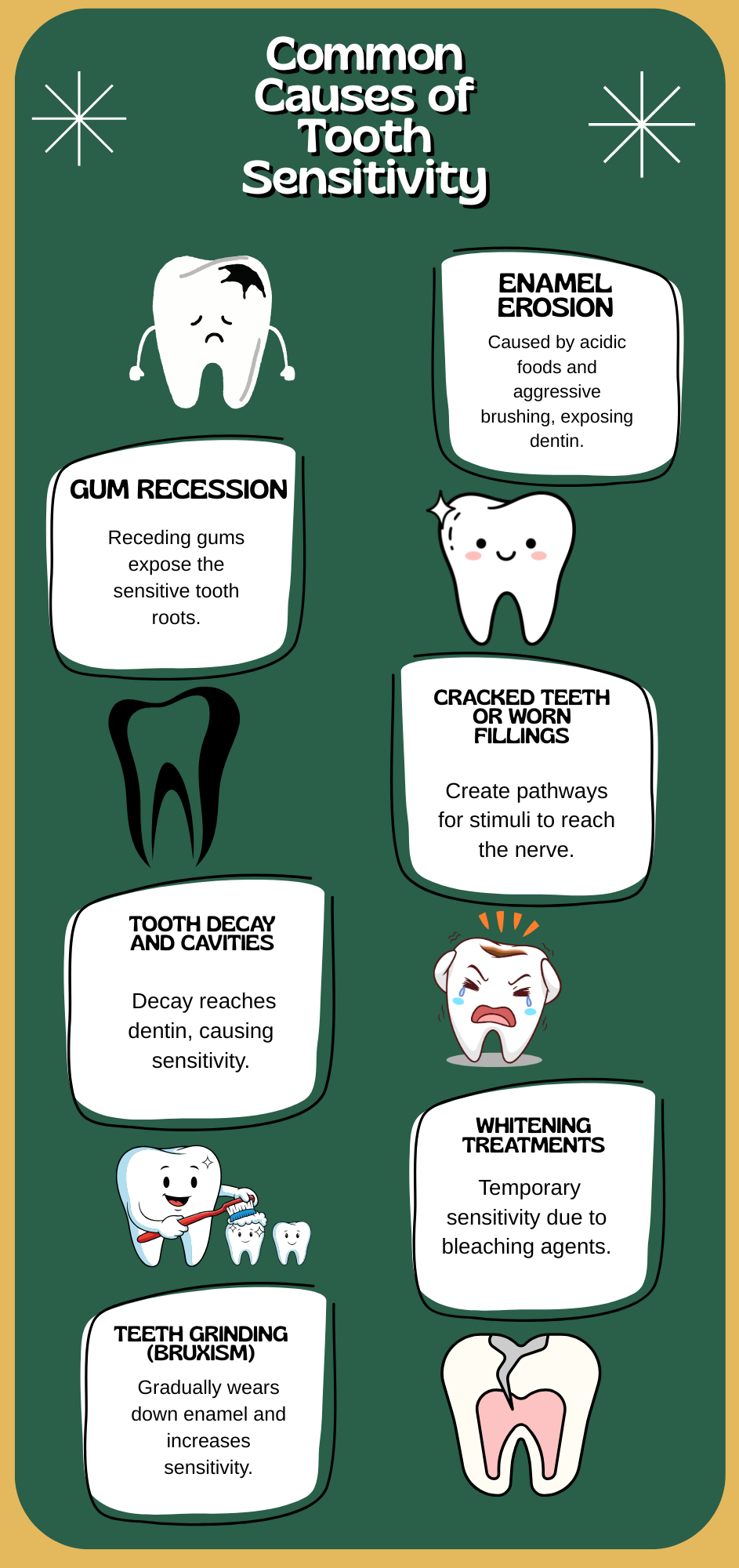
1. Enamel Erosion from Acidic Foods and Aggressive Brushing
Both thin the enamel from the outside, gradually and without obvious warning signs until sensitivity appears. Brushing at a 45-degree angle to the gumline with a soft-bristled toothbrush cleans effectively without the scrubbing pressure that wears enamel down. One practical tip that surprises many patients: brushing immediately after eating something acidic actually accelerates enamel loss, because the acid has already softened the surface. Waiting an hour before brushing gives saliva time to remineralise the enamel first.
2. Gum Recession
When gums pull back, whether from gum disease, years of aggressive brushing, or natural changes over time, the root surface becomes exposed. Unlike the crown of the tooth, roots have no enamel covering them at all. They're inherently more sensitive, which is why gum recession often produces a more persistent sensitivity than surface enamel erosion does. Patients who also notice bleeding gums or gums that appear to be pulling away from teeth will find more detail on what drives that in the gum disease treatment guide.
3. Cracked Teeth and Worn or Leaking Fillings
A crack in the tooth surface, even a small one, creates a direct pathway for temperature and pressure changes to reach the inner layers. Older fillings that have started to wear or leak around the edges do the same thing. Sensitivity that feels sharper than usual, and is clearly coming from one specific tooth rather than a general area, is often pointing at one of these two causes. It's worth having checked rather than waiting it out.
4. Tooth Decay and Cavities
As decay progresses through enamel into dentin, the nerve becomes progressively easier to reach. Sensitivity to sweets alongside cold sensitivity is a common early signal. Patients who also notice visible discolouration, a rough patch on the tooth surface, or pain that lingers longer than a second or two after the trigger is removed should read up on early cavity signs and when to treat them for a better picture of what's happening inside the tooth.
5. Whitening Treatments and Whitening Toothpastes
Temporary sensitivity after professional whitening or from using whitening toothpastes containing bleaching agents is common and usually resolves within a few days once treatment stops. It's the bleaching agent temporarily increasing the permeability of the enamel, not permanent damage. For anyone wanting to understand the difference between professional whitening and at-home products before deciding, the whitening treatment types and procedures guide and the teeth whitening cost guide for Mumbai are both worth reading first.
6. Bruxism: Teeth Grinding During Sleep
Grinding or clenching, usually at night without the person knowing, wears enamel down gradually across multiple teeth rather than in one spot. The signs that often show up before sensitivity does: waking with jaw soreness or a dull headache, teeth that look flatter than they used to, or a partner mentioning the sound at night. A custom mouthguard from a dentist is the only practical way to stop the damage from continuing.
Symptom and Cause Quick Reference
What’s Felt | Likely Cause | How Long It Lasts |
Pain on cold water or air | Exposed dentin or gum recession | Brief, usually a few seconds |
Pain on hot drinks that lingers | Advanced decay or nerve involvement | Persists for several minutes |
Sensitivity to sweets | Enamel erosion or early tooth decay | Brief, typically a few seconds |
Pain while brushing | Gum recession or aggressive brushing technique | Occurs only during brushing |
Sharp pain in one specific tooth | Cracked tooth, leaking filling, or tooth decay | Brief to lingering, depending on the cause |
Sensitivity after whitening | Temporary nerve irritation from bleaching agents | Usually lasts a few days and resolves on its own |
Dull ache across multiple teeth | Bruxism (teeth grinding) causing enamel wear | Ongoing and develops gradually |
Manage at home or see a dentist? A quick triage guide
✓ Manage at home if
- Sensitivity is mild and triggered by cold only
- Pain lasts less than 2–3 seconds and then disappears
- Sensitivity is spread across multiple teeth (not one specific tooth)
- It started after a new whitening product and is improving
- No swelling, bleeding, or gum tenderness alongside it
- You haven't recently had a filling or crown fitted
⚠ See a dentist if
- Pain lingers more than 30 seconds after the trigger is gone
- Sensitivity is clearly from one specific tooth
- Symptoms have not improved after 1 week of home care
- Gum swelling, tenderness, or visible pulling away from the tooth
- Pain wakes you at night or appears without any trigger
- Post-treatment sensitivity (filling, crown) hasn't settled in 2 weeks
How to Stop Sensitive Teeth Pain at Home
Several home measures genuinely reduce sensitivity, but it's worth being clear about what they're doing: managing the symptom rather than fixing the underlying cause. For mild, general sensitivity, that's often enough. For anything more specific or persistent, professional assessment is still the right step.
Switch to a Desensitising Toothpaste
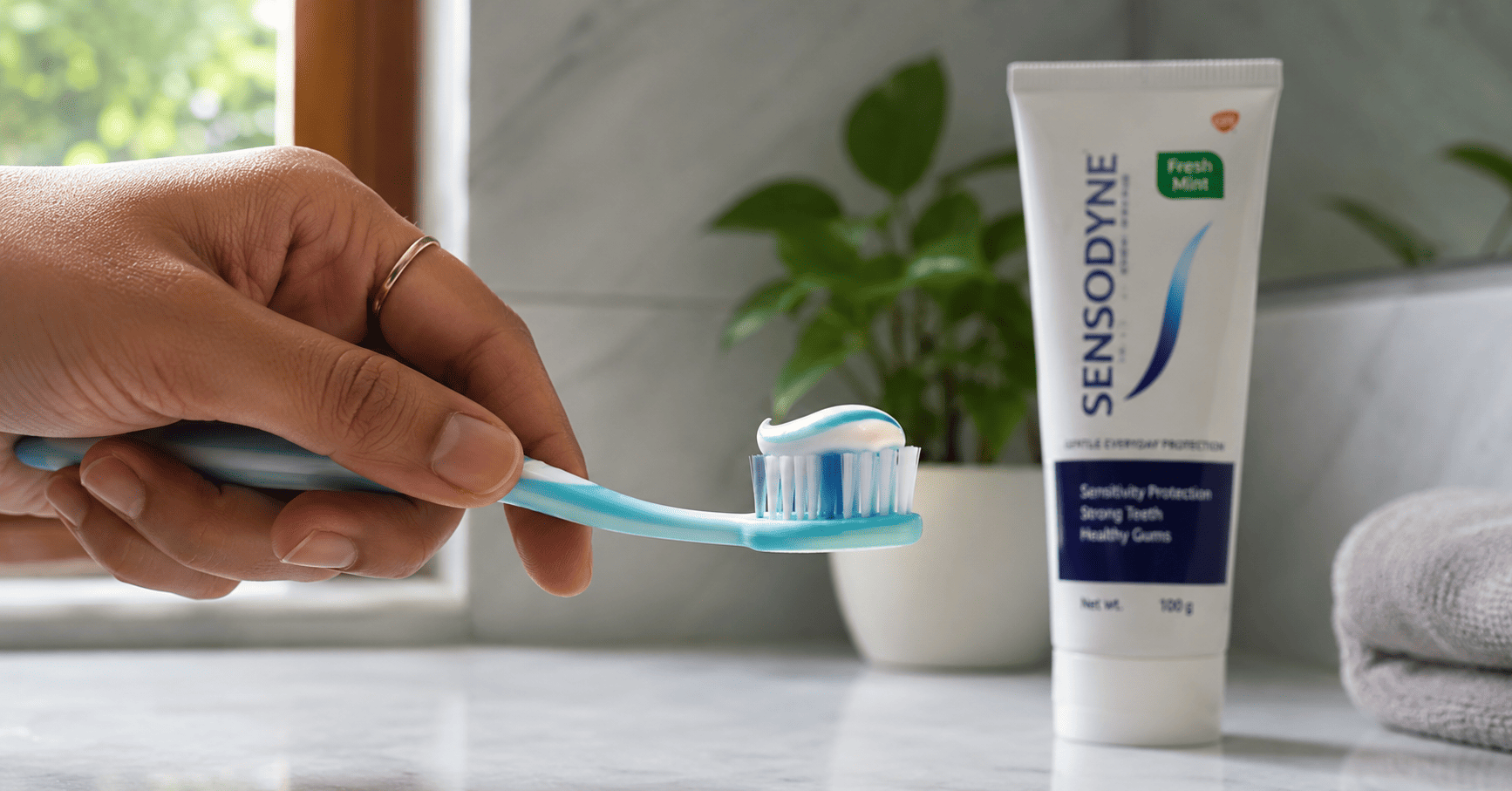
This is the single most effective over-the-counter measure for how to stop sensitive teeth pain at home. Toothpastes containing potassium nitrate or stannous fluoride work by gradually blocking the dentinal tubules, reducing how easily nerve signals are triggered. The key word is gradually: consistent use for two to four weeks is needed before any real difference is felt. Using it once or twice and concluding it doesn't work is one of the most common ways patients miss out on something that would actually help.
Saltwater Rinse
Half a teaspoon of salt stirred into a glass of lukewarm water, rinsed gently around the mouth for about thirty seconds, reduces gum tissue inflammation and has a mild antibacterial effect. It won't fix the sensitivity itself, but it calms irritated tissue around sensitive teeth and is safe to use twice daily without any side effects.
Topical Desensitising Gels
OTC desensitising gels massaged gently onto the sensitive area offer short-term localised relief. They're most useful as a bridge between noticing the sensitivity and getting a dental appointment, not as a long-term substitute for finding out what's actually causing it.
Managing Acute Pain Responsibly
For a sensitivity flare that's genuinely painful, an OTC anti-inflammatory like ibuprofen can help manage discomfort in the short term. Follow the dosage printed on the pack, and check with a doctor first if there are any pre-existing health conditions, stomach issues, or other medications involved. One thing worth avoiding: placing aspirin directly against the gum tissue is a home remedy that still circulates online and can cause a chemical burn on the soft tissue.
Habits Worth Stopping Right Away
Switching from a medium or hard-bristled toothbrush to a soft one often makes a noticeable difference within days. Using an alcohol-based mouthwash when dentin is already exposed can increase irritation; switching to an alcohol-free fluoride rinse removes that trigger while still protecting enamel. If a whitening toothpaste was started recently and sensitivity has increased since, stopping it temporarily and switching to a plain fluoride toothpaste is a reasonable first move.
A patient who came in recently had switched to a charcoal whitening toothpaste a few months earlier to try to brighten their teeth. Within three weeks they had sensitivity across multiple front teeth that hadn't been there before. Switching back to a standard fluoride toothpaste and using a sensitivity-specific product resolved most of the discomfort within about a month, no professional treatment needed at all. Not every sensitivity case needs a clinical procedure, but knowing which product is causing the problem matters.
Habits That Quietly Make Sensitivity Worse
A few everyday habits accelerate enamel loss or gum recession in ways that are hard to notice until the damage is already done.
1. Acidic Foods and Drinks
Frequency matters more than quantity. Sipping nimbu pani or a cold drink throughout the day gives acid more time in contact with enamel than drinking it quickly with a meal. Tamarind, pickles, citrus fruits, carbonated drinks, and even some chaats can all contribute. The solution isn't to eliminate them but to space them out, rinse with plain water afterward, and avoid brushing for an hour after.
2. Brushing Too Hard
More pressure does not mean cleaner teeth. It means enamel and gum tissue bearing a force they're not designed for. A soft brush used gently at the right angle does more for the teeth than a firm brush used aggressively. If the bristles of a toothbrush splay out quickly, that's a reliable sign too much pressure is being applied.
3. Teeth Grinding
For bruxism, there's no effective home remedy. Stress management, reducing caffeine, and avoiding chewing on pens or non-food items can help reduce clenching during the day, but nighttime grinding needs a physical barrier. A properly fitted nightguard from a dentist is the only way to reliably stop the enamel from being worn away further overnight.
4. Alcohol-Based Mouthwashes
This one catches a lot of people off guard. Mouthwash feels like it should be helping, and most of the time it is, but alcohol-based formulations can irritate already-exposed dentin and worsen sensitivity. Switching to an alcohol-free fluoride rinse removes the problem while keeping the enamel-strengthening benefit.
When Sensitive Teeth Signal Something More Serious
Occasional mild cold sensitivity that comes and goes is usually manageable at home. A few specific patterns are worth seeing a dentist about without waiting.
Sensitivity that has been there for more than a week with no sign of improvement. Pain that lingers for more than thirty seconds after the trigger, food, drink, or air, has been removed. Sensitivity clearly coming from one specific tooth rather than a general area. Sensitivity accompanied by visible gum swelling, tenderness when pressing on the gum near a tooth, or any sign of pus. Post-treatment sensitivity (after a filling, crown, or cleaning) that hasn't settled within two weeks. Aching or throbbing that wakes someone up at night.
Lingering pain after the stimulus is gone, or pain that appears spontaneously without any obvious trigger, suggests that the nerve itself may already be inflamed or compromised. Surface-level treatments, whether at home or even some in-clinic options, can't reach that. A proper examination and usually an X-ray are needed to see what's actually happening inside the tooth.
A patient came in after managing sensitivity with desensitising toothpaste for about two months. What had started as mild cold sensitivity had by that point turned into a dull ache that occasionally woke them at night. An X-ray showed the nerve was already significantly inflamed. At the point they first noticed the sensitivity, a bonding treatment would likely have been enough. By the time they came in, root canal treatment was the only option. That's not meant as a warning to alarm anyone, it's simply what the "when to see a dentist" signals are for.
Sensitive Teeth Treatment Options at the Clinic
In-clinic sensitive teeth treatment addresses the cause directly rather than the symptom, and the right option depends entirely on what's driving it.
Professional Fluoride Varnish
Significantly stronger than anything available over the counter, applied directly to sensitive tooth surfaces in the clinic. It remineralises enamel and physically blocks the tubules that are triggering the nerve. Most patients need two to three applications over a few weeks for significant improvement, though some notice a difference after the first.
Dental Bonding
A tooth-coloured resin is applied to exposed root surfaces or areas of worn enamel to physically seal off the tubules underneath. The effect is immediate, anaesthesia is rarely needed, and it typically lasts several years. For recession-driven sensitivity where the root is exposed but the gum is otherwise healthy, bonding is often the most direct and lasting solution.
Gum Treatment for Recession-Driven Sensitivity
When gum disease is the underlying cause, treating the gum has to come first. Periodontal treatment reduces inflammation, stops further recession, and often reduces sensitivity on its own. In cases where significant tissue has already been lost and the root remains too exposed for bonding alone to manage adequately, a gum graft can restore coverage. Patients who are also dealing with the broader effects of gum disease will find the gum disease treatment guide useful for understanding what that treatment involves.
Custom Mouthguard for Bruxism
Fitted at the clinic from an impression of the patient's own teeth, worn at night. It doesn't stop the grinding itself but prevents the teeth from making contact during it, stopping further enamel loss reliably. For patients who've been grinding for years, a nightguard often also reduces the jaw soreness and morning headaches that come with it.
Root Canal Treatment
For cases where the nerve is already inflamed or infected, root canal treatment removes the source of the pain permanently. It's not the starting point for sensitive teeth; it's what's appropriate when the nerve is already compromised and no surface-level treatment can reach the cause. Most patients who've had it describe the procedure as far less uncomfortable than they expected, and considerably more comfortable than the pain that brought them in.
Why Chembur Patients Choose Radiant Smiles for Sensitive Teeth Treatment
Sensitivity cases seen at Radiant Smiles range from the genuinely simple (a different toothpaste and brushing technique, explained in a single visit) to the more involved (recession needing gum treatment, or a cracked tooth needing a crown). The clinical approach starts with finding what's actually causing the sensitivity rather than applying a standard protocol, because the same sharp pain on cold water can have five different origins that need five different responses.
The clinic offers the full range of in-clinic treatments: professional fluoride varnish, dental bonding, periodontal care, custom mouthguards, and restorative treatments where needed, so patients across Chembur, Ghatkopar, Govandi, Wadala, Sion, and Kurla can get a proper assessment and the right treatment locally without being referred elsewhere for routine to moderately complex cases.
Radiant Smiles Dental Clinic 438/A, 1st Floor, Premalaya, V. N. Purav Marg, Opposite Telecom Factory, Deonar, Chembur, Mumbai, Maharashtra 400088 Phone / WhatsApp: +91 89282 28842
Anyone dealing with persistent sensitivity or wanting to understand what's behind it can call or message on WhatsApp to book a consultation and get a proper answer, not just a product recommendation.
Final Thoughts
Sensitive teeth are common, manageable, and in most cases preventable once the cause is understood. The sharp pain from a sip of cold water isn't something to just get used to, and it isn't always something that needs a complex procedure to fix either. Sometimes the answer is a different toothbrush and two weeks of the right toothpaste. Sometimes it needs a closer look.
What matters most is knowing which situation applies, and that's exactly what a single consultation can work out. Book a sensitive teeth assessment at Radiant Smiles, Chembur, and find out what's actually causing the pain and the fastest route to fixing it.
Frequently Asked Questions
1. Why are my teeth suddenly sensitive?
Sudden sensitivity that wasn't there before is most often triggered by a new product (a whitening toothpaste or bleaching treatment), a recently placed filling that's still settling, or a crack that's appeared in the tooth surface. Sensitivity that develops suddenly in one specific tooth, especially if it's getting sharper rather than staying the same, is worth having checked sooner rather than later.
2. Does sensitive teeth toothpaste really work?
Yes, consistently used over two to four weeks for sensitivity caused by exposed dentin. Potassium nitrate and stannous fluoride formulations both have good evidence behind them for reducing nerve response. The limitation is that they manage the symptom rather than the underlying cause. If the sensitivity is driven by gum recession, a crack, or decay, desensitising toothpaste will take the edge off but won't resolve it.
3. Can sensitive teeth be cured permanently?
It depends on the cause. Sensitivity from enamel erosion or post-whitening often settles and stays settled with the right habits and toothpaste long term. Sensitivity from gum recession may need bonding or gum treatment for a more permanent fix. Sensitivity from a crack or decay needs restorative treatment to fully resolve. A proper assessment is the only way to know which category a specific case falls into.
4. When should I see a dentist for tooth sensitivity?
If sensitivity has been going on for more than a week without improvement, is getting worse, is clearly coming from one specific tooth, or is accompanied by any swelling, gum tenderness, or pain that lingers after the trigger is removed, that's the point to come in. Home remedies and desensitising products can manage symptoms effectively in mild cases, but they can't diagnose a crack, assess a nerve, or treat gum disease.
5. Is tooth sensitivity related to gum disease?
Yes, gum recession caused by gum disease is one of the most common causes of sensitivity in adults, particularly those over 35. If sensitivity is accompanied by gums that bleed when brushing, look like they're pulling back from the teeth, or feel tender to touch, it's worth assessing both together. The gum disease treatment guide covers the signs, treatment options, and what to expect.
Dr. Tanvi Patil
BDS, MDS — Prosthodontist
Dr. Tanvi Patil is a highly skilled and compassionate Prosthodontist with advanced expertise in prosthetic dentistry. After completing her Bachelor of Dental Surgery (BDS), she pursued a Master of Dental Surgery (MDS) specialising in the design, restoration, and replacement of teeth. Her clinical practice is driven by precision, aesthetics, and patient-centric care.
With extensive experience in crowns, dentures, and dental implants, Dr. Patil is known for creating natural-looking, functional restorations that enhance both oral health and confidence. Her areas of expertise include fixed and removable dentures, single and full-mouth implant rehabilitation, crown and bridge restorations, smile design, and management of complex restorative cases.
Book an Appointment with Dr. Tanvi Patil