



Oral Cancer Screening: What Happens and Why It Matters

At a Glance
Oral cancer screening is a quick, painless examination performed by a dentist to check the lips, tongue, cheeks, gums, palate, and throat for signs of oral cancer or precancerous changes. Early detection greatly improves treatment options and outcomes, making regular screening an important part of preventive dental care.
- Takes only a few minutes during a routine dental visit
- Helps detect mouth cancer at an early stage
- Especially important for tobacco, smoking, alcohol, and gutkha users
- Does not usually require needles or surgery
- Early oral cancer detection can improve treatment success significantly
Introduction
Many people assume that oral cancer screening is only necessary when pain, ulcers, or visible lumps appear inside the mouth. In reality, early-stage oral cancer often develops quietly and may not cause noticeable symptoms. A simple oral cancer screening performed during a dental checkup can help identify suspicious changes before they become advanced.
This is particularly relevant in India, where tobacco chewing, smoking, gutkha, paan, areca nut use, and alcohol consumption contribute significantly to oral cancer risk. Oral cancer is among the most common cancers in the country, and early diagnosis can make a substantial difference in treatment outcomes.
This article explains what an oral cancer screening involves, who should consider getting screened, what warning signs dentists look for, and why regular screening is an important part of long-term oral health.
What Is Oral Cancer Screening?
Oral cancer screening is a visual and physical examination of the mouth, tongue, cheeks, gums, palate, and throat performed by a dentist to detect signs of oral cancer or precancerous changes at an early stage.
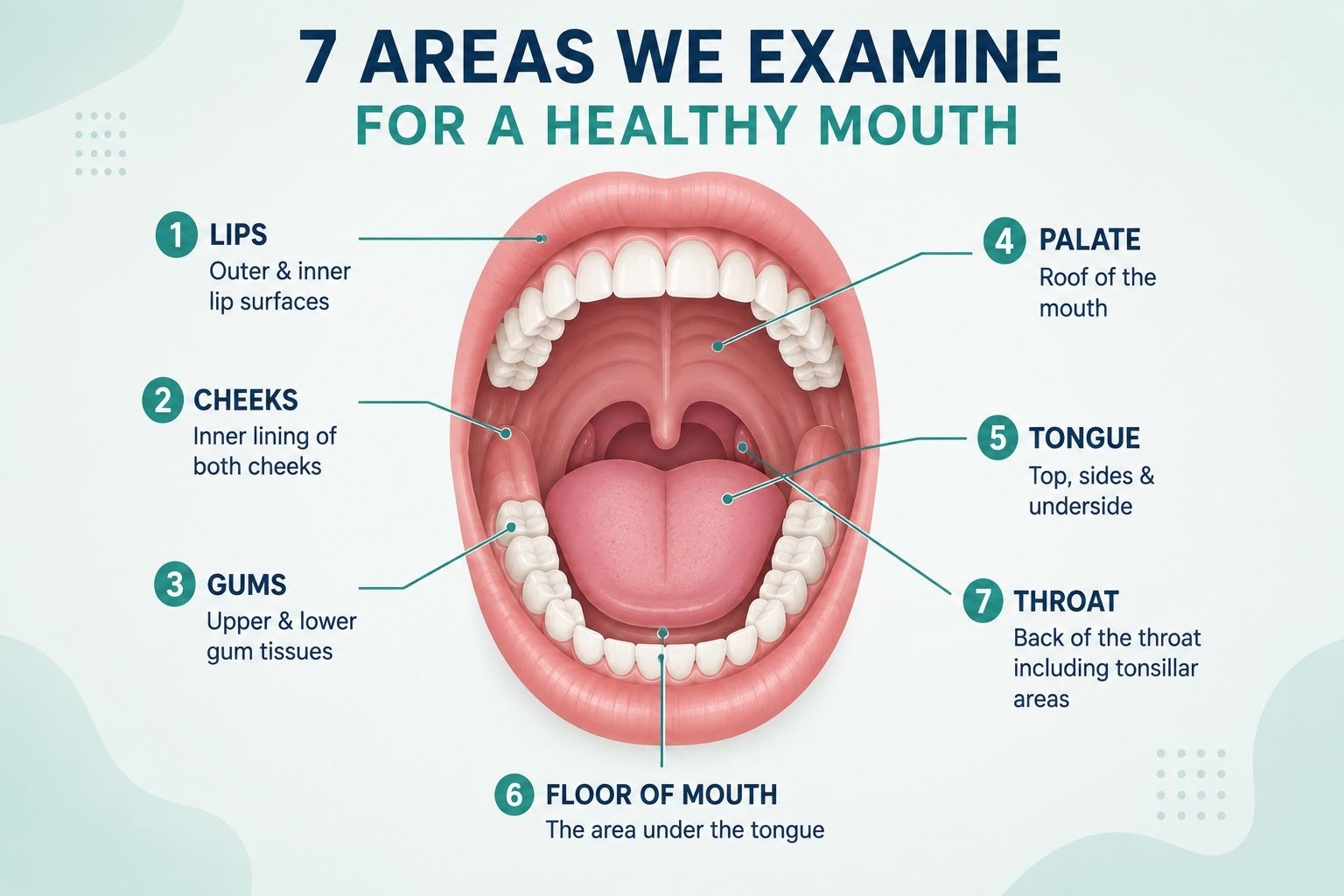
What Areas Are Checked?
- Lips
- Tongue (top, sides, and underside)
- Cheeks
- Gums
- Floor of the mouth
- Roof of the mouth
- Throat and surrounding tissues
Why Early Detection Matters
- Early-stage oral cancer is often easier to treat
- Smaller lesions may require less extensive treatment
- Better preservation of speech, swallowing, and oral function
- Improved overall treatment outcomes
Why Is Oral Cancer Screening Important in India?
Oral cancer screening is a key part of preventive dental care, especially for patients at higher risk due to tobacco or smoking habits. It is especially important in India because the country has one of the highest burdens of oral cancer globally, largely due to tobacco, gutkha, paan, areca nut, and smoking-related habits.
According to the National Cancer Registry Programme (ICMR), cancers of the lip and oral cavity are among the most common cancers among Indian men.
Major Risk Factors in India
- Smoking
- Tobacco chewing
- Gutkha and paan masala
- Areca nut (supari) consumption
- Alcohol use
- Long-term oral irritation
- Poor oral hygiene
- Previous oral precancerous lesions
Who Should Get an Oral Cancer Screening?
Every adult can benefit from periodic oral cancer screening, but individuals with tobacco, smoking, alcohol, or areca nut exposure should be screened more regularly.
Higher-Risk Groups
- Smokers
- Tobacco chewers
- Gutkha users
- Alcohol consumers
- Adults over 40
- People with persistent mouth ulcers
- Individuals with white or red patches in the mouth
- Patients with previous oral precancerous conditions
Can Younger Adults Need Screening?
- Tobacco or vaping use
- Family history
- Persistent oral lesions
- HPV-related considerations
What Happens During an Oral Cancer Screening?
An oral cancer screening performed during a routine general dental checkup, is usually quick, painless, and an important part of preventive dental care.”
Step-by-Step Oral Cancer Examination
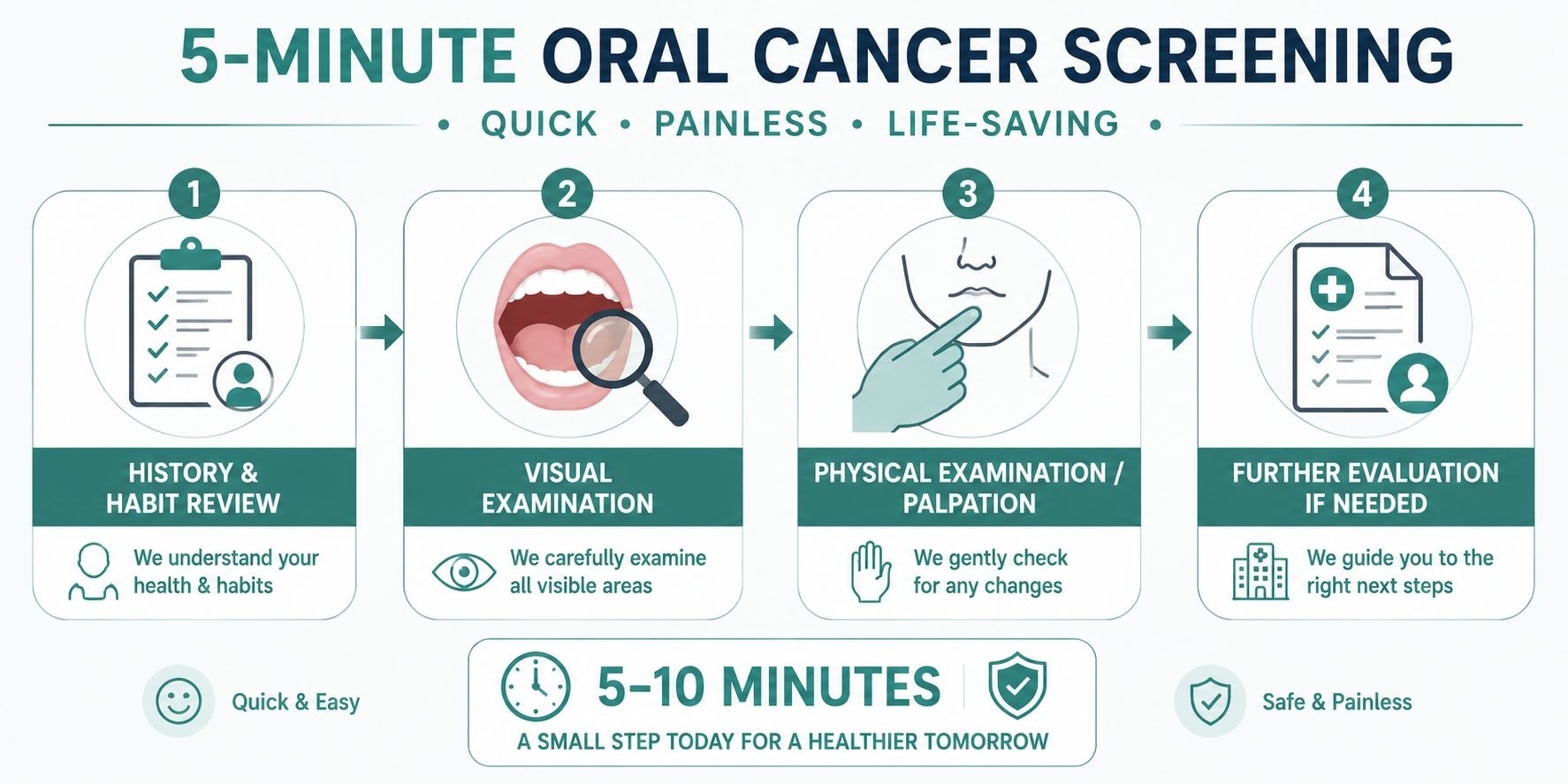
Step 1: Medical and Habit History
- Tobacco use
- Smoking
- Alcohol consumption
- Previous oral lesions
- Family history
Step 2: Visual Examination
The dentist checks:
- Lips
- Tongue
- Cheeks
- Gums
- Palate
- Floor of the mouth
- Throat
Step 3: Physical Examination
- Gentle palpation of oral tissues
- Examination of the neck and lymph nodes
- Assessment of swelling, lumps, or tenderness
Step 4: Additional Evaluation (If Needed)
- Photographic documentation
- Monitoring over time
- Referral for biopsy
- Specialist consultation
An oral cancer screening test usually involves a visual examination of the mouth followed by gentle palpation of the lips, tongue, cheeks, gums, palate, floor of the mouth, and neck to identify suspicious lesions or abnormal tissue changes.
Is Oral Cancer Screening Painful?
No. Oral cancer screening is generally painless, quick, and non-invasive. During the examination, the dentist may ask you to open your mouth and move your tongue while gently checking the tissues inside your mouth. A brief examination of the neck may also be performed to check for any unusual swelling or changes. The screening usually takes around 5–10 minutes and can often be completed as part of a routine dental visit.
What Signs Does a Dentist Look For During an Oral Cancer Checkup?
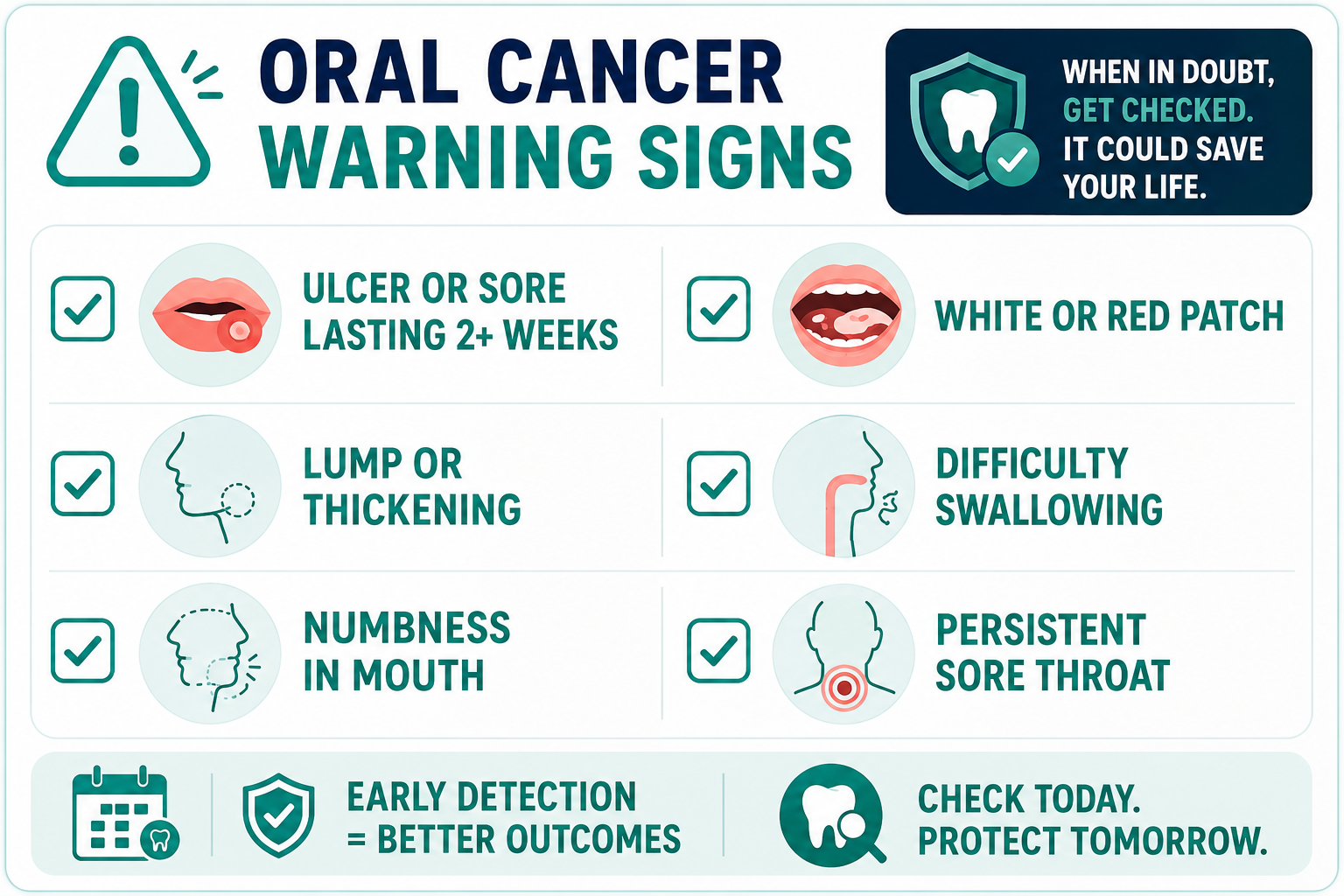
Dentists look for persistent ulcers, abnormal patches, lumps, tissue thickening, and changes in color or texture that may require further investigation. Conditions also like chronic inflammation or untreated infections may overlap with symptoms of gum issues, which is why timely gum disease treatment is important.
Warning Signs
- A mouth ulcer lasting more than two weeks
- White patches (leukoplakia)
- Red patches (erythroplakia)
- Mixed red-and-white lesions
- A lump or thickened area
- Difficulty swallowing
- Persistent sore throat
- Tongue pain
- Numbness in the mouth
- Loose teeth without an obvious dental cause
Oral Cancer Screening vs Oral Cancer Diagnosis
Screening identifies suspicious changes, while diagnosis confirms whether cancer is present.
Screening | Diagnosis |
Visual and physical examination | Biopsy and laboratory analysis |
Painless | May involve a tissue sample |
Preventive and early detection | Confirms cancer or another condition |
Performed during routine dental visits | Performed when abnormalities are found |
What Happens If Something Suspicious Is Found?
A suspicious lesion does not automatically mean cancer. Many oral changes are caused by irritation, infections, trauma, or benign conditions.
Possible Next Steps
- Re-examination after 1–2 weeks
- Removal of local irritants
- Photographic monitoring
- Specialist referral
- Biopsy for definitive diagnosis
Reassurance for Patients
Emphasize that early investigation is meant to rule out serious conditions, not to assume the worst.
How Often Should Oral Cancer Screening Be Done?
Most adults should have oral cancer screening during routine dental checkups, while high-risk individuals may require screening every 6–12 months.
Suggested Screening Frequency
- General adults: during routine dental visits
- Tobacco users: every 6–12 months
- Previous precancerous lesions: as advised by the dentist
- Persistent oral symptoms: immediately
Can Oral Cancer Be Prevented?
Not all oral cancers can be prevented, but many cases are associated with modifiable risk factors. Maintaining good oral health through professional oral hygiene care can help reduce chronic irritation and improve early detection of oral changes.
Prevention Tips
- Avoid tobacco in all forms
- Stop gutkha and areca nut use
- Limit alcohol
- Maintain good oral hygiene
- Treat chronic oral irritation
- Replace missing teeth when appropriate
- Attend regular dental checkups
- Perform periodic self-examination of the mouth
A Realistic Dental Consultation Scenario
A typical patient may visit for a routine dental cleaning and mention a painless white patch on the side of the tongue that has been present for several weeks. During the oral cancer screening examination, the dentist carefully checks the area, looks for possible causes such as irritation from a sharp tooth edge or tobacco use, and recommends follow-up or biopsy only if the lesion does not resolve. This calm, step-by-step approach helps detect problems early while avoiding unnecessary panic.
Practical Oral Cancer Self-Check at Home
Look for
- Ulcers
- White patches
- Red patches
- Lumps
- Thickened areas
- Difficulty moving the tongue
- Persistent pain
Do Not Ignore
- Any lesion lasting more than two weeks
- Recurrent unexplained mouth sores
- Persistent bleeding
- Difficulty swallowing
When Should Someone Book an Oral Cancer Screening Immediately?
- Mouth ulcer lasting more than 2 weeks
- White or red patch
- Lump inside the mouth
- Persistent tongue pain
- Difficulty swallowing
- Unexplained bleeding
- Numbness
- A sore that does not heal
- Swelling in the neck
Conclusion
Oral cancer screening is one of the simplest yet most valuable preventive examinations a person can receive during a dental visit. The examination is quick, painless, and designed to identify suspicious changes before they become advanced disease. In a country where tobacco, gutkha, smoking, and areca nut use remain common, regular screening can play an important role in protecting long-term oral health.
A mouth ulcer, white patch, red patch, or unexplained lump should never be ignored if it persists for more than two weeks. Early evaluation does not necessarily mean cancer is present, but it allows timely diagnosis when treatment is most effective.
Routine oral cancer screening during regular dental checkups can help provide reassurance, detect problems early, and support better long-term outcomes. If you have persistent oral changes or significant risk factors, Radiant Smiles Dental Clinic can provide a professional oral health evaluation and appropriate guidance. After ensuring oral health stability, patients may also explore cosmetic dentistry treatments to restore smile aesthetics and confidence.
FAQs
1. What is an oral cancer screening test?
An oral cancer screening test is a visual and physical examination of the mouth, tongue, gums, cheeks, palate, and throat performed by a dentist to look for signs of oral cancer or precancerous changes.
2. Is oral cancer screening painful?
No. Oral cancer screening is generally painless, non-invasive, and usually takes only a few minutes during a routine dental checkup.
3. How often should oral cancer screening be done in India?
Most adults should be screened during routine dental visits. People who smoke, chew tobacco, use gutkha or areca nuts, or consume alcohol regularly should consider screening every 6–12 months.
4. Can a dentist detect oral cancer during a regular dental checkup?
Yes. Dentists are trained to identify suspicious ulcers, white patches, red patches, lumps, and other abnormal tissue changes during a routine oral examination.
5. What happens if a suspicious mouth lesion is found?
A suspicious lesion may be monitored, photographed, or referred for a biopsy depending on its appearance, duration, and associated risk factors. A suspicious lesion does not automatically mean cancer is present.
Dr. Pooja Balgi
BDS, MDS (Pediatric & Preventive Dentistry), FIAPD — Pedodontist
Dr. Pooja Balgi is a highly qualified Consultant Pediatric and Preventive Dentist, bringing her expertise to our clinic since 2023. She graduated with a BDS from Sinhgad Dental College and Hospital in 2014 and completed her post-graduation in Pediatric and Preventive Dentistry at Terna Dental College in 2018. She is also a Fellow of the International Association of Pediatric Dentistry (FIAPD).
Dr. Pooja specializes in full mouth rehabilitation for children, adolescents, and individuals with special needs, with a strong emphasis on caries prevention. She is an active member of the Indian Society of Pedodontics and Preventive Dentistry, the IAPD, and the Foundation for Orofacial Myotherapy (FOM), where she serves as Joint Editor for Myo Probe. She has coauthored two books: 'Dental Caries and Traumatic Injuries in Pediatric Dentistry: Current Concepts in Clinical Practice' and 'Smile Shine Sparkle: A children's activity book for dental awareness.'
Book an Appointment with Dr. Pooja Balgi