


Why Do Oral Ulcers Happen? Causes, Types and Fast Relief Tips

Mouth ulcers are small but incredibly uncomfortable, often showing up during stress, illness, or after minor injury inside the mouth. While most heal on their own within one to two weeks, the real challenge is understanding what caused them. Triggers can range from stress and nutritional deficiencies to infections or irritation from sharp teeth or braces. Simple remedies like warm saltwater rinses and avoiding spicy or acidic foods can ease the discomfort. But if an ulcer lasts longer than two to three weeks, keeps coming back, or feels unusual, it is important to get it checked. Not all ulcers are harmless.
There is a very specific kind of pain that stops everything. Not dramatic, not spreading, just a small, sharp sting the moment hot chai touches the inside of the mouth. Anyone who has had a mouth ulcer knows exactly what that feels like. And yet, as familiar as oral ulcers are, most people have no idea what actually caused theirs.
About 20% of the general population experiences recurrent mouth ulcers at some point in their lives. They show up at the worst times, during exam season, in the middle of a stressful work week, or right after a bout of fever. Most heal on their own in 10 to 14 days. But not all of them. And not all of them are the same.
That distinction matters more than most people realise.
Do not miss this, the complete procedure breakdown is right here 👉
What Does a Mouth Ulcer Actually Look Like?
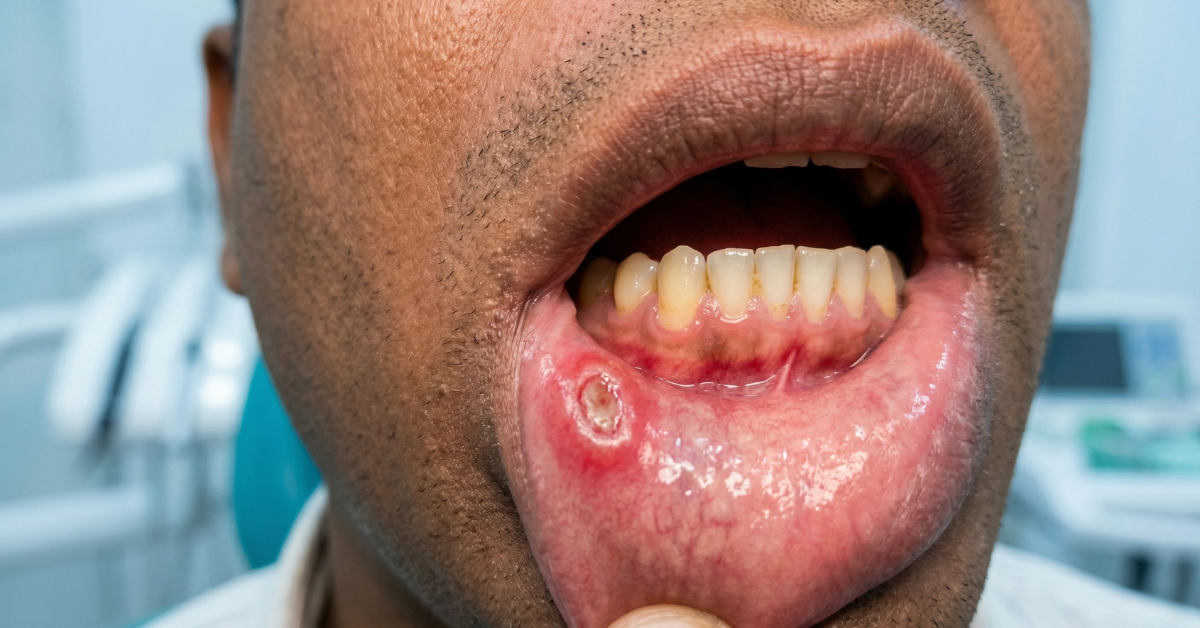
Mouth ulcers are not difficult to spot once you know what to look for. They appear as small, round or oval sores with a red border and a white, yellow, or gray centre. They can form on the gums, tongue, inner cheeks, inner lips, or the roof of the mouth. Sometimes there is just one. Sometimes several appear at the same time, and occasionally they join together into a larger, more uncomfortable sore.
Pain is the defining feature for most people. Eating, drinking, and brushing all become noticeably uncomfortable. Anything hot, spicy, sour, or salty makes contact with the ulcer and produces that sharp, immediate sting. Acidic foods are particularly unpleasant against an open ulcer.
A patient came into Radiant Smiles once convinced she had a tooth problem, the pain was so consistent and localised she was certain something was wrong with the molar. On examination, the source turned out to be a small ulcer on the inner cheek, rubbing against a slightly sharp tooth edge every time she ate. Once the irritant was identified, the ulcer healed within days.
One symptom, however, deserves special attention, and it is the one most people overlook. A painless ulcer. An ulcer that does not hurt at all, that has been sitting in the same spot for more than two to three weeks without changing or healing, should never be dismissed as minor. That is the pattern associated with mouth cancer, and it needs professional evaluation without delay.
What Actually Causes Mouth Ulcers? A Dentist Explains
This is the question worth spending time on, because the cause of the ulcer determines everything about how it should be treated. Reaching for a topical gel before understanding what triggered the ulcer is a bit like treating a symptom while the underlying problem continues.
Viral infections are among the most common triggers seen clinically. When the body is fighting a high fever, the immune system is under significant stress, and the mouth lining becomes vulnerable. Herpes simplex virus causes the fever blisters that appear on and around the lips, contagious, recurring, and often triggered by illness or sun exposure. These are not the same as canker sores, even though many people use the terms interchangeably.
Fungal infections, specifically candida, are another cause that often goes unrecognised. Candida is naturally present in the mouth in small amounts. Under normal circumstances the immune system keeps it in check. But after a course of antibiotics, during periods of illness, or when immunity is lowered for any reason, candida can overgrow and cause oral thrush, creamy white patches and sores that look and feel different from a typical canker sore.
Stress ulcers are, in clinical experience, among the most frequently seen. The connection between stress and immune function is well established, when the body is under psychological pressure, its ability to manage inflammation and bacterial activity in the mouth is reduced. Students come in during exam season. Professionals come in during high-pressure project periods. The timing is rarely a coincidence.
Nutritional deficiency is another cause that quietly underlies a lot of recurrent ulcer cases. Low levels of iron, vitamin B12, folate, or zinc all compromise the health of the mucous membrane lining the mouth. Indian diets that are predominantly vegetarian can sometimes fall short on B12 and iron without supplementation, not always, but often enough to be worth checking in someone with frequent ulcers. Dal, spinach, eggs, curd, and fortified cereals all help, but a blood test gives the clearest picture.
Traumatic ulcers are exactly what the name suggests, caused by physical injury. Biting the inside of the cheek while eating too quickly, a hard apple kernel catching the gum at the wrong angle, a sharp chip scraping the tongue, an ill-fitting denture rubbing the same spot repeatedly, or the wire of a brace catching the inner lip. These ulcers heal reliably once the irritant is removed, but if the source of friction continues, the ulcer keeps returning.
Beyond these main categories, acidic foods, nimbu, tomatoes, imli, can trigger sensitivity in people prone to ulcers. Certain medications including NSAIDs and some antibiotics are also known to cause mouth sores as a side effect. Autoimmune conditions like Crohn's disease, celiac disease, and lupus all have oral manifestations that include recurring ulcers.
Types of mouth ulcers and why the difference matters
Type | Location | Contagious | Heals on its own | Treatment needed |
Canker sore (aphthous ulcer) | Inside the mouth, cheeks, tongue, gums, floor of mouth | No | Yes, within 10 to 14 days | Usually none. Topical gel for comfort if needed |
Cold sore | Outside the mouth, on or around the lips | Yes | Yes, but slowly | Antiviral treatment in some cases |
Traumatic ulcer | Wherever the irritant makes contact | No | Yes, once irritant is removed | Remove the source, appliance adjustment, habit change |
Oral thrush | Inside the mouth, white patches on cheeks, tongue, palate | No | No | Antifungal treatment required |
Leukoplakia | Inside the mouth, white or gray patches | No | No | Dental or specialist assessment needed |
Erythroplakia | Inside the mouth, red patches | No | No | Urgent specialist assessment, frequently precancerous |
Fast relief tips that actually work
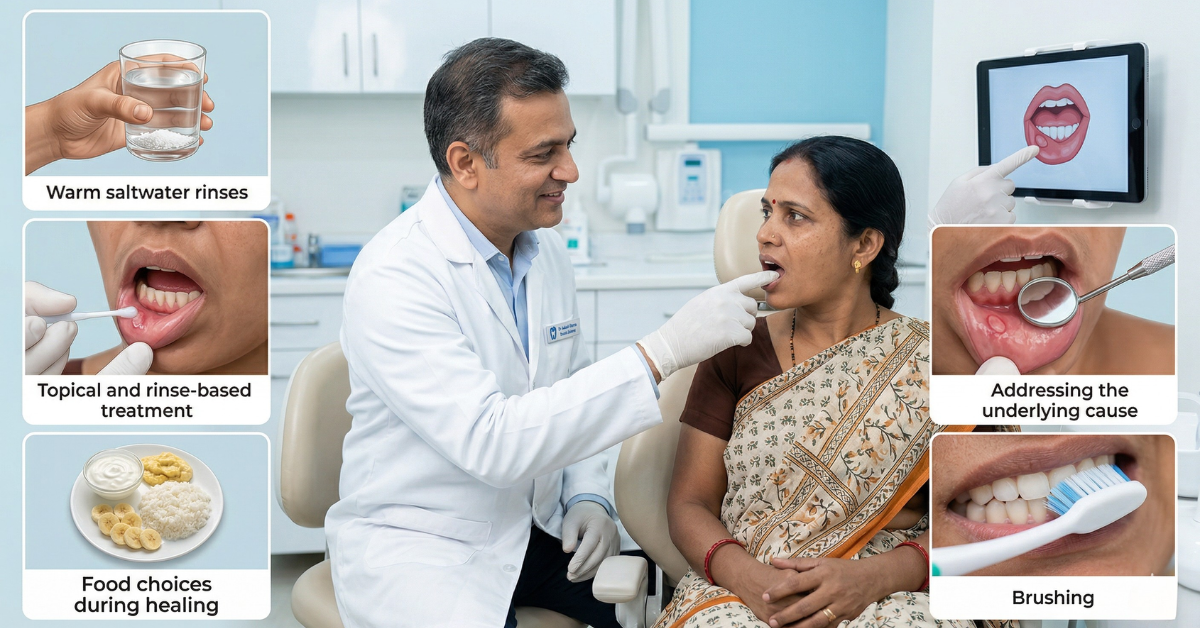
Warm saltwater rinses
- Dissolve half a teaspoon of salt in a glass of warm water. Rinse gently and hold the rinse against the ulcer for up to four minutes. Repeat four times a day, especially after meals.
- Salt draws fluid from inflamed tissue, reduces swelling, and creates an environment less hospitable to bacteria. The clinical reasoning behind this familiar remedy is well established.
Topical and rinse-based treatment
- Apply an antiseptic gel directly to the ulcer to reduce bacterial activity and provide short-term pain relief.
- Use an alcohol-free mouthwash containing chlorhexidine gluconate twice daily. Alcohol-based products sting on open sores and should be avoided during healing.
Food choices during healing
- Avoid spicy food such as heavy mirchi, hot curries, and green chutney. These inflame already sensitive tissue.
- Avoid acidic foods including nimbu, imli, raw tomatoes, and citrus fruits. Contact with an open ulcer is sharply painful and can slow healing.
- Avoid salty snacks and crunchy chips. These physically irritate the ulcer surface. Soft, mild foods genuinely reduce recovery time.
Addressing the underlying cause
- For recurrent ulcers linked to nutritional deficiency, increase intake of iron-rich foods like spinach and lentils, and B12 sources such as eggs, dairy, and fortified cereals. A blood test removes any guesswork about what is actually deficient.
Brushing
- Use a soft-bristled toothbrush and brush gently around the ulcer. Aggressive brushing on inflamed tissue delays healing and extends discomfort significantly.
How to Prevent Mouth Ulcers From Coming Back
Patients who get ulcers repeatedly almost always have a pattern behind them, even if they have not identified it yet. Exam stress every semester. Iron levels that run consistently low. An orthodontic wire that keeps catching the same spot. Eating imli chutney or very sour foods regularly and getting ulcers a day or two later.
Managing stress is one of the most practical prevention strategies available, precisely because the link between psychological stress and immune function is direct. Even basic changes, regular sleep, reducing caffeine, short breaks during intensive work periods, have a measurable impact on ulcer frequency in people who are prone to them.
Regular dental check-ups catch the physical irritants before they become chronic problems. A slightly sharp tooth edge, a denture that has shifted slightly in fit, a brace wire that needs adjustment, none of these are serious problems in isolation, but each one can produce a cycle of recurring traumatic ulcers that home care alone will never fully resolve.
When a Mouth Ulcer Needs More Than Home Care
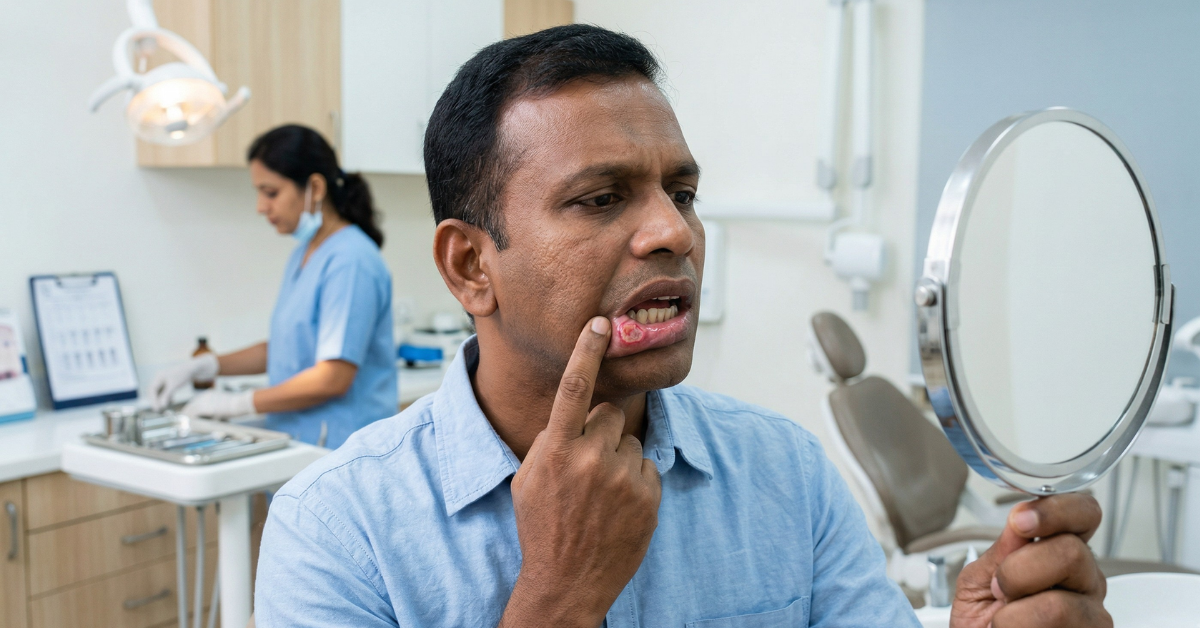
Home care is sufficient for the majority of mouth ulcers. But there are specific situations where professional evaluation is not optional, it is urgent.
Any ulcer that has not healed within two to three weeks needs to be seen. Any ulcer that is painless needs to be seen. Any situation where new sores are appearing before the previous ones have healed points to a systemic issue that warrants blood tests and a proper clinical assessment.
For anyone who uses tobacco products or drinks alcohol regularly, this timeline is even more critical. Tobacco and alcohol both independently increase the risk of mouth cancer, together, the risk is significantly higher. An ulcer in that context that is not healing is not something to monitor at home for another week.
In some cases, a biopsy is the only definitive way to determine what is happening. This involves taking a small tissue sample from the ulcer and surrounding area for laboratory examination. It sounds alarming. In practice, it is a straightforward procedure that provides clarity when nothing else can.
Not All Ulcers Are the Same, and That Is the Point
A stress ulcer, a viral ulcer, and a nutritional deficiency ulcer can all look almost identical from the outside. They are not. They have different causes, different timelines, different treatments, and in some cases, different implications for overall health.
The good news is that most mouth ulcers are harmless, self-limiting, and very manageable with the right approach. Saltwater rinses, soft food, a gentle toothbrush, and some patience get most people through without any intervention at all. But for ulcers that keep returning, that do not heal, or that simply do not fit the pattern of a standard canker sore, a proper diagnosis is the only path to actually stopping the cycle.
Got a mouth ulcer that keeps coming back? Book a consultation at Radiant Smiles Dental Clinic, because treating the symptom without finding the cause means it will keep returning.
Frequently Asked Questions
1. What are the most common causes of mouth ulcers?
Viral infections during high fever, fungal infections like candida, stress and fatigue, nutritional deficiencies in iron, vitamin B12, or folate, and physical injury from hard foods or dental appliances. Because the cause determines the right treatment, a dentist visit is the most reliable way to identify which type of ulcer is present.
2. What are the symptoms of a mouth ulcer?
Round or oval sores with a red border and a white, yellow, or gray centre that cause pain when eating, drinking, or brushing, especially with hot, spicy, sour, or salty food. A painless ulcer that does not heal within two to three weeks is a specific warning sign that needs dental evaluation, as it can indicate a more serious underlying condition.
3. What is the fastest way to treat a mouth ulcer at home?
Warm saltwater rinses held against the ulcer for up to four minutes, repeated four times a day. Applying an antiseptic gel directly to the sore, using an alcohol-free chlorhexidine mouthwash, avoiding spicy and acidic foods, and switching to a soft toothbrush all help manage pain and support faster healing. Recovery cannot be dramatically accelerated, but symptoms can be kept well under control.
4. What causes ulcers on the tongue specifically?
Accidental biting, friction from a sharp tooth edge or dental appliance, viral infections, nutritional deficiencies, or stress. A persistent painless ulcer on or under the tongue that does not heal within three weeks needs professional evaluation. The tongue is one of the more common locations where oral cancer first presents.
5. When should a mouth ulcer be seen by a dentist?
When an ulcer lasts more than two to three weeks, when new sores appear before old ones heal, when the ulcer is painless or unusually large, when it is accompanied by fever, or when ulcers recur frequently without a clear trigger. These patterns point to underlying conditions that home care cannot identify or resolve on its own.
Dr. Ameya Pai
Oral & Maxillofacial Surgeon — Head & Neck Oncoplastic Surgeon
Dr. Ameya is a distinguished Consultant Head and Neck OncoPlastic Surgeon with specialised training from the prestigious Tata Memorial Hospital, Mumbai. After his graduation training in Ahmednagar and post-graduation in Oral and Maxillofacial Surgery in Navi Mumbai, he brings over 10 years of experience treating a wide range of oral and maxillofacial malignancies and pathologies.
He is highly skilled in salivary gland pathologies, reconstructive and rehabilitative surgeries, third molar surgeries, cyst and tumor excisions, dental implants, and maxillofacial trauma, having been involved in treating over 1,000 head and neck cancer patients. An avid researcher with multiple national and international publications, Dr. Ameya is also the founder of Oncomed Life, embodying his philosophy of "Improving life — Together." At Radiant Smiles, he consults on major and minor surgical extractions, lesion excisions, biopsies, and facial reconstruction surgeries.
Book an Appointment with Dr. Ameya Pai