



Why Teenagers Are Getting More Cavities: The Link Between Vaping and Tooth Decay

Teenagers are increasingly developing cavities, and vaping is emerging as a major contributing factor. Unlike traditional causes, vaping introduces sticky residues, sweet flavouring agents, and chemicals that reduce saliva and disrupt the natural balance of oral bacteria. This creates an ideal environment for tooth decay to develop quickly, often without obvious early symptoms. Many teens are unaware of this link, assuming vaping is harmless. Combined with dietary habits and inconsistent dental care, the risk becomes even higher. Early signs like sensitivity or discoloration shouldn’t be ignored. Awareness, prevention, and timely dental visits are key to protecting long-term oral health.
Over the past few years, there has been a noticeable shift in what walks into a dental clinic. Teenagers and young adults, often between 15 and 25, who previously had healthy teeth are now presenting with multiple cavities. In many cases, these are not minor issues. Some require extensive treatment despite the patient having no prior history of decay.
This pattern is not isolated. Dentists across India are observing a clear increase in cavities young adults, and the change has been both sudden and concerning. What makes it more striking is that many of these patients report brushing regularly and maintaining reasonably good oral hygiene.
The common link, more often than expected, is vaping.
There is a growing connection between vaping and tooth decay in youth, and understanding this link is essential for both teenagers and parents.
Why Are Teenagers Suddenly Getting More Cavities?
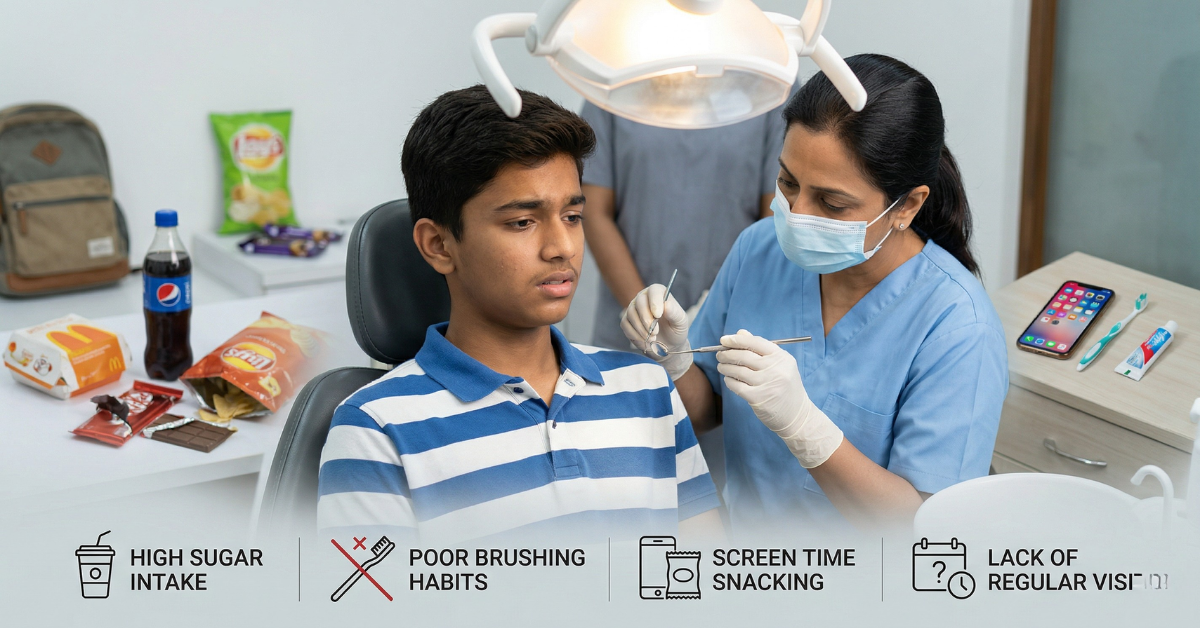
The reasons go beyond poor brushing habits. Modern teen cavities are increasingly linked to lifestyle changes that directly affect the oral environment.
Key contributing factors include:
- Sticky vape residue that adheres to tooth surfaces
- Frequent exposure to sweetened flavouring agents
- Reduced saliva flow, leading to dry mouth
- Shifts in oral bacteria that favour decay
Together, these factors create an environment where cavities can develop faster and often without obvious early symptoms, making early detection even more important.
What Dentists Are Seeing in Real Practice
A pattern is becoming increasingly common in clinics. A teenager comes in for a routine check-up. Just a few years earlier, there were no signs of decay. Now, multiple cavities are present, often in areas not typically affected, such as along the gumline or between teeth.
When lifestyle habits are reviewed, vaping is frequently part of the conversation.
What stands out is the level of surprise. Many teenagers believe vaping is a safer alternative to smoking and do not associate it with oral health problems. As a result, early warning signs are often missed, and cavities progress unnoticed.
This gap between perception and reality has become a key challenge in addressing vaping and tooth decay in youth, making awareness and early intervention more important than ever.
What Is Vaping and Why Is It So Popular Among Teens?
Vaping involves inhaling an aerosol produced by electronic cigarettes. These devices typically contain a combination of:
- Nicotine
- Propylene glycol
- Vegetable glycerin
- Flavouring agents, often sweet
The popularity among teenagers is driven by several factors. Flavoured options make the experience more appealing than traditional tobacco. Social media and peer influence normalize the habit. Many also believe vaping is a safer alternative to smoking, which lowers the perceived risk. The discreet design of modern devices further adds to its convenience and acceptance.
However, the oral environment responds very differently to these substances than most users expect. What may seem harmless on the surface can quietly create conditions that increase the risk of cavities and other dental problems.
How Vaping Leads to Tooth Decay
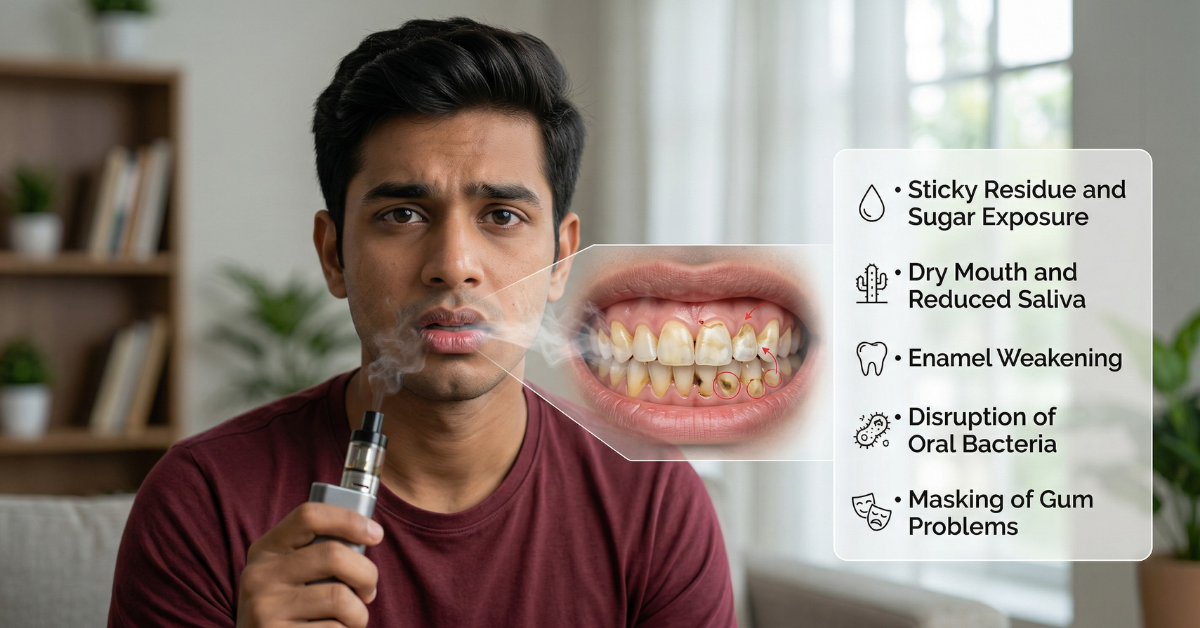
Sticky Residue and Sugar Exposure
Vape aerosols leave behind a thin, sticky layer on the teeth. This layer traps bacteria and sugars from flavoured liquids, creating ideal conditions for decay-causing organisms to thrive.
This is one of the most direct links between vaping and tooth decay in youth.
Dry Mouth and Reduced Saliva
Saliva plays a critical role in protecting teeth. It neutralises acids, washes away food particles, and helps repair early enamel damage.
Vaping reduces saliva production, leading to dry mouth. Without this natural defence, teeth become significantly more vulnerable to decay.
Enamel Weakening
Many vape liquids have an acidic nature. Repeated exposure weakens enamel, making it easier for cavities to form and spread quickly.
Disruption of Oral Bacteria
A healthy mouth maintains a balance between good and harmful bacteria. Vaping disrupts this balance, allowing harmful bacteria like Streptococcus mutans to dominate.
This shift accelerates cavity formation.
Masking of Gum Problems
Nicotine reduces blood flow to the gums, which can mask early signs of inflammation. This means problems may go unnoticed until they become more serious.
Why Teenagers Are More at Risk
Teenagers are not just smaller versions of adults when it comes to oral health. Their biology and daily habits make them more vulnerable to decay.
- Developing Enamel
Enamel in younger individuals is still maturing and may be less mineralised, making it more susceptible to damage from acids and plaque. - Dietary Habits
Frequent snacking, sugary drinks, and irregular eating patterns expose teeth to repeated acid attacks throughout the day, increasing the risk of cavities. - Behavioural Factors
Peer influence, experimentation, and limited awareness often lead to delayed dental visits and neglect of early warning signs.
When these factors combine with vaping, the risk increases significantly. The result is faster progression of decay and a higher likelihood of multiple cavities at a younger age.
Early Signs You Should Not Ignore
Cavities rarely begin with pain. The early changes are subtle, but they are the most important to catch.
Common early signs include:
- Sensitivity to cold or sweet foods
- White chalky patches on teeth
- Dark spots or stains that do not go away
- Rough areas felt by the tongue
- Food getting stuck repeatedly in the same spot
- Persistent bad breath
These signs usually appear before any real discomfort starts. Ignoring them allows decay to progress silently, often turning a simple issue into a more complex problem over time.
Additional Risks Beyond Cavities
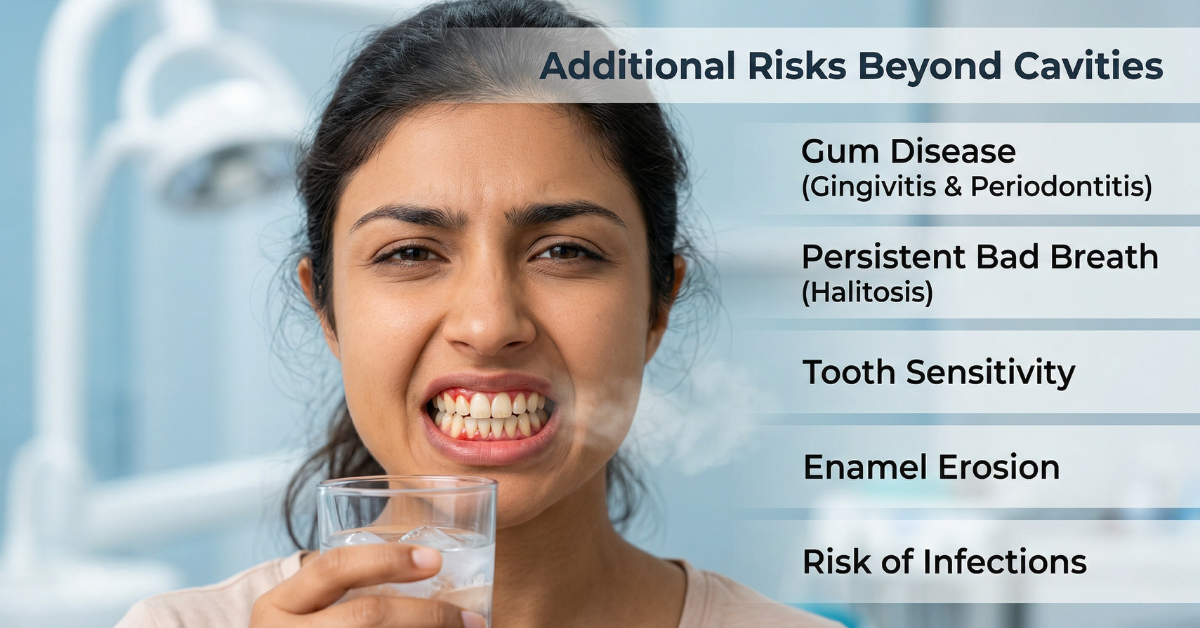
While cavities are often the most noticeable issue, vaping carries other important risks for oral health and safety.
Lithium batteries used in e-cigarettes, though rarely, can malfunction or explode. When this happens, it can lead to severe facial injuries, burns, and damage to teeth and soft tissues.
Long-term use is also linked to a higher risk of gum disease, as vaping can affect blood flow and the body’s natural healing response. Patients may experience delayed healing after dental procedures, increased gum inflammation, and, over time, a greater likelihood of early tooth loss.
These risks extend beyond aesthetics, impacting both oral health and overall well-being.
What Can Be Done: Practical Prevention Steps
For Teenagers
- Brush twice daily with fluoride toothpaste
- Floss once a day
- Drink plenty of water to combat dry mouth
- Rinse the mouth after vaping if quitting is not immediate
For Parents
- Start open conversations without judgment
- Watch for early signs of decay
- Ensure regular dental visits every six months
Professional Care
- Fluoride applications to strengthen enamel
- Dental sealants for protection in cavity-prone areas
- Early intervention to stop decay before it progresses
Safer Alternatives
If nicotine use is a concern, medically guided options such as nicotine patches or lozenges are safer than vaping.
When Should You See a Dentist?
Pain is often the last sign of a dental problem, not the first. A dental evaluation should be considered as soon as any changes are noticed, even if they seem minor. Sensitivity, slight discomfort, visible discoloration, rough or uneven tooth surfaces, or food repeatedly getting stuck in the same area can all indicate early decay.
Addressing these signs early usually means simpler, quicker, and more comfortable treatment, often preventing the need for more invasive procedures later. At Radiant Smiles Dental Clinic, Chembur the focus is on early detection and minimally invasive care, helping patients manage issues before they progress.
Conclusion: Awareness Today Prevents Damage Tomorrow
Teen dental health is evolving, and vaping is emerging as a significant but often underestimated factor. What may seem like a harmless habit can gradually contribute to tooth decay, gum issues, and long-term oral health concerns.
The encouraging part is that early awareness, consistent preventive care, and timely dental intervention can make a real difference. Small steps taken early can prevent more serious problems later.
Take action today: If your teen has started vaping or is showing early signs of tooth decay, schedule a consultation at Radiant Smiles Dental Clinic in Chembur. Early intervention can help protect their smile and support long-term oral health.
Frequently Asked Questions
1. Can vaping cause cavities in teenagers?
Yes. Vape aerosols can create a sticky environment on teeth, and sweet flavouring agents support bacterial growth. This increases the risk of cavities in teenagers.
2. Why are cavities increasing in young adults?
Dentists are seeing a rise due to lifestyle factors such as vaping, frequent snacking, sugary drinks, and inconsistent oral hygiene habits.
3. Are sweet flavoured vapes more harmful to teeth?
Yes. Sweet flavours expose teeth to more sugar-like compounds, which feed decay-causing bacteria and accelerate cavity formation.
4. Can dental damage from vaping be reversed?
Early enamel damage may be managed or reversed with fluoride treatments and good oral care. However, advanced cavities require professional dental treatment.
5. What should parents do if their teen vapes?
Focus on awareness rather than judgment, encourage regular dental check ups, monitor for early signs of decay, and guide them toward safer habits and cessation support.
Prefer a quick video instead? Watch the Instagram reel below:
Dr. Pooja Balgi
BDS, MDS (Pediatric & Preventive Dentistry), FIAPD — Pedodontist
Dr. Pooja Balgi is a highly qualified Consultant Pediatric and Preventive Dentist, bringing her expertise to our clinic since 2023. She graduated with a BDS from Sinhgad Dental College and Hospital in 2014 and completed her post-graduation in Pediatric and Preventive Dentistry at Terna Dental College in 2018. She is also a Fellow of the International Association of Pediatric Dentistry (FIAPD).
Dr. Pooja specializes in full mouth rehabilitation for children, adolescents, and individuals with special needs, with a strong emphasis on caries prevention. She is an active member of the Indian Society of Pedodontics and Preventive Dentistry, the IAPD, and the Foundation for Orofacial Myotherapy (FOM), where she serves as Joint Editor for Myo Probe. She has coauthored two books: 'Dental Caries and Traumatic Injuries in Pediatric Dentistry: Current Concepts in Clinical Practice' and 'Smile Shine Sparkle: A children's activity book for dental awareness.'
Book an Appointment with Dr. Pooja Balgi