


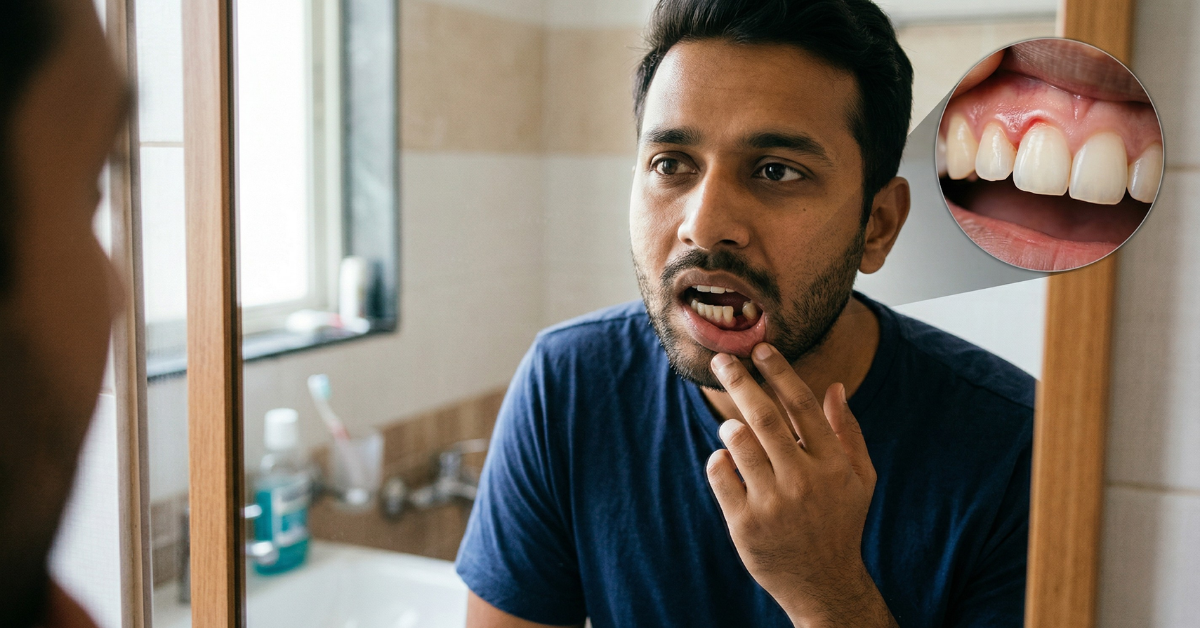
What Happens If You Don’t Replace a Missing Tooth? Shifting Teeth, Gum Disease & More

A missing tooth may not seem urgent, but ignoring it can lead to gradual and serious oral health issues. Nearby teeth begin to shift into the empty space, causing misalignment, uneven bite, and difficulty cleaning. This increases the risk of cavities and gum disease. At the same time, the jawbone in that area starts to shrink due to lack of stimulation, which can affect facial structure over time. You may also experience chewing problems, jaw pain, or headaches. Replacing a missing tooth early helps prevent these complications, maintains proper alignment, and supports long-term oral health and comfort.
Losing a tooth may not always feel urgent, especially if it is not visible when you smile. Many people continue their daily routine without discomfort and assume that replacing it can wait.
However, the effects of missing teeth are often silent and progressive. Clinical studies show that bone loss can begin within just a few months after tooth loss, with up to 25 percent reduction in bone width within the first year.
A missing tooth does more than create a gap. It affects how your teeth align, how your jaw functions, and how easily you can maintain oral hygiene. Understanding these changes early helps prevent more complex dental issues later.
Why Replacing a Missing Tooth Is So Important
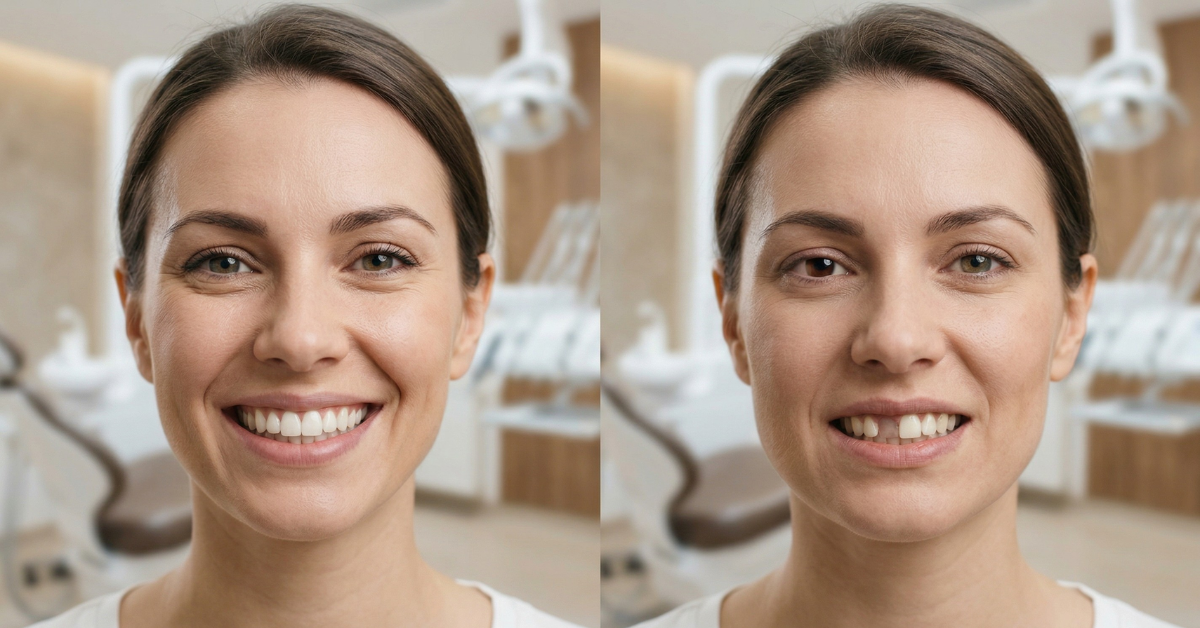
Teeth are naturally designed to function as a connected system. Each tooth supports the ones beside it, and the upper and lower teeth are meant to meet evenly when you bite.
The moment a tooth goes missing, this balance is disrupted. The teeth in front of and behind the gap begin to move toward the empty space. At the same time, the tooth in the opposite jaw may start shifting out of its position because it no longer has support.
This gradual movement can lead to misalignment, also known as malocclusion. Once the alignment changes, it becomes easier for food to get stuck between teeth, increasing the risk of cavities and gum problems.
This is why replacing a missing tooth at the right time is not just about appearance. It is essential for maintaining long-term oral health.
Teeth Shifting After Tooth Loss: The First Silent Change
One of the earliest changes seen after tooth loss is movement of the surrounding teeth. This process, known as teeth shifting after tooth loss, happens slowly and often goes unnoticed in the beginning.
Over time, even small shifts can lead to:
- Crooked or tilted teeth
- Uneven bite pressure
- Increased wear on certain teeth
In clinical practice, many patients only notice the problem when chewing becomes uncomfortable or when food starts getting trapped more frequently. By then, correcting the alignment may require more complex treatment.
Gum Disease Due to Missing Teeth
As teeth shift, they create small gaps and irregular spaces that are difficult to clean. These areas easily trap food particles and plaque.
This is where gum disease due to missing teeth often begins. What starts as mild gum irritation can gradually progress to:
- Swollen or bleeding gums
- Persistent bad breath
- Infection affecting deeper tissues
If left untreated, gum disease can weaken the support around nearby teeth, increasing the risk of further tooth loss.
This chain reaction is one of the most common long-term consequences seen when a missing tooth is ignored.
Jawbone Loss and Changes in Facial Structure
Beneath each tooth lies the jawbone, which stays strong through regular stimulation from chewing. When a tooth is lost, that stimulation stops.
As a result, the bone in that area begins to shrink, a process known as resorption. This change is gradual and painless, which is why many people do not realise it is happening.
Over time, bone loss can:
- Weaken support for neighbouring teeth
- Affect suitability for dental implants
- Cause subtle changes in facial appearance
In cases where multiple teeth are missing, this can lead to a sunken or aged look. Early intervention helps preserve bone and maintain natural facial structure.
Bite Problems, Jaw Pain, and TMJ Issues
When teeth shift and the bite becomes uneven, the jaw has to work harder to function normally. This imbalance places extra stress on the jaw joint, also known as the temporomandibular joint (TMJ).
Patients may experience:
- Jaw discomfort or stiffness
- Clicking or popping sounds
- Headaches or facial pain
Often, these symptoms are not immediately linked to a missing tooth, but they are closely connected. Restoring the gap helps rebalance the bite and reduce strain on the jaw.
Chewing Difficulties and Digestive Impact
Chewing is the first step of digestion. When a tooth is missing, especially a molar, chewing efficiency decreases.
Many patients begin using one side of the mouth more than the other. This uneven habit can lead to:
- Excess pressure on certain teeth
- Faster wear and sensitivity
- Difficulty breaking down food properly
Poor chewing can also affect digestion, as larger food particles are harder for the body to process. Restoring the missing tooth improves both comfort and function.
A Real Consultation Scenario
A common situation seen in clinics involves a patient who lost a back tooth and delayed treatment because there was no pain.
After several months, the patient starts noticing food getting stuck frequently. Gradually, gum swelling develops, and chewing becomes uncomfortable. On examination, the surrounding teeth have shifted, and early gum disease is present.
This pattern is very common. The absence of pain does not mean the absence of damage. Most changes begin quietly and worsen over time.
How Missing Teeth Affect Children
Parents often assume that early loss of a baby tooth is not a concern. However, premature loss can affect how permanent teeth come in.
It may lead to:
- Loss of space for adult teeth
- Crowding or misalignment
- Need for orthodontic treatment later
Early dental evaluation helps ensure proper development and prevents long-term issues.
Why Early Replacement Makes a Difference
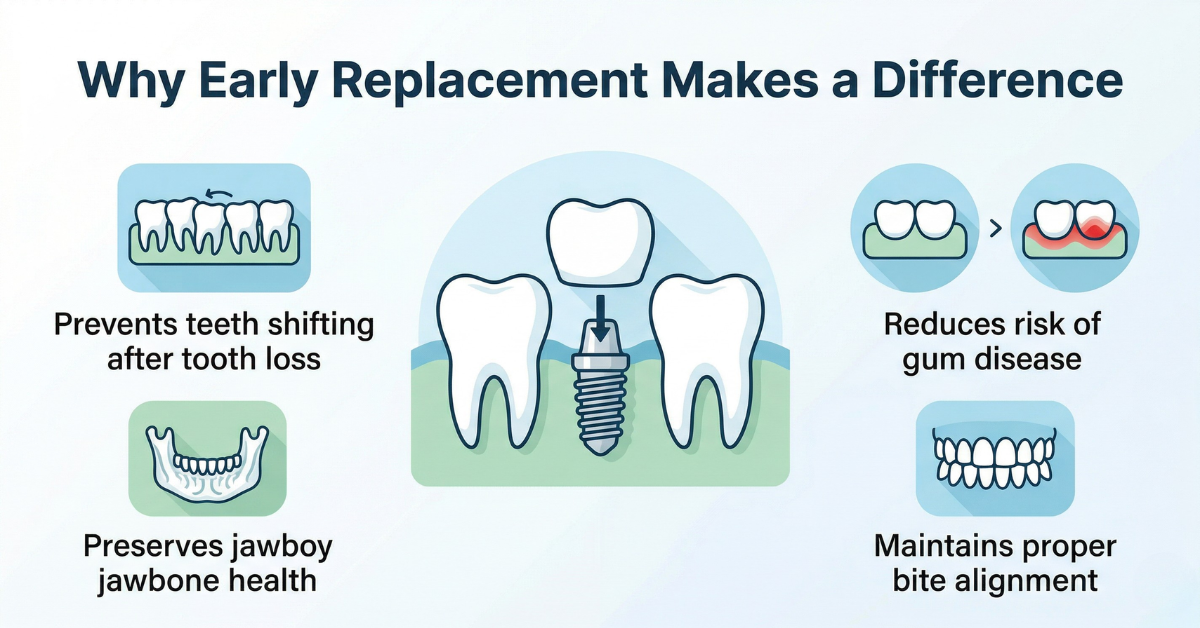
Replacing a missing tooth at the right time helps prevent a chain reaction of oral health problems.
- Prevents teeth shifting after tooth loss: Adjacent teeth begin to drift into the empty space, affecting alignment and spacing.
- Reduces risk of gum disease: Gaps can trap food and plaque, increasing the chances of inflammation and infection.
- Preserves jawbone health: Without stimulation from a tooth root, the jawbone gradually loses density over time.
- Maintains proper bite alignment: Missing teeth can disrupt how upper and lower teeth meet, leading to uneven pressure and wear.
From a clinical perspective, early replacement is usually simpler, more predictable, and more cost-effective than managing complications later.
Treatment Options to Replace a Missing Tooth
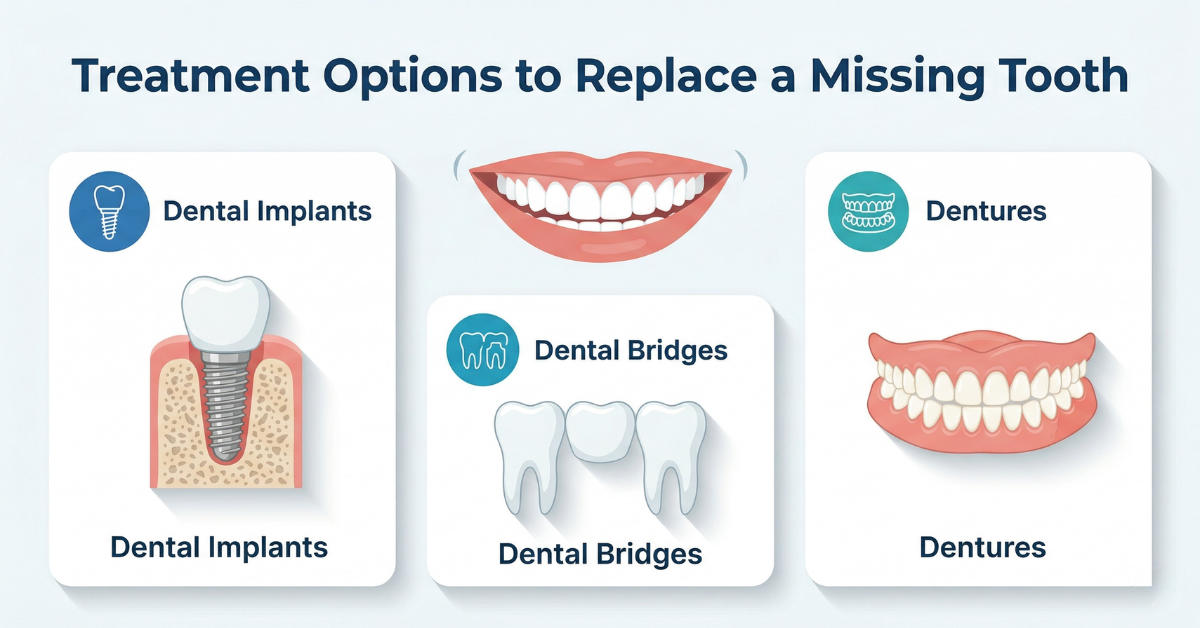
Modern dentistry offers several reliable solutions, each suited to different clinical needs:
- Dental Implants: Function like natural tooth roots and help preserve jawbone structure. They are durable, stable, and designed for long-term results.
- Dental Bridges: Use adjacent teeth to support a replacement tooth, restoring function and appearance effectively.
- Dentures: Removable options ideal for replacing multiple missing teeth, designed to improve comfort, chewing ability, and aesthetics.
The most appropriate option depends on factors such as bone health, age, number of missing teeth, and overall oral condition. A clinical evaluation helps determine the best long-term solution.
Prevention Tips to Protect Your Teeth
- Brush twice daily with fluoride toothpaste
- Clean between teeth using floss or interdental brushes
- Rinse your mouth after meals
- Limit sugary and acidic foods
- Avoid tobacco
- Visit your dentist regularly
These simple habits help protect existing teeth, prevent future problems, and maintain overall oral health.
Conclusion: Don’t Ignore the Gap- Act Early
A missing tooth may seem minor at first, but its impact goes beyond appearance. Over time, it can affect alignment, gum health, bone support, and overall comfort.
Acting early helps prevent these complications and keeps treatment simpler, more predictable, and more effective.
If you have a missing tooth or are noticing changes, schedule a consultation at Radiant Smiles Dental Clinic. Early evaluation can protect your smile, restore function, and support long-term oral health.
Frequently Asked Questions
1. What happens if a missing tooth is not replaced?
Untreated tooth loss can lead to shifting teeth, gum disease, bone loss, bite problems, and difficulty chewing. These changes develop gradually but can become complex over time.
2. How quickly do teeth shift after tooth loss?
Teeth can begin shifting within a few months. While early movement may not be noticeable, alignment changes become more visible over time.
3. Can missing teeth increase the risk of gum disease?
Yes. Gaps can trap food and plaque, making cleaning difficult and increasing the risk of gum inflammation and infection.
4. Is it necessary to replace a single missing tooth?
Yes. Even one missing tooth can affect bite alignment, neighboring teeth, and long-term oral stability if left untreated.
5. What is the best treatment to replace a missing tooth?
Dental implants are often the most effective long-term solution as they preserve bone and function like natural teeth. However, bridges and dentures may be recommended based on individual clinical needs.
Watch how this works in practice in the Instagram reel below:
Dr. Hemal Shah
BDS, MDS (Prosthodontics) — Implantologist & Digital Dentistry Specialist
Dr. Hemal Shah is a highly accomplished Implantologist with expertise in digital dentistry and complex surgical procedures. He completed his BDS and MDS in Prosthodontics from Dr. D.Y. Patil School of Dentistry, Navi Mumbai, graduating as university topper and gold medallist in Prosthodontics. He is a past ITI Study Club Director, a Key Opinion Leader (KOL) for Bredent and Conelog Implant Systems, and a faculty member for the IDA Mumbai Aesthetic Fellowship program.
Dr. Shah runs 3D Smiles, a firm providing guided surgery solutions to dentists across India and Sri Lanka, supported by an in-house lab equipped with the latest CAD CAM and 3D printer technology. At Radiant Smiles, he consults on digital dentistry and guided implant surgeries, bringing innovation and precision to every case.
Book an Appointment with Dr. Hemal Shah