


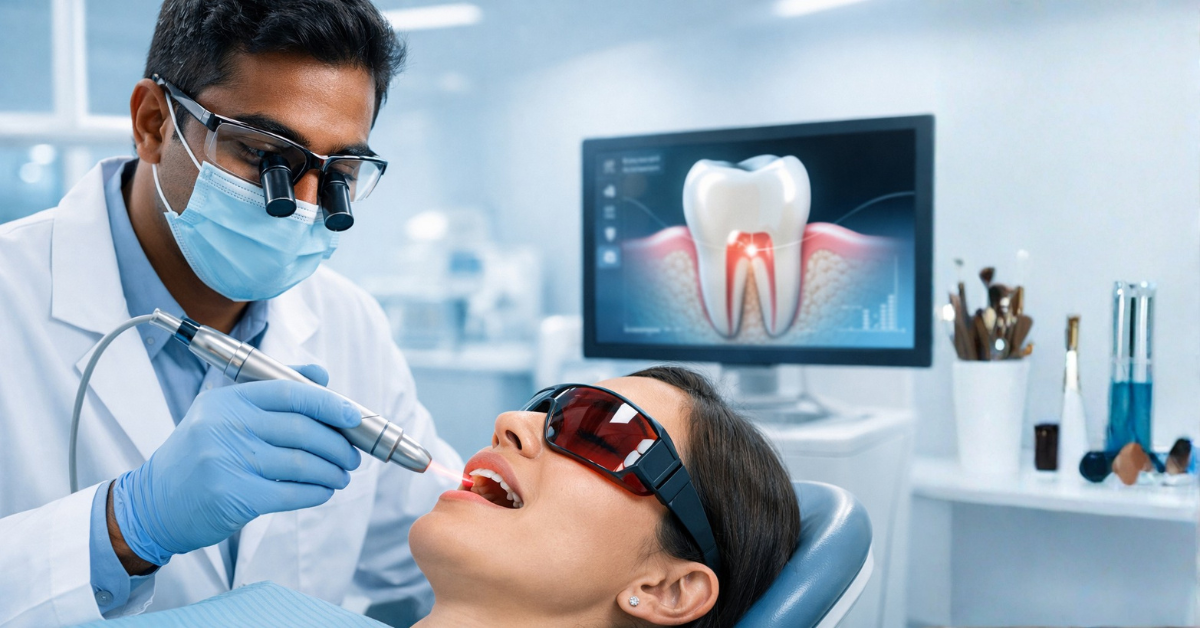
Laser Dentistry Benefits: Why Bloodless, Suture-Free Procedures Are Changing Dental Care (2026 Guide)
For many patients, the word “surgery” in dentistry still brings to mind scalpels, stitches, bleeding, and prolonged discomfort. One concern remains consistent among adults and parents alike: “Will it hurt?”
In 2026, the answer is very different from what it was ten years ago.
Laser dentistry benefits are transforming how several dental procedures are performed. With cleaner surgical fields, reduced bleeding, minimal need for sutures, and faster healing, laser technology is reshaping patient expectations across India and globally. While not every procedure requires a laser, its role in modern dental care continues to expand as clinical evidence and technology advance.
Laser dental care advantages include improved precision, reduced trauma to surrounding tissues, and greater patient comfort during and after treatment. Recovery is often smoother, and in many cases, anesthesia requirements are lower compared to conventional techniques.
At Radiant Smiles Dental Clinic, the focus remains on combining safety, accuracy, and patient-centered care. Integrating laser technology into appropriate treatments supports that commitment while enhancing overall clinical outcomes.
What Is Laser Dentistry?

Laser dentistry uses concentrated light energy to treat specific dental conditions with high precision. The term LASER stands for Light Amplification by Stimulated Emission of Radiation. In practical terms, it is a focused beam of light that can cut, reshape, or remove tissue in a controlled and targeted manner.
Unlike traditional drills or scalpels, lasers interact with water and natural pigments present in tissues. Because the dentist can precisely control the intensity and duration of exposure, the treatment is limited to the intended area while preserving surrounding healthy structures. This selective action is one of the key laser dentistry advantages and uses in modern practice.
There are two primary categories of dental lasers:
Hard Tissue Lasers
These are used for procedures involving teeth, such as cavity preparation and minor enamel reshaping. In certain cases, they may reduce the need for conventional drilling.
Soft Tissue Lasers
These are designed for gum-related treatments, including gum contouring, frenectomy, crown lengthening, and periodontal therapy. They allow precise tissue management with improved healing response.
When selected appropriately, both types enhance precision, comfort, and overall treatment outcomes.
Laser Dentistry Benefits That Patients Notice Immediately

1. Bloodless and Suture Free Procedures
One of the most significant laser dental surgery benefits is the ability to create a nearly bloodless surgical field during soft tissue procedures. As the laser works, it seals small blood vessels instantly.
This offers two clear advantages. First, improved visibility allows greater precision during treatment. Second, sutures are often unnecessary.
Without stitches, post operative care becomes simpler. There is no suture removal and less irritation during healing. Parents especially value this when their child undergoes a minor gum procedure. Treatments that previously involved swelling and multiple follow ups now often heal smoothly with minimal instructions.
2. Minimal Pain and Reduced Need for Anesthesia
Laser procedures are generally gentler than traditional methods. Because there is no vibration, drilling noise, or mechanical pressure, patient anxiety is significantly reduced.
This is particularly helpful for children who fear injections, adults with dental anxiety, and individuals with a strong gag reflex. In many soft tissue treatments, patients report only mild warmth or light pressure rather than pain.
3. Faster Healing and Lower Infection Risk
Laser energy has a sterilizing effect on the treated area. This lowers bacterial contamination and reduces post operative infection risk.
Since surrounding tissues experience minimal trauma, swelling and discomfort are reduced. Healing is often faster compared to conventional surgical approaches. For working professionals and school going children, this means less interruption to daily routines.
4. Precision and Preservation of Healthy Tissue
Modern dentistry focuses on preservation. Maintaining healthy tooth and gum structure is always a priority.
Laser dentistry benefits include targeting only diseased tissue, preserving healthy gum and bone, and in some procedures supporting tissue regeneration. This level of control is especially valuable in cosmetic gum reshaping and pediatric care, where precision directly impacts long term outcomes.
Real Consultation Scenarios from Practice

Scenario 1: Gum Overgrowth Without Stitches
A 42-year-old patient presented with gum overgrowth affecting both appearance and oral hygiene. Traditionally, this would involve scalpel surgery followed by sutures and a longer recovery period.
With a soft tissue laser, the procedure was performed in a nearly bloodless field. No stitches were required, and post operative discomfort was minimal. The patient resumed work the very next day.
Improved visibility during the procedure allowed precise reshaping of the gum line, enhancing both periodontal health and smile aesthetics.
Scenario 2: Child with Tongue Tie
Parents are understandably concerned when a child experiences breastfeeding or speech difficulties due to a tight frenulum.
In a recent case involving a 6-year-old child, a laser frenectomy was completed within minutes. There was minimal bleeding, no need for sutures, and healing progressed smoothly. Follow up assessments showed significant improvement alongside speech therapy.
For parents, laser dental care advantages provide reassurance that the treatment is controlled, safe, and less traumatic for the child.
Scenario 3: Periodontal Therapy in Gum Disease
In patients with moderate gum disease, lasers can assist in removing infected tissue and reducing bacterial load.
Compared to conventional deep cleaning alone, laser assisted therapy often results in less bleeding during the procedure, reduced post treatment soreness, and improved tissue response during healing.
It is important to note that lasers complement proper oral hygiene and professional periodontal care. They enhance treatment outcomes but do not replace routine maintenance and preventive visits.
Safety and FDA Approval
Dental lasers are approved by regulatory authorities, including the FDA, for specific hard and soft tissue applications. Their use in dentistry is supported by clinical research and established safety protocols.
When operated by trained professionals, dental lasers are safe for both adults and children. During treatment, protective eyewear is provided to shield the eyes from laser exposure. Energy settings are carefully calibrated based on the procedure, and surrounding tissues are safeguarded to ensure precision and control.
It is important to understand that not every case is suitable for laser treatment. Extensive restorations, deep structural repairs, or certain complex surgical procedures may still require conventional techniques.
A thorough clinical examination is essential to determine whether laser technology or traditional methods will provide the safest and most effective outcome for the patient.
Who Is an Ideal Candidate for Laser Dentistry?
Laser dentistry may be particularly beneficial for:
- Patients with dental anxiety who prefer minimally invasive procedures.
- Children requiring frenectomy or minor soft tissue corrections.
- Individuals undergoing treatment for gum disease.
- Patients seeking cosmetic gum contouring for smile enhancement.
- Those who prefer faster recovery, reduced bleeding, and minimal post operative discomfort.
At the same time, realistic expectations are essential. Laser technology enhances precision and comfort, but it does not replace the fundamentals of oral care. Good oral hygiene, routine dental check ups, and early diagnosis remain the foundation of long term dental health.
Prevention Still Comes First
Laser dentistry is an advanced clinical tool, but it is not a replacement for preventive care. The most effective way to avoid surgical intervention is consistent daily maintenance and early professional evaluation.
To reduce the likelihood of invasive treatment:
- Brush twice daily with fluoride toothpaste.
- Floss daily to remove plaque between teeth.
- Schedule dental check ups every six months.
- Address gum bleeding at the earliest sign rather than delaying care.
- Seek timely evaluation for speech or feeding concerns in children.
Early diagnosis often allows simpler, less invasive solutions, whether laser assisted or conventional. Prevention remains the foundation of long term oral health.
Conclusion: A Comfortable Future for Dental Care
Laser dentistry advantages and uses continue to expand in 2026, making dental procedures more comfortable and less intimidating. Bloodless treatment, suture free healing, reduced pain, and faster recovery are helping many patients move past long standing dental fear.
Laser dental surgery benefits are not about eliminating conventional techniques. They are about enhancing precision, improving patient comfort, and delivering better outcomes when used appropriately.
At Radiant Smiles Dental Clinic, every treatment decision is guided by safety, evidence based protocols, and patient centered care.
Take the next step: Book a consultation today to find out whether laser dentistry is right for you or your child and experience modern dental care designed around comfort and precision.
Don’t miss this quick Instagram reel that explains it visually:
https://www.instagram.com/reel/DG5rcBgJKKw/?igsh=MThmdzFleGhiaThiNw==
Frequently Asked Questions
1. Is laser dentistry safe for children?
Yes. When performed by a trained dentist, laser procedures such as frenectomy are safe and typically more comfortable than conventional methods.
2. Are laser dental procedures completely pain free?
Many soft tissue procedures involve minimal discomfort and may not require anesthesia. Pain perception varies, but most patients report significantly less discomfort compared to traditional surgical techniques.
3. What are the main laser dental surgery benefits?
Key benefits include reduced bleeding, suture free healing, faster recovery, lower infection risk, improved precision, and decreased treatment anxiety.
4. Is laser dentistry suitable for treating gum disease?
In many cases, yes. Lasers can assist in periodontal therapy by removing infected tissue and reducing bacterial load. A proper clinical evaluation determines whether it is appropriate.
5. Is laser treatment more expensive?
Laser procedures may involve slightly higher initial costs due to advanced technology. However, faster healing, reduced complications, and improved comfort often make it a worthwhile long term investment in oral health.