


Does Purple Toothpaste Really Whiten Teeth? Dentist-Approved Truth
“So I’m sure everybody on social media has heard about purple toothpaste.”
Reels promise instant brightness. Influencers show dramatic before and after smiles. The claim sounds simple: brush once and yellow tones disappear.
But does purple toothpaste really whiten teeth?
Tooth discoloration is one of the top five cosmetic concerns reported in urban clinics, according to the Indian Dental Association. More than 60 percent of adults in India are dissatisfied with their tooth shade. The demand for quick whitening solutions is real.
However, a 2025 in vitro study published in Applied Sciences by MDPI found that purple color correcting formulations provide limited whitening compared to peroxide bleaching systems.
From a clinical standpoint, the conclusion is clear. Purple toothpaste does not change enamel color or remove intrinsic stains. It creates a temporary optical illusion using color theory.
This guide explains the science, benefits, limitations, safety considerations, and when professional whitening is truly necessary.
Why Do Teeth Become Yellow in the First Place?

Before discussing purple toothpaste teeth whitening, one fact must be clear: not all stains are the same.
In clinical practice, many patients assume yellow teeth always result from poor brushing. In reality, discoloration occurs at different levels of the tooth, and treatment depends on the type of stain.
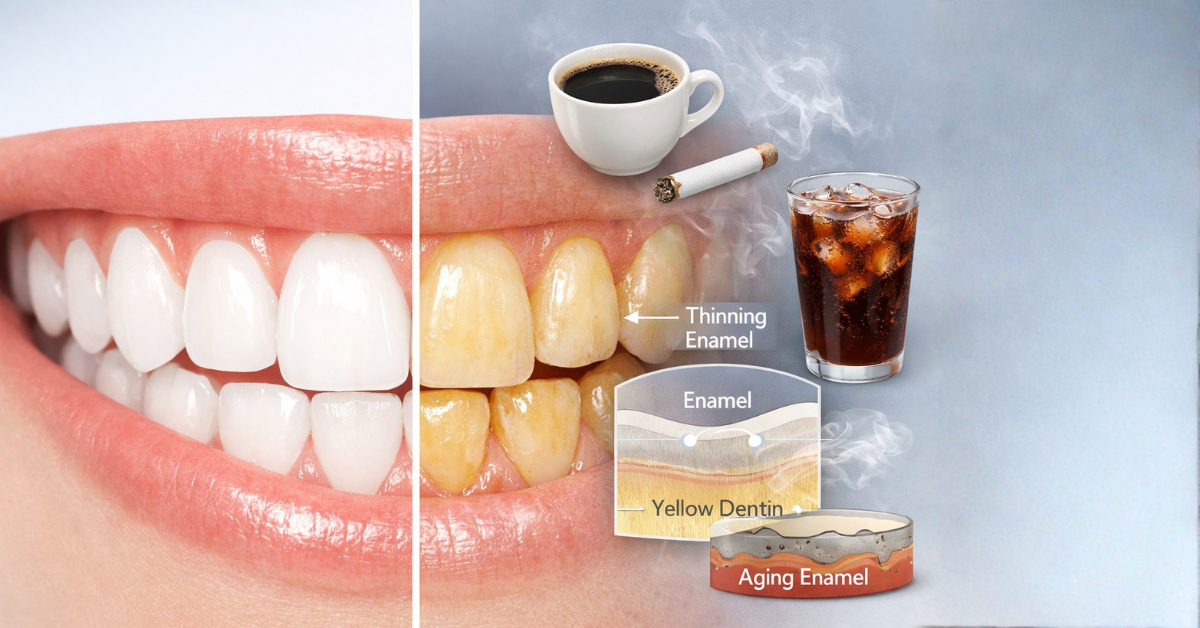
1. Extrinsic Stains: Surface Stains
Extrinsic stains sit on the outer enamel layer and are the most common.
Frequent causes in India include:
• Tea and coffee
• Turmeric rich foods
• Tobacco and paan
• Red wine
• Inadequate oral hygiene
These stains attach to enamel over time and worsen with plaque buildup.
They respond well to professional scaling and polishing. In many cases, teeth look noticeably brighter after cleaning alone, without any whitening treatment.
A typical example seen in clinics involves a 32 year old corporate professional who consumes four to five cups of tea daily. After routine cleaning and polishing, visible surface stains reduce substantially, and the natural tooth shade becomes more apparent. No bleaching agents are required in such cases.
2. Intrinsic Stains: Deep Stains
Intrinsic stains develop within the tooth structure.
Common causes include:
• Fluorosis in high fluoride regions
• Childhood medications
• Tooth trauma
• Natural enamel thinning with age
When enamel thins, the yellow dentin beneath becomes more visible.
These stains cannot be brushed away or polished off. They require peroxide based whitening or cosmetic procedures for visible change.
This distinction explains why many people feel disappointed. Purple toothpaste may create temporary brightness, but intrinsic discoloration remains unchanged.
The Science Behind Purple Toothpaste
The concept behind purple toothpaste benefits and truth lies in color theory.
On a color wheel, purple sits opposite yellow. Opposite colors neutralize each other visually.
When purple pigment coats the surface of teeth, it counteracts yellow tones temporarily. This creates an illusion of brightness.
The important word here is illusion.
It does not chemically break down stain molecules. It does not penetrate enamel. It does not alter the natural shade of the tooth.
It simply changes how light reflects off the surface for a short time.
Think of it as applying a filter.
Does Purple Toothpaste Really Whiten Teeth?
This is the big question.
Clinically speaking, no.
It may make teeth appear whiter immediately after brushing. That temporary brightness can be useful before a photoshoot, wedding function, or special event.
But the effect fades once the pigment wears off.
A 2025 in vitro study published in Applied Sciences by MDPI found that purple based toothpastes showed only limited whitening effects compared to peroxide bleaching methods. Researchers clearly stated that these products are not substitutes for peroxide based whitening treatments.
In practical terms:
• Good for a quick boost
• Not effective for long term whitening
• Not suitable for treating deep stains
What About Ingredients Like Peroxide or Charcoal?
Some products marketed under purple toothpaste teeth whitening contain additional active ingredients. The label may highlight whitening agents, but effectiveness depends on concentration and formulation.
Hydrogen Peroxide
Hydrogen peroxide is a clinically proven whitening agent. It breaks down stain molecules through oxidation, lightening the tooth from within.
In most over the counter toothpastes, concentrations are low. The result is mild and gradual whitening, far less noticeable than professional in clinic treatments where peroxide levels are higher and carefully supervised.
Peroxide in toothpaste can support slight improvement, but it does not create dramatic shade change.
Activated Charcoal
Activated charcoal helps remove surface stains through adsorption. It binds to pigments and assists in mechanical stain removal during brushing.
The concern is abrasiveness. Frequent or aggressive use may wear down enamel, leading to sensitivity and, over time, a more yellow appearance as dentin becomes exposed.
Risk varies based on the product’s abrasivity, brushing pressure, and frequency of use.
The Bottom Line
Even when peroxide or charcoal is included, the immediate brightness in many purple toothpaste formulas still comes mainly from pigment masking. The color correcting effect is temporary, while true bleaching remains limited.
A Real Clinic Scenario
A 24-year-old bride-to-be visited Radiant Smiles after seeing viral videos online. She asked whether she could skip professional whitening and use purple toothpaste instead.
After examination, she had moderate intrinsic staining.
Purple toothpaste would not have changed her enamel shade.
We performed a supervised peroxide-based whitening procedure. The result was several shades lighter and long lasting.
She later mentioned she had tried purple toothpaste earlier and was disappointed when the brightness faded within hours.
This is a common experience.
Safety Concerns Parents Often Overlook

One growing concern in clinics involves children and teenagers influenced by social media trends. Cosmetic appeal often overshadows basic oral health priorities.
Fluoride Matters
Many purple toothpastes do not contain fluoride.
Fluoride is essential for cavity prevention. In children and adolescents, enamel is still vulnerable, and consistent fluoride exposure plays a critical role in strengthening teeth and preventing decay.
Replacing a daily fluoride toothpaste with a pigment based cosmetic product can increase the risk of cavities. Cosmetic brightness should never come at the cost of protection.
Irritation and Overuse
Excessive or frequent use may cause gum irritation in some individuals, especially if combined with aggressive brushing.
Purple toothpaste may be safe for occasional use. It is not recommended as a long term primary oral care product, particularly for growing children who require fluoride based protection daily.
Colgate Purple Toothpaste Review: What Patients Ask
Many patients specifically ask for Colgate purple toothpaste review feedback after seeing online promotions.
Most purple formulations from mainstream brands focus on optical brightening rather than chemical whitening. The visible effect comes from color correction, not structural stain removal.
Before buying, consider the following:
• Check whether fluoride is included
• Understand that the effect is temporary
• Do not expect dramatic or permanent shade change
As with any oral care product, ingredient concentration and overall formulation determine real effectiveness. Marketing claims may highlight whitening, but clinical outcomes depend on what is actually inside the tube.
What Actually Works for Long Term Whitening?

If the goal is genuine shade improvement rather than a temporary visual effect, evidence based options are clear.
Professional Peroxide Based Whitening
This approach remains the gold standard for cosmetic whitening.
It:
• Penetrates enamel
• Breaks down stain molecules through oxidation
• Can lighten teeth by several shades
• Provides longer lasting results
Because peroxide concentration and exposure are carefully controlled, the process is predictable and safe when performed under professional supervision.
Regular Professional Cleaning
For many individuals, scaling and polishing alone create noticeable improvement. Removing plaque and surface stains often restores the natural tooth shade without the need for bleaching.
Daily Preventive Care
Long term brightness depends on daily habits:
• Brush twice daily with fluoride toothpaste
• Floss every day
• Rinse after consuming tea or coffee
• Visit a dentist every six months
Whitening enhances appearance. Prevention protects health. The latter should always come first.
The Bottom Line
Social media trends change quickly. Tooth structure does not.
Purple toothpaste works like makeup for teeth. It can create a temporary brightness boost, but it does not produce lasting whitening.
If discoloration is a concern, guessing is not the solution. A proper clinical evaluation helps identify whether the issue is surface staining, intrinsic discoloration, or simply natural tooth shade.
At Radiant Smiles Dental Clinic, the focus is not only on a brighter smile but on long term oral health. A personalized consultation can determine whether professional cleaning, peroxide based whitening, or simple reassurance is appropriate.
If uncertainty remains about tooth shade or online whitening trends, scheduling a consultation at Radiant Smiles Dental Clinic and get clear, evidence based guidance tailored to individual needs.
You can also watch a short explanation in the Instagram reel below:
https://www.instagram.com/reel/DLcng1OoDB_/?igsh=MTlvMnpwYXAwcTM4MA==
Frequently Asked Questions
1. Does purple toothpaste really whiten teeth permanently?
No. Purple toothpaste neutralizes yellow tones temporarily using color correction. It does not change enamel structure or remove intrinsic stains. The brightness fades once the pigment washes away.
2. How long does the whitening effect of purple toothpaste last?
The effect typically lasts a few hours at most. It depends on saliva flow, eating, drinking, and oral hygiene habits. It is a short term visual enhancement, not a structural change.
3. Is purple toothpaste safe for daily use?
Occasional use is generally safe for most adults. However, it should not replace a fluoride toothpaste for daily long term use. Fluoride remains essential for cavity prevention and enamel strength.
4. What is the difference between purple toothpaste and peroxide whitening?
Purple toothpaste creates an optical illusion by masking yellow tones. Peroxide whitening penetrates enamel and chemically breaks down stain molecules, resulting in measurable shade improvement.
5. Can purple toothpaste remove tea, coffee, or tobacco stains?
It may temporarily reduce the appearance of mild surface stains. However, professional scaling and polishing are far more effective for removing extrinsic stains caused by tea, coffee, or tobacco.
6. Can teenagers use purple toothpaste?
Teenagers can use it occasionally. However, fluoride based cavity protection is far more important during developmental years. Cosmetic whitening should never replace preventive care.