



When Should Your Child First Visit the Dentist? A Parent's Complete Guide

Most parents walk in when the damage is already done. A toddler in pain. A cavity that had been quietly growing for months. This is one of the most preventable patterns seen in pediatric dentistry. A 2017 NIH-published study found that 57% of children had their very first dental visit only between ages 6 and 9, years after the recommended window had already passed. Even more sobering, 75% of parents in that same study had no idea that six months was the right age to start. This guide answers exactly when to book, what to expect, and how to make a baby's first dental visit a positive milestone rather than a stressful one.
What Is the Right Age for a Child's First Dental Visit?
The Golden Rule: First Tooth or First Birthday
The answer is simpler than most parents expect. The first dental visit for a baby should happen within six months of the first tooth erupting, or by the child's first birthday, whichever comes first. This is the recommendation of the American Academy of Pediatric Dentistry (AAPD), and it is one that experienced pediatric dental professionals stand fully behind.
Many families visiting a kids dental clinic for the first time arrive with a three or four year old who already has visible decay. By that age, what could have been a brief preventive check has turned into a more involved conversation. Starting at age one does not mean drilling or procedures. It means getting ahead of problems before they begin.
Why So Many Parents Wait Too Long
The most common reason parents delay is a straightforward one: the child is not complaining of pain. In research surveying 300 families, 55% said they did not bring their child in earlier because there was no dental problem to speak of. This thinking is completely understandable and also, unfortunately, how decay quietly takes hold.
There is also a deeply rooted belief that baby teeth do not matter much since they fall out anyway. The truth is that primary teeth do far more than fill a child's smile. They hold space for adult teeth, support clear speech development, and allow children to eat and chew properly. When a baby tooth is lost too early due to decay or infection, it can cause surrounding teeth to shift, leading to crowding and bite problems that require orthodontic treatment later. Those small teeth carry a big responsibility.
Why Infant Dental Care Starts Earlier Than Most Parents Think
Infant dental care is not just about teeth. It begins with gums, feeding habits, and the oral environment a child is born into. Baby bottle tooth decay is one of the most common and preventable conditions seen in young children. It develops when sugary liquids, including formula, milk, and juice, sit against the teeth for extended periods, often during sleep or prolonged bottle use.
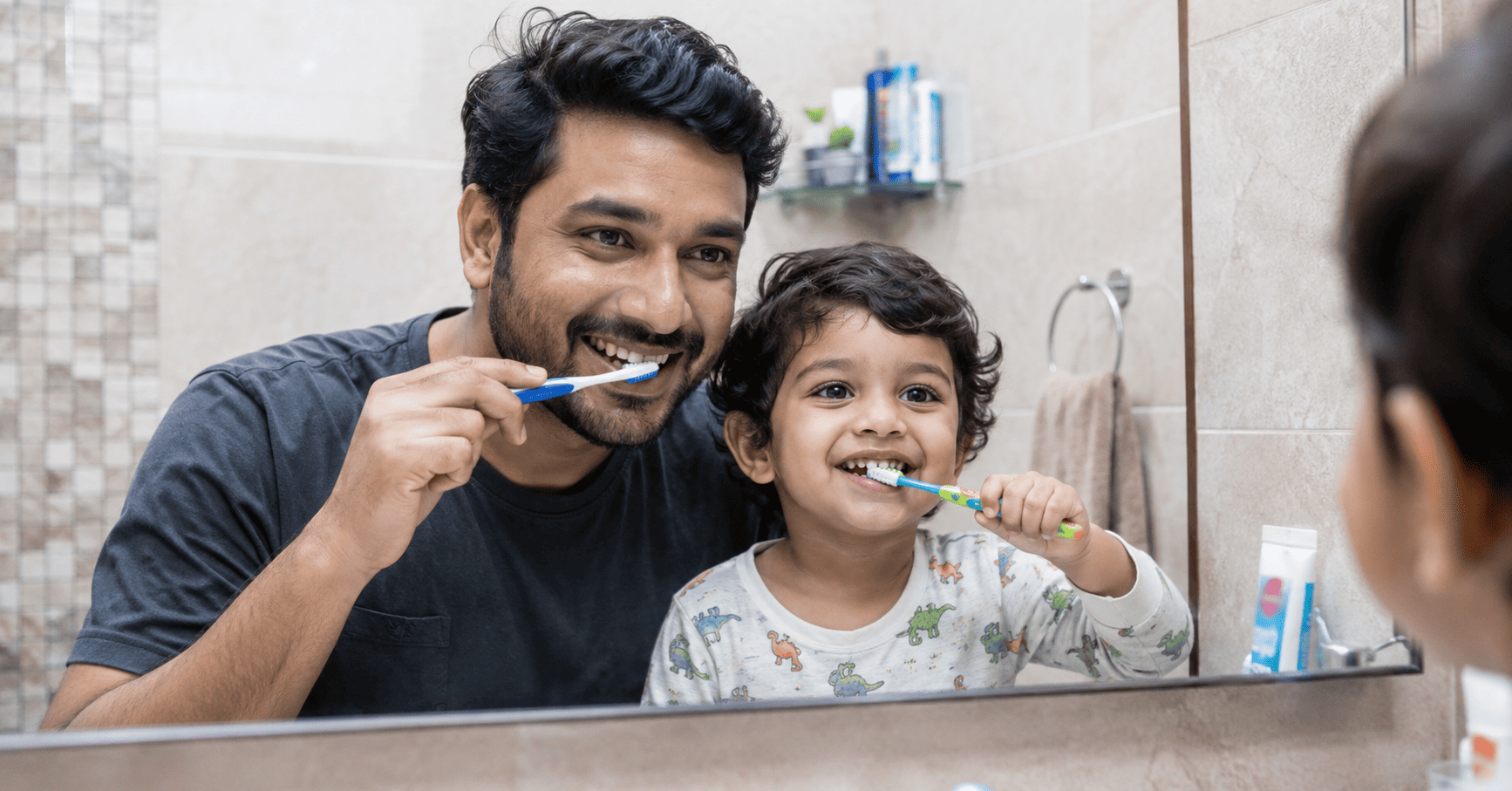
What surprises many parents is that cavity-causing bacteria can actually transfer from a caregiver to an infant through shared spoons, pacifiers, or kissing on the lips. This means that a parent's own oral health directly influences their baby's risk of early decay.
The first pediatric dentist visit allows a thorough assessment of jaw development, gum tissue health, and early bite alignment, all of which are easier to manage when caught at this stage. It is also when parents receive personalized guidance on fluoride. In one clinical study, 74% of parents were completely unaware that fluoride plays a protective role against tooth decay in children. That single conversation at an early visit can meaningfully change a child's dental trajectory.
What Happens at a Pediatric Dentist First Visit
1. The Knee to Knee Examination
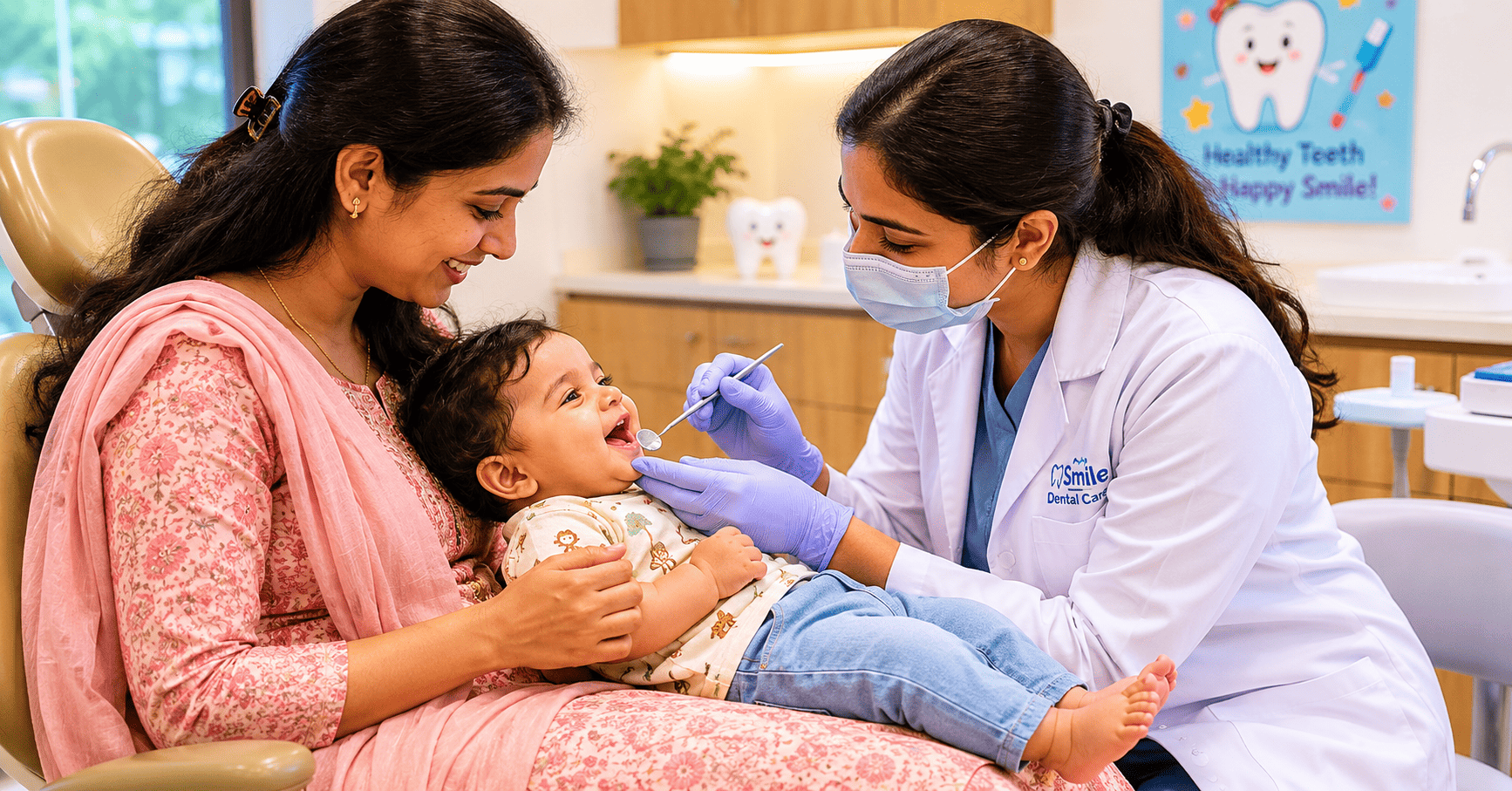
For infants and young toddlers, the first visit typically involves what is known as a knee to knee examination. The parent sits face to face with the dentist, and the child lies with their head resting in the dentist's lap and their legs across the parent's lap. The parent holds the child's hands throughout. The child remains fully in the parent's sight and is never out of reach.
This position is gentle, safe, and specifically designed to keep young children calm. The entire appointment typically takes between 30 and 45 minutes and is focused on education and early detection rather than any complex treatment.
2. What the Dentist Checks
During a child's first dentist appointment, the dentist will count and carefully examine every erupted tooth, screen for any early signs of baby bottle tooth decay, assess the jaw alignment and development of the bite, and examine the gum tissue for any signs of irritation or concern. Depending on the child's age and comfort, the visit may also include a gentle cleaning and an application of fluoride varnish, a quick and painless protective coating that significantly reduces the risk of early decay.
3. What Parents Learn at This Appointment
The first visit is as much for the parent as it is for the child. Caregivers leave with clear guidance on how to brush a baby's teeth properly, using a rice grain sized smear of fluoride toothpaste from the moment the first tooth appears. There is also discussion around diet, because how frequently a child consumes sugary foods and drinks matters more than the total amount. Habits like thumb sucking and pacifier use are addressed with realistic, age appropriate advice rather than alarm. And the next visit is scheduled, beginning a six monthly rhythm that forms the backbone of lifelong oral health.
How to Prepare Your Child for Their First Dentist Visit
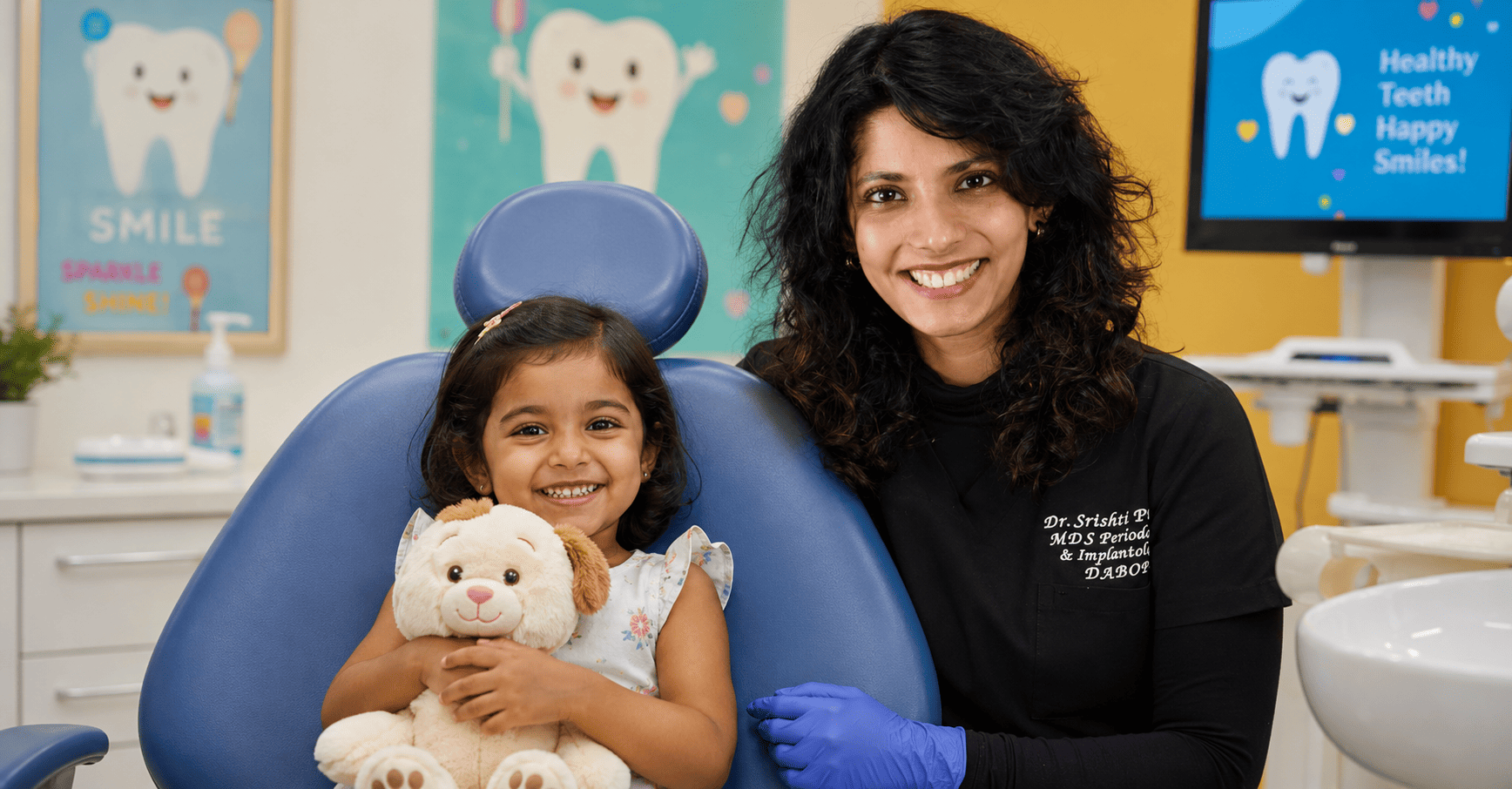
Preparation makes an enormous difference, and it does not require much. The most important thing is language. Words like hurt, injection, pain, and drill should be completely avoided before the visit. Instead, say things like "the dentist is going to count your teeth" or "you get to sit in a big moving chair and open your mouth like a lion." Children take emotional cues from their parents, and calm, positive language goes a long way.
Role playing at home is surprisingly effective. Take turns being the dentist and the patient. Use a soft toothbrush to gently count teeth out loud. This helps children become comfortable with someone looking inside their mouth and makes the actual appointment feel far less unfamiliar.
Parents often find that familiar cartoon references help too. Watching episodes of Chhota Bheem or Motu Patlu before the visit, then casually talking about “strong teeth” and brushing habits, makes the conversation feel natural rather than intimidating. Simple stories from Indian parenting YouTube channels about brushing and visiting the dentist can also help normalize the experience.
Timing matters more than most parents realise. Morning appointments, ideally after a nap and a light meal, usually go far more smoothly than late afternoon visits when children are tired or hungry. Bringing a favourite toy, blanket, or comfort item gives toddlers something familiar to hold during the appointment.
And perhaps most importantly, stay calm yourself. Children are highly perceptive. When the adult in the room feels relaxed and confident, children usually feel safe too.
Common Parent Questions, Answered Honestly
"My child has no pain. Do we still need to come in?"
Yes, absolutely. Dental decay rarely causes pain in its earliest stages. By the time a child is actually complaining of discomfort, the situation has typically progressed beyond what a simple preventive visit would have caught. Early visits are always less time consuming, less costly, and far less stressful than restorative ones.
"Will my toddler even cooperate?"
This is one of the most common concerns heard at a pediatric dentist's first visit, and the answer is reassuring. A well trained pediatric dental team works with children at every level of cooperation. Crying during a visit is completely normal and does not mean the experience was traumatic. Consistency is what builds confidence. Children who visit regularly from a young age almost always become the most relaxed patients in the chair.
"What if decay is found on the first visit?"
Early stage decay is far more manageable than most parents imagine. In many cases, it can be addressed with fluoride varnish applications and targeted dietary changes, with no drilling required. Finding it early is precisely the point of coming in before a problem announces itself.
The Earlier You Start, the Easier It Gets
A child who visits the dentist within the first year of life grows up understanding that oral health is simply part of everyday care. The dental chair feels familiar rather than frightening. They know what to expect, trust the people around them, and carry those healthy habits forward for life.
Children who start early are consistently calmer, healthier, and more comfortable at future appointments. The first dental visit is not about reacting to a problem. It is about preventing one before it begins.
One simple visit before age one can prevent years of anxiety, discomfort, and avoidable dental treatment later on. It is never too early to start building a positive relationship with dental care. Those habits, once established early, are also the ones that last longest, and simple daily habits make the biggest difference to a child's long-term dental health.
Ready to schedule your child's first dental visit? The pediatric team at Radiant Smiles Dental Clinic focuses on making every toddler dental checkup gentle, positive, and stress free.
Book an Appointment at Radiant Smiles Dental Clinic
Frequently Asked Questions
- When should a child first visit the dentist?
Within six months of the first tooth erupting, or by the child’s first birthday, whichever comes first. This is the recommendation followed by pediatric dental specialists worldwide and helps detect early issues before they become painful or expensive to treat. - What happens at a baby’s first dental visit?
The dentist gently checks the baby’s teeth, gums, bite, and jaw development, looks for signs of early decay, demonstrates correct brushing techniques, and discusses feeding and oral hygiene habits with parents. The visit is short, gentle, and designed to help the child feel comfortable in the dental environment. - Is it too early to take a one year old to the dentist?
Not at all. One year is actually the ideal age to begin dental visits. Early appointments focus on prevention, habit building, and helping children grow up without fear of the dentist. - How do parents find a good pediatric dentist near them?
Look for a certified pediatric dentist with a child friendly clinic setup, experienced behavioural management techniques, and strong parent reviews. For families in Mumbai, Radiant Smiles Dental Clinic offers specialised pediatric dental care designed to make first visits calm, positive, and stress free. - How often should toddlers visit the dentist?
Most toddlers should visit the dentist every six months. Children with a higher risk of cavities or specific dental concerns may need more frequent checkups for closer monitoring and preventive care.
Dr. Pooja Balgi
BDS, MDS (Pediatric & Preventive Dentistry), FIAPD — Pedodontist
Dr. Pooja Balgi is a highly qualified Consultant Pediatric and Preventive Dentist, bringing her expertise to our clinic since 2023. She graduated with a BDS from Sinhgad Dental College and Hospital in 2014 and completed her post-graduation in Pediatric and Preventive Dentistry at Terna Dental College in 2018. She is also a Fellow of the International Association of Pediatric Dentistry (FIAPD).
Dr. Pooja specializes in full mouth rehabilitation for children, adolescents, and individuals with special needs, with a strong emphasis on caries prevention. She is an active member of the Indian Society of Pedodontics and Preventive Dentistry, the IAPD, and the Foundation for Orofacial Myotherapy (FOM), where she serves as Joint Editor for Myo Probe. She has coauthored two books: 'Dental Caries and Traumatic Injuries in Pediatric Dentistry: Current Concepts in Clinical Practice' and 'Smile Shine Sparkle: A children's activity book for dental awareness.'
Book an Appointment with Dr. Pooja Balgi