


Water Flosser vs String Floss vs Interdental Brushes: Which Cleans Between Teeth Best?

At a Glance
String floss scrapes plaque from tight tooth contacts, interdental brushes clean wider gaps and braces effectively, and water flossers flush debris gently along the gumline and around appliances. The best tool is the one used consistently every day. Many people combine string floss with a water flosser for thorough coverage.
- String floss works best for close contacts but needs good technique.
- Interdental brushes excel in open spaces and around braces.
- Water flossers are gentler, easier for limited dexterity, and reach pockets well.
- Clinical comparisons often favour water flossers for plaque reduction and bleeding control.
- Consistency matters more than any single device.
Introduction
Many patients leave the clinic feeling they brush carefully twice a day, yet still notice food trapped between teeth or slight gum bleeding after meals. Toothbrushing reaches only about 60 percent of tooth surfaces, leaving the interdental areas where most periodontal problems begin. In India, where busy urban routines in cities like Mumbai, Delhi, Bengaluru, Chennai and Kolkata often leave little time for extra steps, this gap becomes even more noticeable. String floss, interdental brushes and water flossers each target these spaces differently. This guide compares their strengths, limitations and ideal uses so readers can select a practical daily method that fits their mouth, lifestyle and any orthodontic or prosthetic needs. Readers will also find clear guidance on technique, safety and when professional advice helps refine the routine.
What Is the Best Way to Clean Between Teeth?
The most effective method is the one a person will use every day. String floss, interdental brushes and water flossers each remove interdental plaque, but suitability depends on tooth spacing, dexterity and appliances.
Why Brushing Alone Is Not Enough
A toothbrush cleans the outer and inner surfaces well, yet its bristles cannot fully reach the tight spaces where teeth meet. Studies show that even thorough brushing leaves a large amount of plaque in these interproximal zones. Over time that plaque hardens into calculus and fuels gingivitis. Patients often notice the first signs as mild bleeding while eating or a persistent feeling of something stuck after meals. Interdental cleaning closes this gap and protects both teeth and gums for the long term.
How Does String Floss Work and Who Benefits Most?
String floss physically scrapes sticky plaque from tight contact points where teeth touch closely.
Benefits of Traditional Dental Floss
String floss remains inexpensive, highly portable and excellent at removing the thin film that forms exactly where teeth meet. The American Dental Association notes that proper flossing can remove up to 80 percent of interdental plaque. For people with naturally tight contacts and good hand control, it delivers a clean, precise feel that many describe as thorough.
Limitations Patients Commonly Report
Technique matters. Snapping the floss down too hard can cut the gums. Limited hand movement, arthritis or braces make the wrapping and sawing motion difficult. Only 10 to 30 percent of adults floss regularly, largely because the process feels time-consuming or uncomfortable. In a typical consultation a patient might say the floss shreds between back teeth or that they simply forget after a long workday.
When Are Interdental Brushes the Better Choice?
Interdental brushes clean wider gaps and spaces around braces by sliding a small bristled head straight into the embrasure.
Benefits of Interdental Brushes
These compact brushes sweep food particles and plaque from open spaces more easily than string. They are especially helpful around orthodontic brackets and wires. Many patients find the direct insertion more intuitive and less fiddly than wrapping floss around fingers. The physical scrubbing action gives clear feedback that cleaning is happening.
Practical Challenges with Interdental Brushes
The brush head must match the gap size. Too large and it will not enter; too small and it cleans poorly. Brushes wear out and bend with repeated use, so replacements are needed. Very tight contacts simply do not allow the brush to pass. Sensitive gums can feel mild abrasion if the bristles are forced.
How Do Water Flossers Compare for Daily Plaque Control?
Water flossers use a pulsating stream to flush plaque and debris from gumlines, pockets and around braces or implants with less mechanical force.
Clinical Evidence on Plaque and Bleeding Reduction
A systematic review of randomised controlled trials found that the majority of studies favoured water flossers over string floss for plaque reduction, particularly in inaccessible interproximal areas. One trial reported 74.4 percent whole-mouth plaque reduction with a water flosser versus 57.7 percent with string floss, and even higher gains on approximal surfaces. Separate research comparing water flossers with interdental brushes showed a 56 percent greater reduction in whole-mouth gingival bleeding and a 53 percent greater reduction on approximate surfaces. A four-week trial also confirmed better improvement in marginal gingival health with water flossing and no increased risk of abrasion. These results explain why many clinicians now recommend water flossers for patients who struggle with traditional methods.
Water Flosser Benefits for Specific Situations
Patients with braces, bridges, implants or limited hand strength often prefer the water flosser. Adjustable pressure settings allow a gentle start that can be increased as gums adapt. The stream reaches below the gumline and around appliances without the need for precise finger positioning. Many users report fresher breath and less bleeding within the first week of consistent use.
Common Concerns About Cost, Mess and Safety
- Higher upfront cost: Water flossers generally cost more initially than string floss or interdental brushes.
- Counter space: The device needs some bathroom counter space, and cordless models may need regular charging.
- Mess during early use: First time users may splash water while learning the correct angle and technique. This usually improves with practice.
- Safety: Using a water flosser at the recommended pressure is generally considered safe for enamel and healthy soft tissues.
- Adjustable pressure: Many quality devices offer multiple intensity settings, allowing users to start at a lower, more comfortable pressure.
- Easy adjustment: As technique and comfort improve, users can gradually increase the pressure if needed.
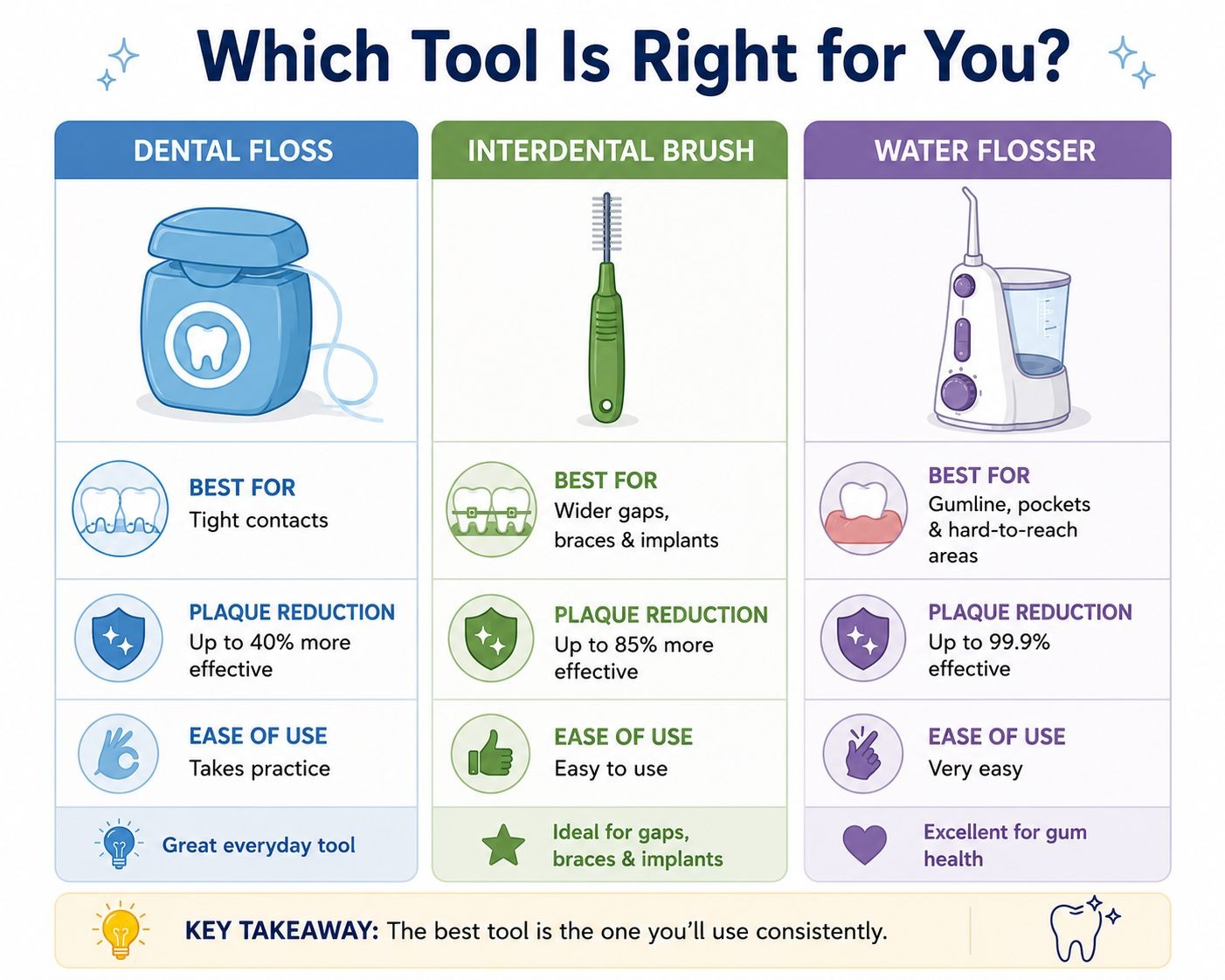
Feature | String Floss | Interdental Brushes | Water Flosser |
Best for | Tight tooth contacts | Wider gaps and braces | Braces, implants, sensitive gums, limited dexterity |
How it works | Physical scraping between contacts | Bristled head slides into gaps | Pulsating water stream flushes debris |
Key advantages | Low cost, portable, precise scraping | Easy insertion, good for open spaces | Gentle, reaches pockets, easy for most users |
Main limitations | Technique-sensitive, hard with braces | Needs correct size, wears out, not for tight contacts | Higher cost, needs space or power, initial mess |
Clinical plaque findings | Effective at contacts | Strong in accessible gaps | Often superior overall and interproximal |
Can These Tools Be Combined for Better Results?
Yes. Many patients use string floss for tight contacts and a water flosser for overall flushing, or interdental brushes for wider gaps plus water flossing for gum stimulation.
Realistic Consultation Scenarios
A young professional with naturally tight contacts and mild bleeding after meals often starts with string floss for the contact points and adds a water flosser in the evening for a thorough rinse. A teenager wearing braces finds interdental brushes useful under the wires while a water flosser keeps the brackets and gumline clear without extra effort. An older adult with implants and reduced hand strength discovers that a water flosser alone meets daily needs and reduces the frustration of fine motor tasks. In each case the goal is the same: a routine the person will actually follow.
How to Use Each Tool Correctly
1. String Flossing Technique
Break off about 45 centimetres of floss. Wrap most of it around the middle fingers, leaving a short working section. Guide the floss gently between teeth using a sawing motion. Curve it into a C shape against one tooth and slide it under the gumline with light up-and-down strokes. Repeat on the adjacent tooth before moving to the next space. Never snap the floss downward.
2. Choosing and Using the Right Interdental Brush Size
A dental professional can help select the correct diameter.
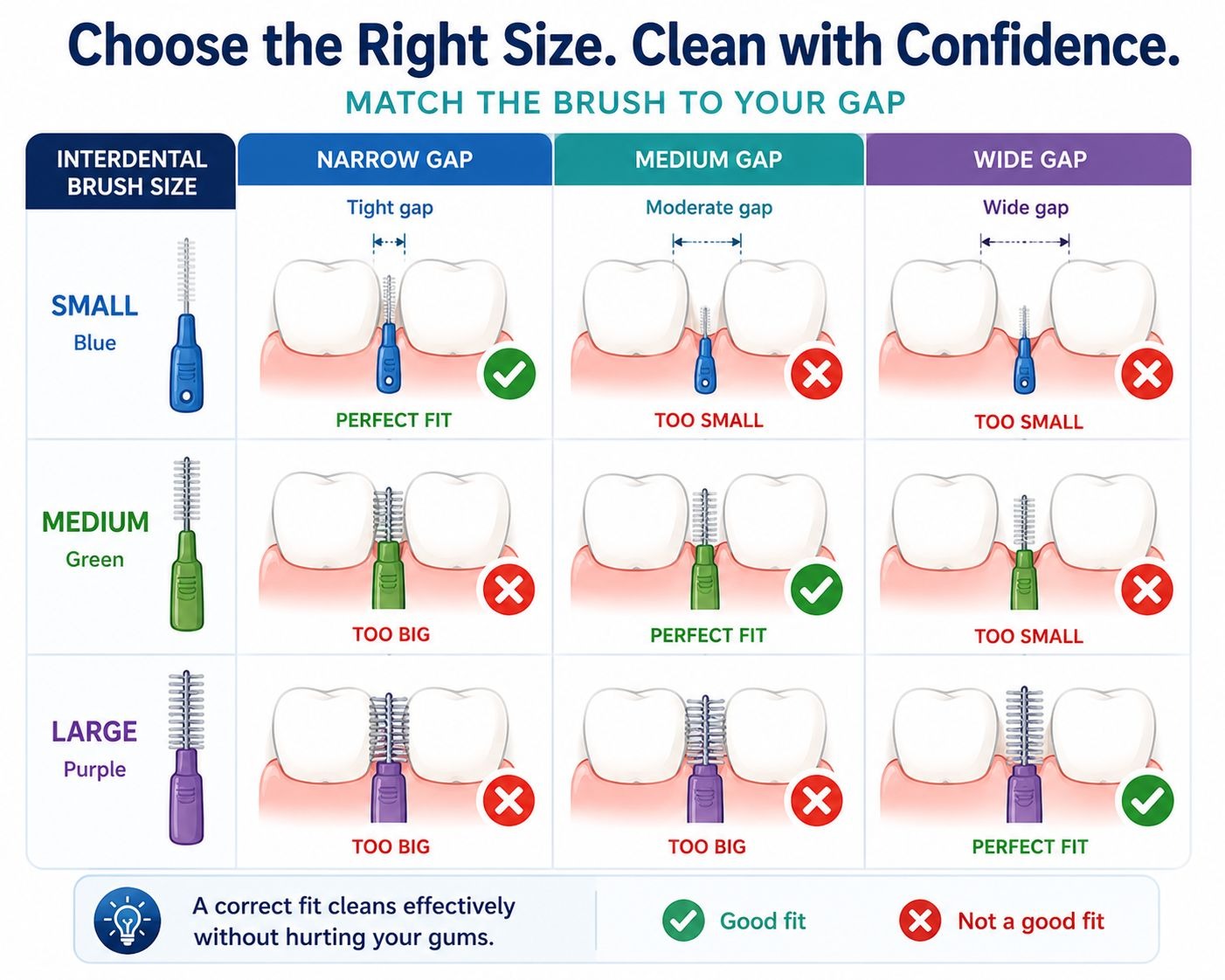
Insert the brush gently into the gap without forcing. Move it back and forth a few times, then rinse the bristles. Replace the brush when the bristles bend or fray.
3. Effective Water Flosser Routine
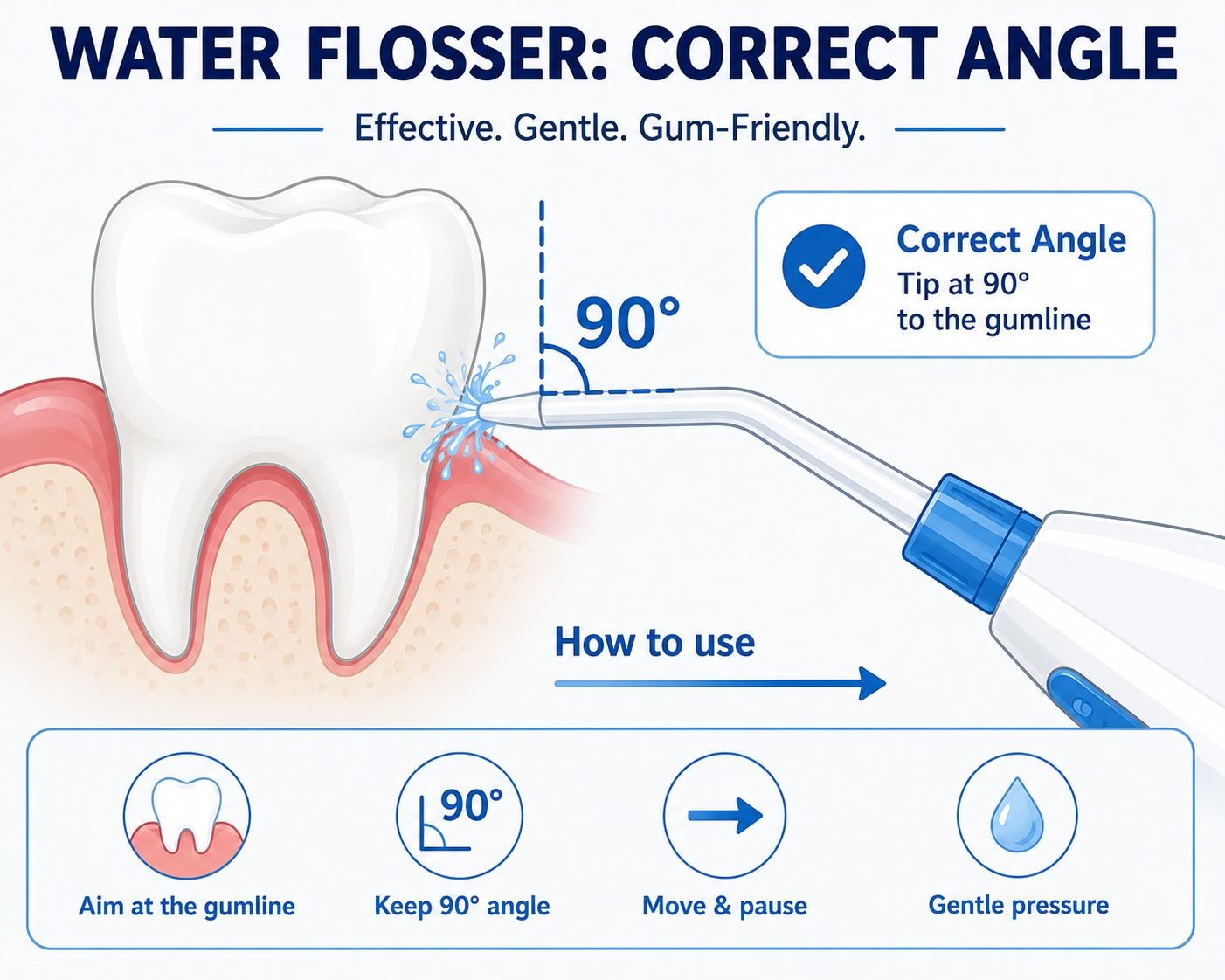
Fill the reservoir with lukewarm water. Start at the lowest pressure setting. Lean over the sink, place the tip at a 90-degree angle to the gumline, and turn the unit on. Trace along the gumline and pause briefly between each tooth. Increase pressure gradually as comfort allows. One to two minutes covers the whole mouth. Empty and clean the reservoir after each use.
Practical Guidance for Everyday Success
- Start with what feels easiest: Choose an interdental cleaning method that fits comfortably into your daily routine.
- Aim for daily use: Consistency matters more than achieving perfect technique from the beginning.
- Use gentle pressure: Avoid aggressive force, which can irritate or injure the gums.
- Look for gradual improvement: Reduced bleeding and a cleaner feeling may become noticeable within 1 to 2 weeks with consistent use.
- Pay attention to warning signs: Persistent bleeding, discomfort, or changes around orthodontic or prosthetic appliances warrant a professional dental review.
- Keep expectations realistic: Interdental cleaning works through steady, consistent improvement rather than an overnight transformation.
- Make it a habit: A simple routine maintained over time can help protect gum health and reduce the likelihood of future dental treatment.
Conclusion
String floss, interdental brushes and water flossers each have clear strengths for different mouths and situations. Clinical comparisons frequently show water flossers performing well for plaque removal from hard-to-reach areas and for reducing gingival bleeding, while string floss remains excellent for tight contacts and interdental brushes suit wider spaces. The deciding factor is daily consistency. Patients who choose a comfortable method or a simple combination and use it every day protect their gums and reduce long-term risk of decay and inflammation.
A short conversation with a dental professional at Radiant Smiles Dental Clinic can confirm the most suitable approach for an individual mouth and help refine technique for lasting results.
Frequently Asked Questions
1. Is a water flosser better than string floss for plaque removal?
Many randomised trials and a systematic review found water flossers more effective than string floss for overall and interproximal plaque reduction, especially in areas that are hard to reach. String floss still excels at scraping tight contact points. The better choice is the one used consistently.
2. Are interdental brushes better than floss for braces?
Interdental brushes are often preferred around braces because the bristles clean under and around wires more easily than string. Water flossers also work well with orthodontic appliances and can be gentler for some patients.
3. Can water flossers damage gums or teeth?
When used at appropriate pressure settings, water flossers are generally gentler than repeated mechanical scraping. Adjustable pressure allows users to start low and increase gradually. Quality devices do not harm healthy enamel or soft tissue when used as directed.
4. Should someone use both a water flosser and interdental brushes?
Yes, many people benefit from a combined routine: interdental brushes for wider gaps or specific problem spots and a water flosser for comprehensive flushing and gumline care. A dental professional can help tailor the combination.
5. How often should interdental cleaning be done?
Daily interdental cleaning is recommended for most adults. Consistency matters more than the specific tool. Patients who find one method easier are more likely to maintain the habit long term.
Dr. Srishti Parekh
BDS, MDS (Periodontology & Implantology), Fellow in TMD, Orofacial Pain & Sleep Medicine — Periodontist & Implantologist
Dr. Srishti Parekh obtained both her Bachelor in Dental Surgery and Master in Dental Surgery in Periodontology and Implantology from the prestigious Maharashtra University of Health Sciences (MUHS). She has received her Fellowship in TMD, Orofacial Pain and Sleep Medicine from Roseman University of Health Sciences (USA).
She is a Life member of the Indian Dental Association, the Indian Academy of Aesthetic & Cosmetic Dentistry, the Indian Society of Oral Implantologists, and the Indian Society of Periodontology.
Dr. Srishti strongly believes in constantly updating her knowledge and takes great pride in staying up-to-date with the latest in dental techniques, materials, and technology in order to provide the highest quality care. She has attended a number of courses such as Enhanced Course in Aesthetic Dentistry, A to Z of Smile Design, Complete Implant Prosthodontics, and Surgical Extravaganza — Hard and Soft Tissue Augmentation Procedures, among many others, and continues to stay active in furthering her professional education.
Book an Appointment with Dr. Srishti Parekh