


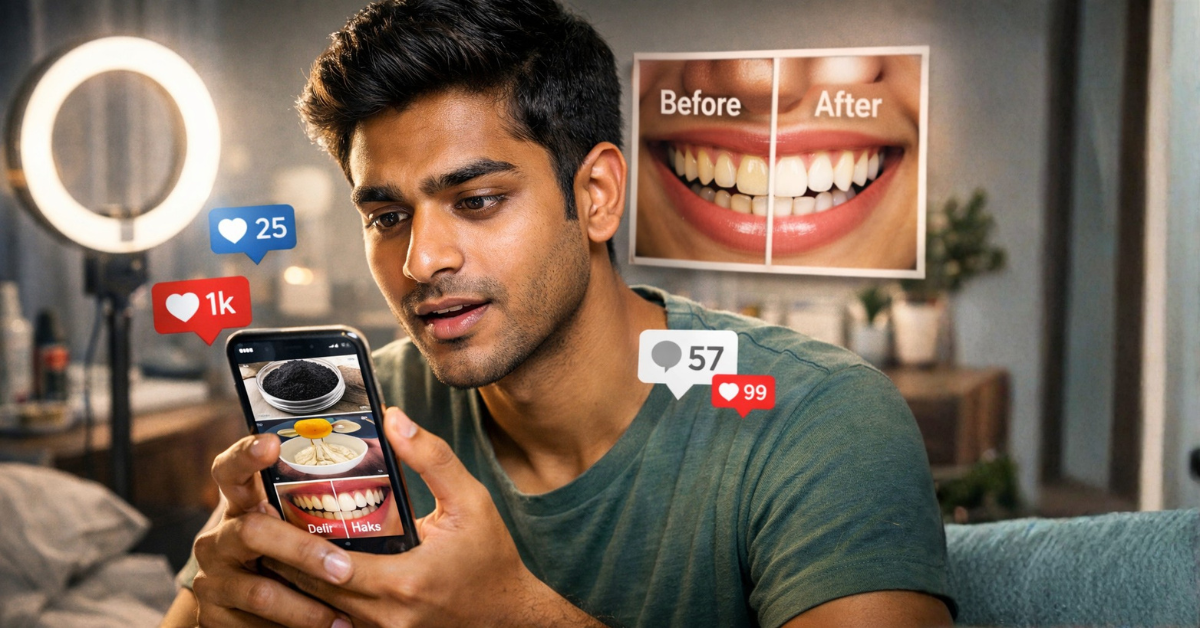
Viral Dental Trends on Social Media: Do They Actually Work or Are They Just Hype?

“So I’m sure everybody on social media has heard about the purple toothpaste.”
That line has become common in everyday consultations. Teenagers, college students, and even parents now walk in with screenshots, reels, and trending hacks, asking one simple question:
Do these dental trends actually work?
The digital influence is undeniable. Over 80 percent of Indian internet users consume health related content through platforms like Instagram and YouTube. At the same time, cosmetic dentistry searches in India have risen steadily over the past five years, with growing queries around teeth whitening TikTok trends India and other viral hacks.
The problem is not curiosity. The problem is credibility.
Many viral dental trends promoted on social media look convincing in short videos. They promise instant whitening, pain free straightening, or quick fixes using household ingredients. But visual appeal does not equal scientific validity.
This article offers a clear, evidence based breakdown of what works, what does not, and what may actually harm your smile.
Why Social Media Dental Hacks Go Viral
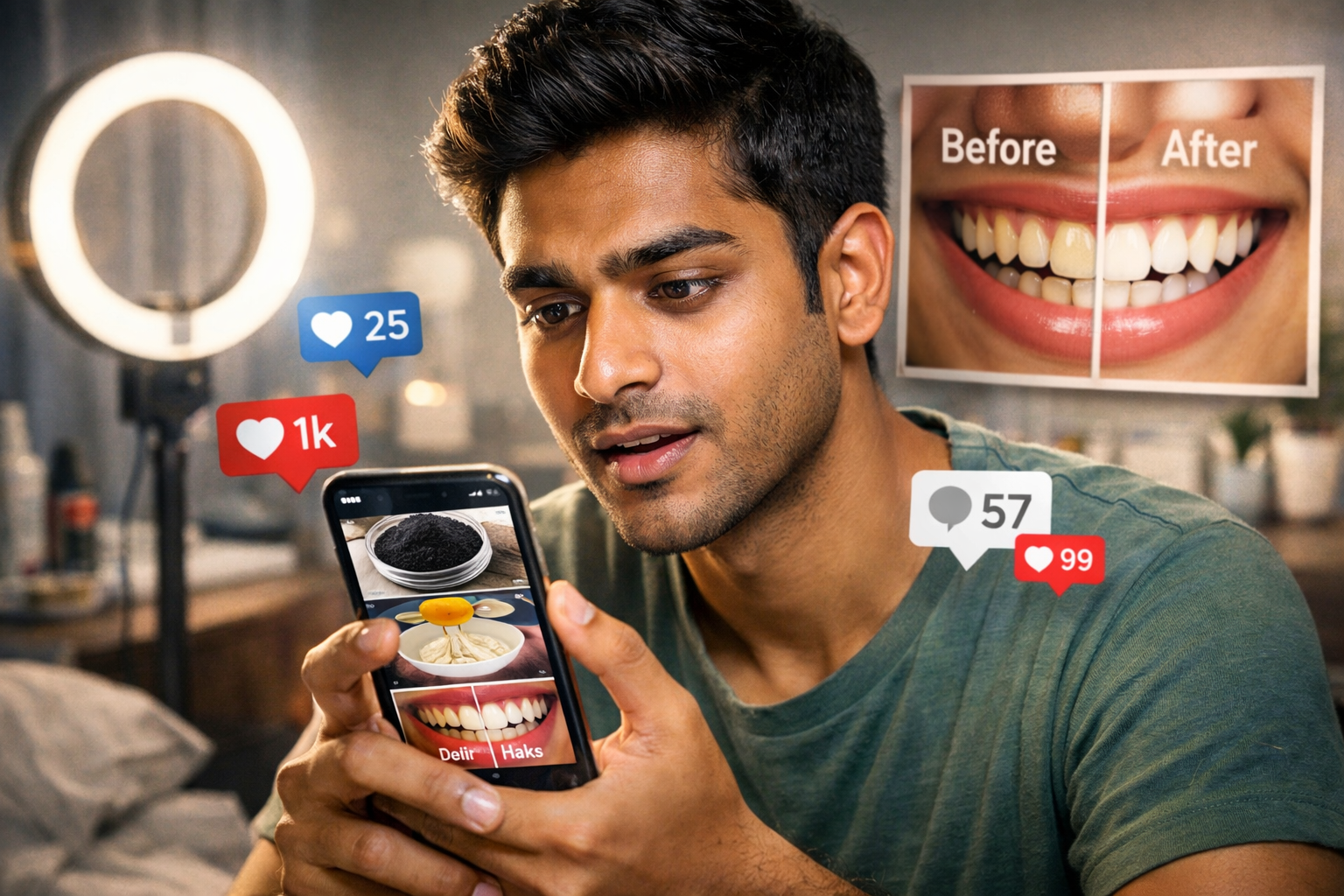
Social media dental hacks spread quickly because they align perfectly with instant gratification culture. Before and after videos show dramatic changes in seconds. Thirty second transformations make complex dental procedures appear simple. DIY solutions feel accessible and affordable, giving the impression that professional care can be replaced with a quick home remedy.
Emotional factors also drive this trend. Smile insecurity is common. Peer comparison, wedding preparation, interviews, and social events increase pressure to look flawless. When confidence feels linked to appearance, people naturally look for fast solutions.
The real risk arises when anecdotal online advice replaces professional evaluation. Short videos rarely explain enamel biology, gum health, or long term consequences. Teeth are living structures, not filters. What looks harmless on screen can lead to enamel damage, sensitivity, or worsening of underlying issues.
Let’s examine the most common trends patients now bring into consultation.
Purple Toothpaste: The “Makeup for Teeth” Trend
Let us address the most common question first.
“Now, does it really whiten your teeth?”
The answer is no.
Purple toothpaste works like a color corrector in makeup. Yellow tones are temporarily neutralized by purple pigment, creating the appearance of brighter teeth.
In simple terms, it is makeup for your teeth.
The effect is short lived. It may help before a photoshoot or special event, but it does not remove stains or change enamel color.
A college student recently used it before a wedding function. The photos looked brighter, but the effect faded the next day once the pigment washed away.
So when patients influenced by viral dental trends social media platforms promote ask, do dental hacks actually work, the answer depends on expectations. For temporary brightness, yes. For real whitening, no.
DIY Whitening with Charcoal and Peroxide
Another category widely promoted under viral dental trends social media platforms promote is DIY whitening at home.
Activated Charcoal
Charcoal is often marketed as natural and powerful. But natural does not automatically mean safe.
Charcoal particles are abrasive. With repeated use, they can wear down enamel, the protective outer layer of the tooth. Once enamel thinns, sensitivity increases and the risk of cavities rises.
Clinically, early enamel erosion is increasingly seen in young adults who brush aggressively with charcoal products. The irony is clear. As enamel thins, the yellow dentin underneath becomes more visible, making teeth appear darker over time.
Many charcoal toothpastes also lack fluoride, which is essential for strengthening enamel and preventing decay.
Hydrogen Peroxide at Home
Peroxide is a proven whitening agent when used under controlled conditions. In professional settings, concentration and exposure time are carefully regulated.
Using high concentration peroxide at home without supervision can irritate gums, increase sensitivity, and damage enamel.
For individuals seeking real whitening, professional assessment offers a safer and more predictable outcome.
Oil Pulling: Ancient Practice, Modern Confusion
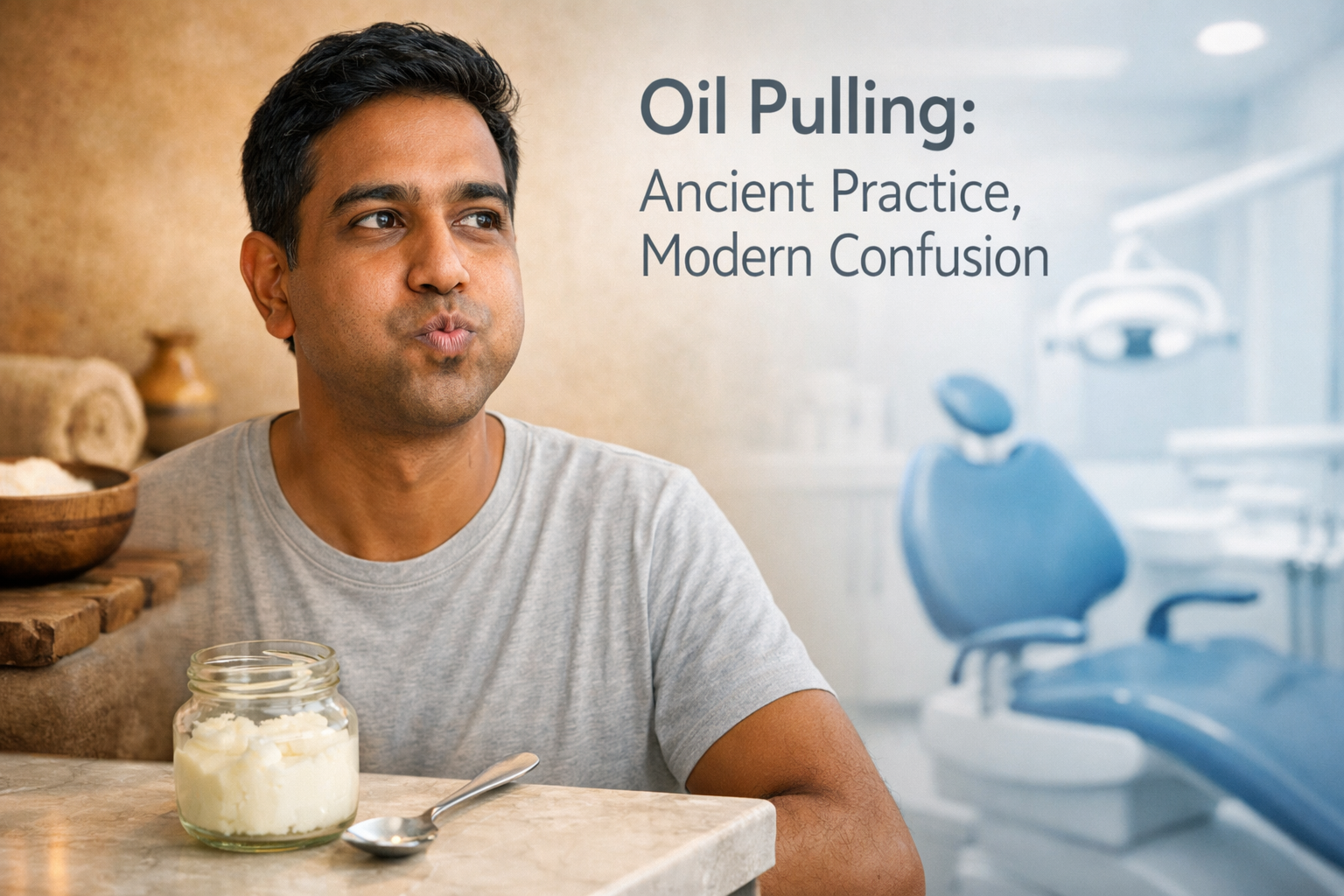
Oil pulling, commonly done with coconut oil, is often promoted online as a detox solution for oral health.
Research suggests it may slightly reduce certain oral bacteria. However, it does not replace brushing with fluoride toothpaste or daily flossing.
Some parents ask whether oil pulling can substitute brushing for their child. The answer is no.
Plaque is a sticky biofilm that adheres firmly to tooth surfaces. It requires mechanical removal with a toothbrush and floss. Swishing oil cannot effectively clean between teeth or along the gumline.
Oil pulling is not harmful when practiced occasionally. It simply should not replace evidence based oral care routines.
Electric Toothbrushes: Worth It?
Unlike many trends, electric toothbrushes are supported by evidence.
Many patients, especially teenagers with braces or elderly individuals with limited hand movement, achieve better plaque control with electric brushes.
However, the brush does not replace technique. Brushing twice daily for two minutes with proper angulation still matters most.
If used correctly, electric brushes can improve gum health and reduce plaque more effectively than manual brushes for many users.
Water Flossers vs String Floss
Water flossers are helpful, particularly for patients with braces, crowns, bridges, or gum sensitivity. The stream of water helps flush out debris from difficult areas.
However, they do not fully replace traditional floss. String floss physically scrapes plaque from between teeth and along the gumline, which is essential for proper cleaning.
Water flossers work best as a supplement, not a substitute.
When patients ask, do dental hacks actually work, the answer is simple: some tools add value, but they cannot replace the basics.
Lemon Water for Whitening: A Dangerous Myth
One of the more concerning teeth whitening trends circulating online is using lemon water for whitening.
Lemon is highly acidic. Acid weakens enamel through demineralization. As enamel thinns, the yellow dentin underneath becomes more visible.
This may create a temporary illusion of brightness while actually causing damage.
Over time, repeated acid exposure can lead to:
• Tooth sensitivity
• Increased cavity risk
• Surface erosion
If lemon water is enjoyed for general health, have it with meals and rinse with plain water afterward. It should never be used as a whitening method.
Cosmetic Trends: Tooth Gems, Veneers, and Gum Contouring
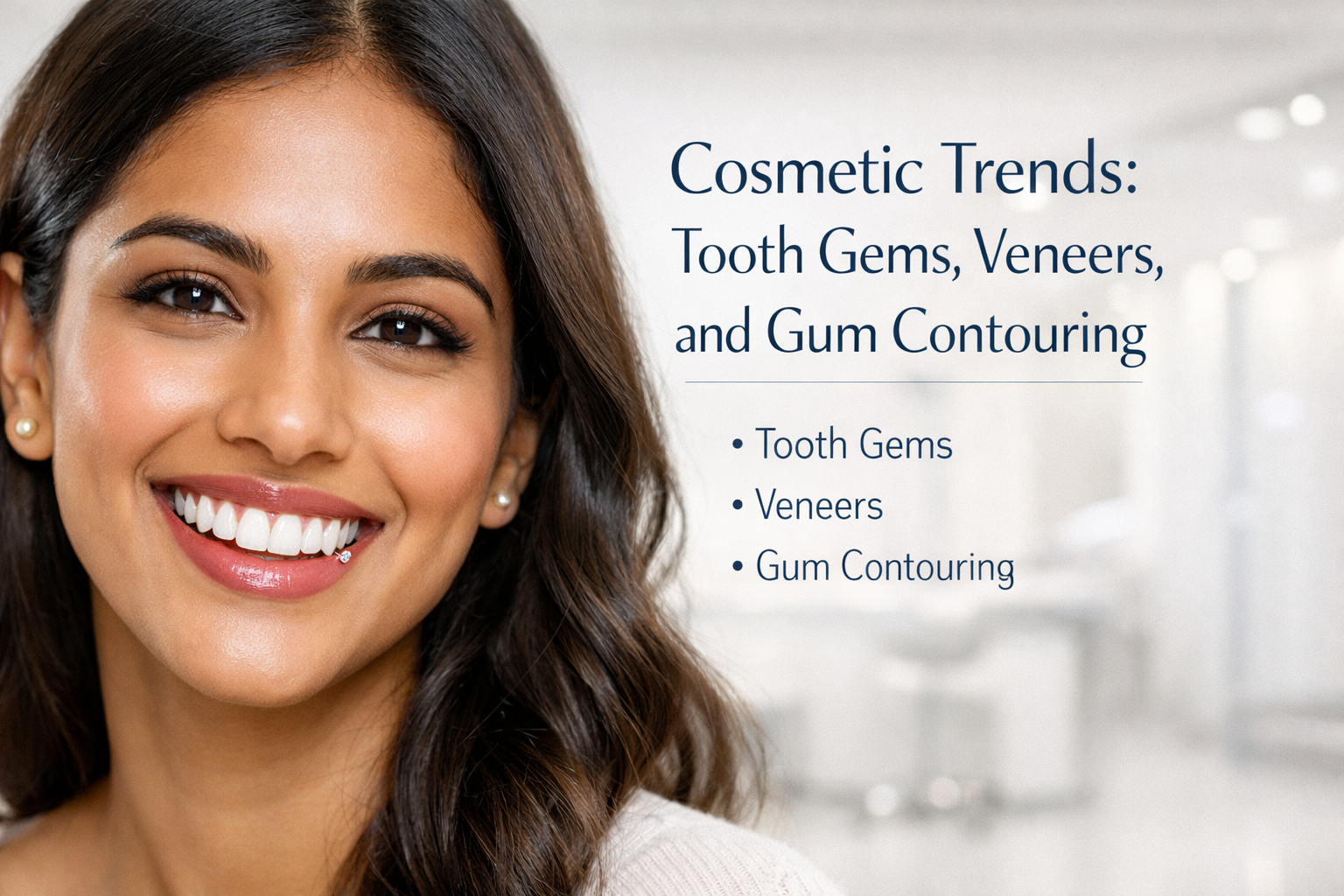
Cosmetic dental trends are gaining attention across social media platforms. Some are harmless when done correctly. Others require serious consideration.
Tooth Gems
Tooth gems may look trendy, but they can trap plaque around the bonded area. Poor placement or improper removal can damage enamel.
Teenagers are especially drawn to this trend. Professional placement and parental supervision are essential to reduce risks.
Veneers
Veneers are a legitimate cosmetic treatment when indicated properly. They can transform a smile in a predictable and controlled way.
However, veneers require permanent enamel modification. They are not a temporary or casual cosmetic accessory. A complete smile assessment is necessary before making this decision.
Gum Contouring
Laser gum contouring can effectively improve a gummy smile. When performed after thorough evaluation, it can safely enhance facial aesthetics.
The common thread across all these procedures is simple. Professional diagnosis matters more than influencer advice.
Three Simple Tips to Prevent Tooth Discoloration
Instead of chasing trends, prevention delivers better and longer lasting results.
Tip 1: Use a Straw
When drinking aerated beverages, cold coffee, or iced tea, use a straw. This limits direct contact with enamel and helps reduce surface staining.
Tip 2: Rinse After Meals
Many Indian foods contain turmeric and strong pigments that can stain over time. Rinsing or sipping water after meals helps wash away color deposits and neutralize acids.
Tip 3: Schedule Professional Cleaning Early
Light stains are easier to remove. Early scaling and polishing are more comfortable, quicker, and more effective than waiting until discoloration becomes heavy.
Prevention is always simpler and more cost effective than correction.
Social Media Dental Myths vs Facts
Social media has increased awareness about oral health, which is a positive shift. At the same time, it has amplified misinformation.
Not every trending hack is harmful. Some tools, such as electric toothbrushes and water flossers, can genuinely improve oral hygiene when used correctly.
However, whitening shortcuts, acidic home remedies, and unsupervised treatments carry real risks to enamel and gum health.
The objective is not to dismiss curiosity, but to channel it safely through evidence based guidance and professional evaluation.
Final Thoughts
Viral dental trends social media platforms promote are not always harmful, but they are not always accurate either.
Healthy smiles rely on fundamentals: brushing twice daily with fluoride toothpaste, regular flossing, a balanced diet, and professional checkups.
If you are unsure about a trend or concerned about staining, sensitivity, or cosmetic treatments, do not experiment blindly.
At Radiant Smiles Dental Clinic, personalized evaluations help determine what your teeth truly need. For any questions about online trends, schedule a consultation to receive clear, evidence-based guidance before making decisions.
Protect your smile the right way. Book a consultation at Radiant Smiles Dental Clinic and get expert, evidence-based guidance today.
Want to see this explained visually? Watch the Instagram reels below:
https://www.instagram.com/reel/DLcng1OoDB_/?igsh=MTlvMnpwYXAwcTM4MA==
https://www.instagram.com/reel/DF-siMDIcda/?igsh=MWRicm4yYzN3aThuNQ==
Frequently Asked Questions
1. Do dental hacks actually work?
Some tools like electric toothbrushes and water flossers can improve oral hygiene when used properly. Many viral whitening hacks, however, lack scientific support and may harm enamel.
2. Are teeth whitening TikTok trends India safe?
Most DIY whitening trends are not clinically supervised. Misuse of charcoal or peroxide can lead to enamel damage and sensitivity.
3. Is purple toothpaste a real whitening solution?
No. It temporarily masks yellow tones through color correction. It does not remove stains or permanently lighten teeth.
4. Can oil pulling replace brushing and flossing?
No. It may reduce bacteria slightly but cannot remove plaque effectively. Brushing with fluoride toothpaste remains essential.
5. How can parents protect teenagers from harmful trends?
Open conversations, monitor products used, and schedule dental consultations before trying cosmetic procedures. Professional guidance prevents long-term damage.
Dr. Srishti
BDS — Dental Surgeon
[Add Dr. Srishti's bio here — qualifications, experience and areas of focus. Edit this text in blog-authors.php.]
Book an Appointment with Dr. Srishti