


Tooth Cap Price in Mumbai: Zirconia vs Metal vs PFM

Quick Answer
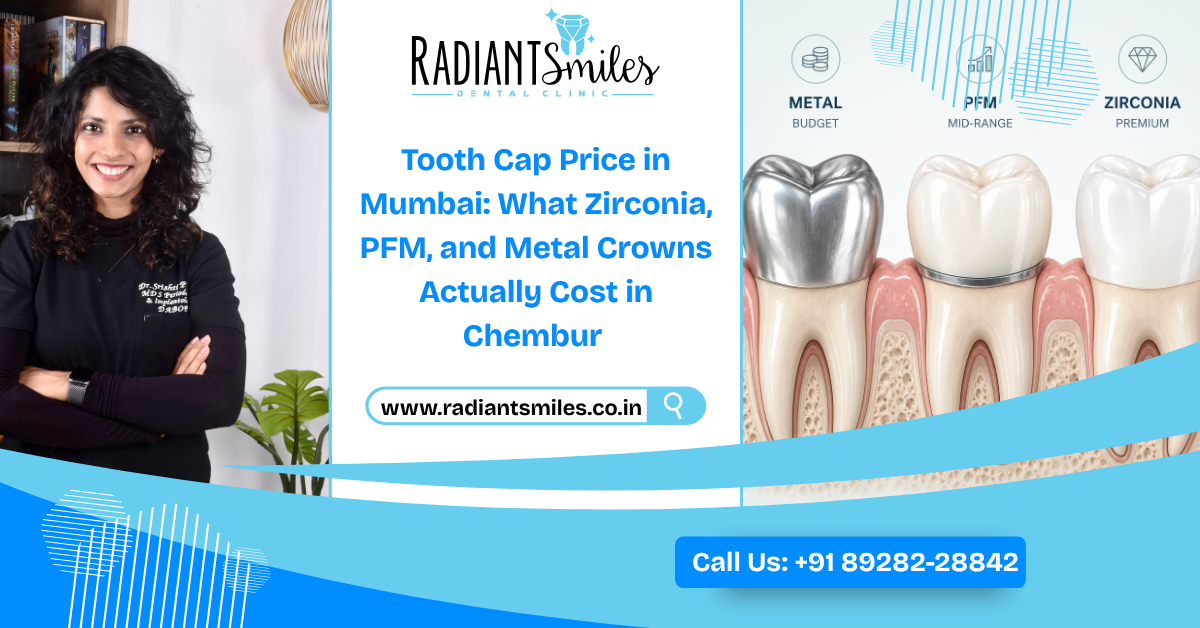
A tooth cap, also known as a dental crown, restores a damaged or root-canal-treated tooth by covering it completely, and pricing in Mumbai depends heavily on material. Metal crowns are the most affordable option, PFM sits in the middle, and zirconia costs more upfront but tends to last longer and look far more natural.
- Metal crowns: most budget-friendly, ideal for back teeth, not suited for visible teeth
- PFM crowns: mid-range, natural coating over a metal base, can show a grey line at the gum over time
- Zirconia crowns: premium, metal-free, most natural-looking, longest lasting of the three
- Tooth cap and dental crown are the same thing, just different names for the same procedure
- A crown is usually completed over two visits, roughly a week apart
Introduction
A tooth that suddenly cracks while eating or a cavity that has weakened a molar beyond a simple filling often leads to the same recommendation from the dentist: a dental crown, commonly known as a tooth cap. The next question is almost always about cost, and the answers can vary widely. One clinic may quote ₹4,000, while another may suggest ₹18,000 or more for what appears to be the same treatment.
The reason for this price difference is that not all dental crowns are created equal. The material used, the location of the tooth, the complexity of the procedure, laboratory charges, and the technology involved can all significantly influence the final cost.
With dental decay affecting a large portion of the Indian population, many people eventually need a crown to restore the strength, function, and appearance of a damaged tooth. Yet there is often little clarity about which type of crown is actually necessary and whether paying more always means getting a better outcome.
This guide explains the cost of tooth caps in Chembur and Mumbai in 2026, compares different crown materials, and helps patients understand which option may be most suitable for their dental needs and budget.
What Is a Dental Crown (Tooth Cap) and When Is It Needed?
A dental crown is a custom-made cover, shaped like a tooth, that fits over a damaged or weakened tooth to restore its strength and function. Most patients ask for it by the more familiar name, tooth cap, and both terms describe the exact same procedure. A crown typically gets recommended in three situations: protecting a tooth after root canal treatment, rebuilding a tooth with a cavity too large for a filling to handle, or anchoring a bridge over a gap left by a missing tooth.
Tooth Cap Price in Mumbai by Material
Metal Crowns
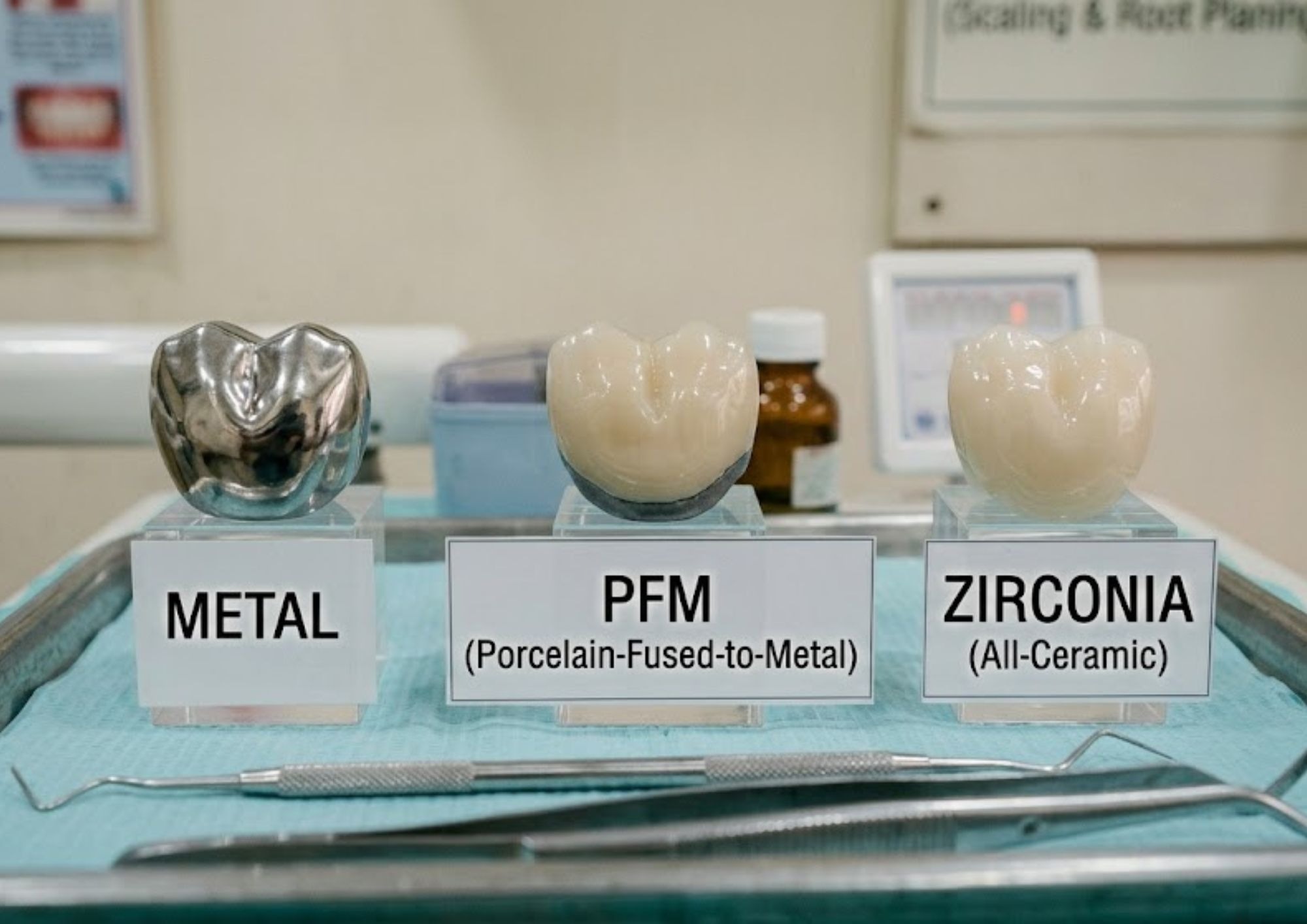
Metal crowns are the most economical option for restoring a tooth, and they hold up remarkably well under everyday chewing pressure. They're made from a durable metal alloy, require the least amount of natural tooth structure to be shaved down during preparation, and can comfortably last well over a decade. The catch is purely cosmetic: the metallic shade makes them a poor fit for any tooth visible when talking or smiling, which is why they get reserved almost exclusively for back molars.
PFM (Porcelain-Fused-to-Metal) Crowns
PFM crowns bring metal and porcelain together, a metal frame underneath for strength, topped with a tooth-colored porcelain layer for a more natural look. They sit right in the middle on cost and are a common choice for patients who want something more presentable than metal without stretching to zirconia pricing. The tradeoff shows up years later rather than immediately: as gums naturally recede with age, that metal base underneath can peek through as a thin grey line at the gumline, something no patient wants to notice in a mirror.
Zirconia Crowns
Zirconia crowns are milled from a single block of high-strength ceramic with no metal core at all, which is exactly why they don't develop that grey line problem down the road. Light passes through zirconia in a way that mimics how it passes through natural enamel, giving these crowns a lifelike, almost translucent quality that's hard to replicate with metal underneath. They cost more at the outset, but for a front tooth, or really any tooth that shows when smiling, most dentists lean toward zirconia as the default recommendation rather than the upgrade.
Material | Best For | Typical Lifespan | Appearance |
Metal Crowns | Back molars where chewing forces are highest | 15 to 20 years | Metallic appearance, generally not preferred for visible teeth |
Porcelain Fused to Metal (PFM) | Back teeth and budget-conscious front tooth restorations | 8 to 12 years | Natural-looking initially, but may develop a grey line near the gums over time |
Zirconia Crowns | Front and back teeth, especially visible smile zones | 15 to 20+ years | Highly natural, tooth-colored, and translucent appearance |
For a closer look at what each restoration option involves, the crowns, bridges, and onlays page covers the full range of options available at the clinic.
Why the Same Crown Gets Quoted Differently Across Mumbai Clinics
Two quotes for what sounds like the identical crown can differ by thousands of rupees, and the reason usually has nothing to do with one dentist overcharging. It comes down to what's actually bundled into the number. A complete, honest quote should account for the consultation and X-ray, the digital scan or physical impression, the temporary crown worn while the permanent one is being made, the lab fabrication itself, and the final fitting with bite adjustment. When a quote looks unusually low, it's worth asking directly whether all of these are included, or whether some will show up as separate line items later.
PFM vs Zirconia, Which One Actually Makes Sense?
The honest answer depends on which tooth is being treated and how much the appearance matters day to day. Structurally, the two materials are built completely differently. PFM stacks a porcelain layer over a metal alloy frame, which means there's a physical junction between two different materials, and that junction is exactly where chipping tends to start over time. Zirconia has no such junction since it's carved from one solid ceramic block from start to finish.
There's also the matter of staining. Between tea, coffee, and turmeric-heavy cooking being daily habits in most Indian households, porcelain crowns near the metal margin tend to pick up discoloration faster than a solid zirconia surface does. None of this makes PFM a bad option outright. It remains a perfectly reasonable choice for a back molar where nobody's looking too closely. For a front tooth, though, the case for zirconia gets stronger the longer someone plans to keep smiling in photos without worrying about a grey shadow at the gum.
What Happens During the Crown Procedure
The process is more straightforward than most patients expect, and it typically unfolds over two visits.
- Tooth preparation: The tooth is gently reshaped to make room for the crown. Local anesthesia is used if the tooth still has live nerve tissue, though many prepared teeth need little to no numbing at all.
- Impression or digital scan: A precise scan or mold captures the exact shape of the prepared tooth.
- Temporary crown: A short-term crown is placed to protect the tooth while the permanent one is being made.
- Lab fabrication: The permanent crown is custom-built to match the surrounding teeth, usually taking a few days.
- Final fitting: The permanent crown is checked for fit and bite, then cemented into place.
Patients coming in after a root canal often have more questions about how crowns and bridges work together for a full restoration. The complete guide to dental crowns and bridges in Mumbai goes deeper into that side of treatment planning.
How Long Does a Tooth Cap Actually Last?
Metal crowns tend to go the distance, often 15 to 20 years with reasonable care. PFM sits lower, typically 8 to 12 years, mainly because the porcelain layer is the first thing to wear or chip. Zirconia matches or beats metal on longevity, commonly running 15 to 20 years or more. Worth factoring in here: a PFM crown replaced once mid-way through its life often ends up costing close to what zirconia would have from the start, once a second lab fee and a second appointment get added to the math.
Ready to find out which crown fits a specific tooth and budget? A quick consultation settles that far faster than comparing quotes online.
Caring for a New Crown
- Avoid biting into very hard foods like ice or hard candy, especially on a front crown
- Skip sticky foods like caramel or chikki for the first few days after cementation, since the suction can loosen a fresh crown before it's fully settled
- Brush and floss around the crown margin just as carefully as natural teeth
- Keep up with the six-monthly dental check-up to catch any early gum irritation near the crown
- Mention any lingering sensitivity to biting pressure at the follow-up visit rather than waiting it out indefinitely
Getting the Right Crown for the Right Tooth

Choosing between metal, PFM, and zirconia isn't really about picking the "best" material in the abstract. It's about matching the crown to the tooth, the budget, and how much the appearance matters for that particular spot in the mouth. A back molar rarely needs the same investment as a front tooth that shows every time someone smiles. Getting that assessment right the first time also avoids the far more expensive scenario of redoing the work a few years later.
Booking a consultation at the Chembur clinic is the simplest way to get a clear, honest recommendation and an exact cost estimate before committing to anything.
Frequently Asked Questions
1. Is a tooth cap the same as a dental crown?
Yes. Tooth cap is simply the everyday term patients use, while dental crown is the clinical name. Both refer to the same custom-made cover placed over a damaged or weakened tooth.
2. Which crown is best for front teeth?
Zirconia is generally the preferred choice for front teeth since it's metal-free, allows light through much like natural enamel, and won't develop the grey gumline that PFM crowns can show over time.
3. Does getting a dental crown hurt?
The tooth preparation stage is done under local anesthesia when needed, so there's little to no discomfort during the procedure. Mild sensitivity for a few days after the final crown is cemented is normal and settles on its own.
4. How long does a crown take from start to finish?
Most crowns take two visits spaced about a week apart. The first covers tooth preparation and the scan, the second is for fitting and cementing the finished crown once the lab has completed it.
5. Can a crown be redone if it doesn't fit well or falls off?
Yes. If a crown feels off in terms of bite or comfort, or comes loose, it can be adjusted or recemented. A poorly fitting crown should never simply be left as is, since it can lead to further damage to the tooth underneath.
Dr. Tanvi Patil
BDS, MDS — Prosthodontist
Dr. Tanvi Patil is a highly skilled and compassionate Prosthodontist with advanced expertise in prosthetic dentistry. After completing her Bachelor of Dental Surgery (BDS), she pursued a Master of Dental Surgery (MDS) specialising in the design, restoration, and replacement of teeth. Her clinical practice is driven by precision, aesthetics, and patient-centric care.
With extensive experience in crowns, dentures, and dental implants, Dr. Patil is known for creating natural-looking, functional restorations that enhance both oral health and confidence. Her areas of expertise include fixed and removable dentures, single and full-mouth implant rehabilitation, crown and bridge restorations, smile design, and management of complex restorative cases.
Book an Appointment with Dr. Tanvi Patil