



Tongue Tie in Babies and Toddlers: Symptoms, Treatment and Frenectomy

Quick Answer
Tongue tie, or ankyloglossia, occurs when the lingual frenulum beneath the tongue restricts tongue movement. It does not always cause problems or require treatment. If restricted movement contributes to persistent breastfeeding or other functional difficulties, a trained healthcare professional may consider tongue tie release, also called frenotomy or frenectomy.
• Tongue tie does not always affect feeding.
• A tight looking frenulum does not automatically require surgery.
• Breastfeeding difficulties should be assessed before treatment.
• Frenotomy is a short procedure that releases restrictive tissue.
• Treatment should focus on function and symptoms, not appearance alone.
What Is Tongue Tie in Babies?
Tongue tie, medically called ankyloglossia, is a condition in which the lingual frenulum, the band of tissue connecting the underside of the tongue to the floor of the mouth, restricts tongue movement.
Every baby has a lingual frenulum. In some babies, however, the tissue may be unusually short, tight or positioned in a way that limits how freely the tongue can move.
This can become noticeable during breastfeeding because the tongue plays an important role in maintaining an effective latch and transferring milk.
However, tongue tie is not automatically a medical problem.
Some babies have a visible or restrictive frenulum but breastfeed normally, gain weight appropriately and have no difficulty using their tongues. These babies may not need treatment.
An Indian study from Bengaluru reviewed 25,786 babies born between 2007 and 2015 and identified ankyloglossia in 134 infants, or about 0.52%. This large difference from some international estimates illustrates why prevalence figures should be interpreted carefully. Diagnostic methods and definitions have a major influence on the numbers.
What Are the Symptoms of Tongue Tie in Babies?
Tongue tie symptoms in babies are most often noticed during feeding.
Possible signs include:
- Difficulty latching onto the breast
- Repeatedly losing the latch
- Clicking sounds during feeding
- Long or tiring feeds
- Difficulty transferring milk effectively
- Persistent nipple pain for the breastfeeding parent
- Limited tongue movement
- Difficulty lifting or extending the tongue
- A notched or heart shaped tongue when extended
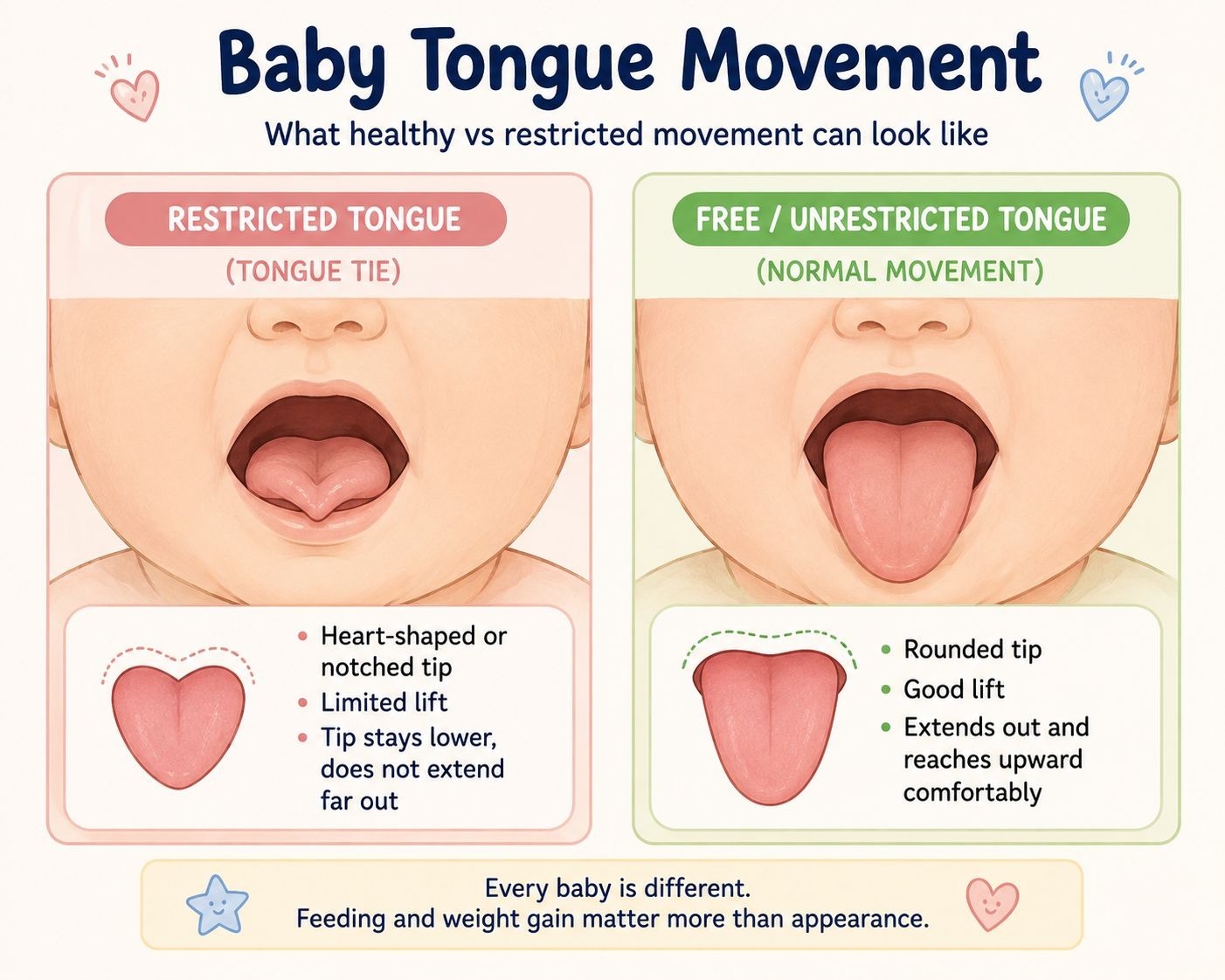
These signs do not prove that tongue tie is the cause.
Breastfeeding difficulties can also result from positioning, latch technique, milk supply, sucking problems and other infant or maternal factors. That is why a complete feeding assessment is important before deciding on tongue tie treatment.
Can Tongue Tie Cause Breastfeeding Problems?
Yes, tongue tie can contribute to breastfeeding problems in some babies, but not every baby with tongue tie will struggle to feed.
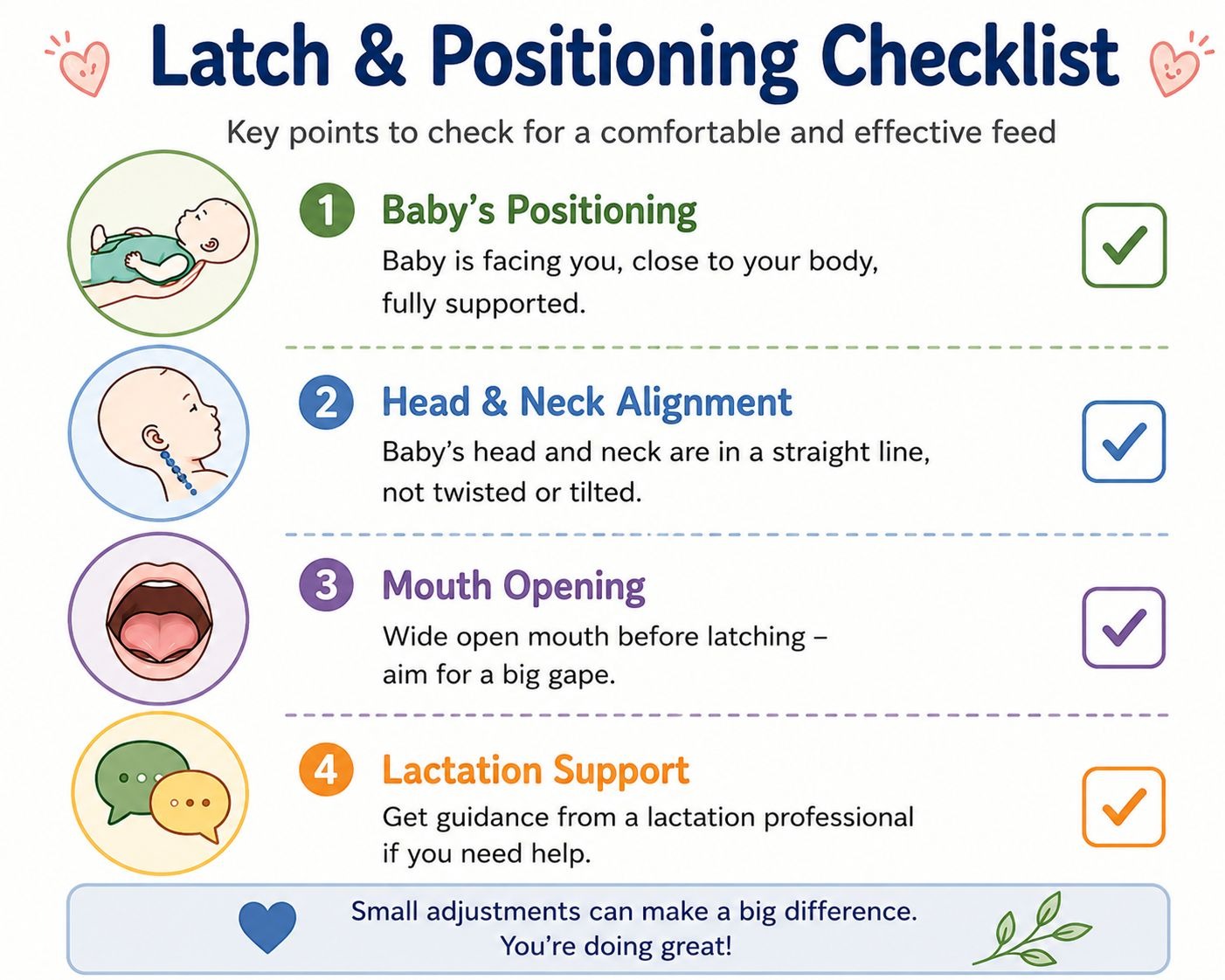
An effective latch requires coordinated movement of the tongue, jaw and mouth. When tongue movement is significantly restricted, a baby may find it difficult to maintain a deep latch or transfer milk efficiently.
For example, a newborn may repeatedly slip off the breast and cause considerable nipple pain during feeding. A lactation consultant may first identify a shallow latch or positioning issue and help correct it.
If feeding improves with these changes, surgery may not be necessary.
If significant problems continue despite appropriate breastfeeding support and restricted tongue movement is found to be contributing, tongue tie release may be considered.
This cautious approach is supported by current evidence. A Cochrane review found that frenotomy can reduce breastfeeding related nipple pain in the short term, while improvements in objectively measured infant feeding have been less consistent. (Cochrane)
Does Every Baby With Tongue Tie Need Treatment?
No. This is one of the most important points for parents to understand.
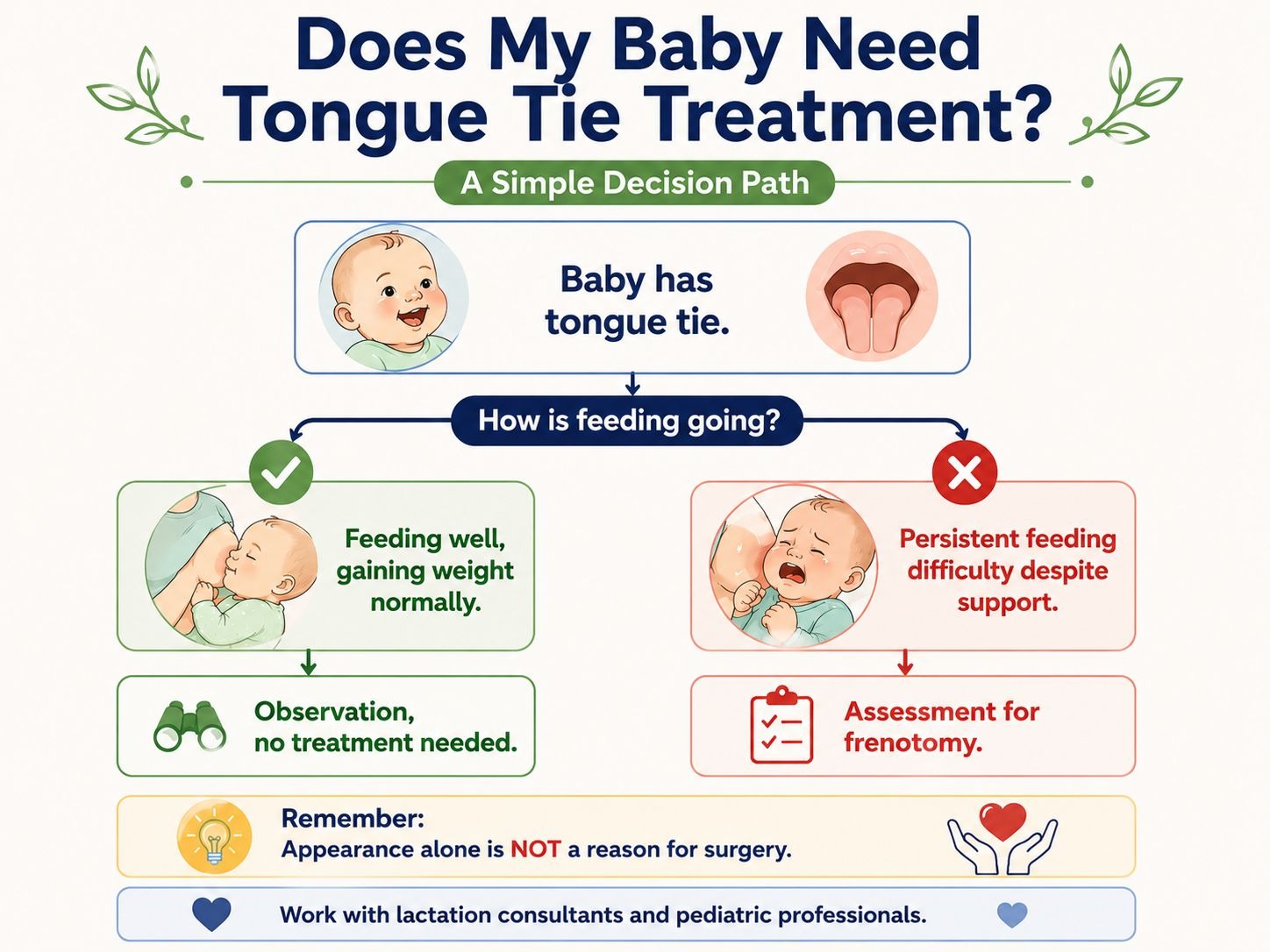
A baby with tongue tie who feeds comfortably, maintains a good latch and grows normally may simply need observation.
Treatment becomes relevant when restricted tongue movement is causing a genuine functional problem.
The appearance of the frenulum alone is not enough reason for surgery.
Parents may see a heart shaped tongue or a prominent band of tissue and become concerned immediately. However, the more useful question is whether the tongue can perform the movements needed for feeding and other normal functions.
The AAP does not recommend frenotomy for infants who are feeding normally or as a preventive treatment for possible future problems. (AAP)
How Is Tongue Tie Diagnosed?
Tongue tie is diagnosed through a physical and functional assessment.
A dental or medical professional may examine:
• The appearance and attachment of the lingual frenulum
• How far the tongue can extend
• Whether the tongue can lift
• Side to side tongue movement
• Sucking and feeding patterns
• Latch quality
• Milk transfer
• Maternal comfort during breastfeeding
• The baby's overall feeding and growth
A lactation consultant may also be involved when breastfeeding is the main concern.
This comprehensive approach is important because not every feeding problem is caused by tongue tie. Treating the frenulum will not solve a difficulty that has another underlying cause.
What Is the Treatment for Tongue Tie?
Treatment depends on whether the tongue tie is causing symptoms.
Observation
If a baby has tongue tie but feeds normally, no treatment may be necessary.
Breastfeeding Support
When feeding is difficult, improving the baby's position and latch may help. Lactation support can be particularly useful before considering surgery.
Tongue Tie Release
If significant feeding problems continue and restricted tongue movement is confirmed as a contributing factor, a healthcare professional may discuss tongue tie release.
This procedure is commonly called a frenotomy. Some professionals also use terms such as frenectomy or lingual frenectomy.
The terminology can vary, so parents should ask exactly what procedure is being recommended and why.
What Is a Frenectomy for Babies?
A frenectomy or frenotomy releases the restrictive tissue beneath the tongue.
In an infant, the procedure is generally very short. A trained healthcare professional releases the restrictive lingual frenulum, allowing the tongue to move more freely.
Traditional frenotomy is commonly performed using sterile scissors. Some providers also use laser equipment.
The goal is not simply to remove tissue. The purpose is to improve tongue function when the restriction is genuinely causing a problem.
This is why the decision to perform the procedure deserves more attention than the procedure itself.
Is Frenectomy Painful for Babies?
Infant frenotomy is generally a quick procedure and is usually well tolerated, but some discomfort can occur.
The healthcare professional will explain appropriate comfort measures. Feeding soon after the procedure is commonly recommended because it can comfort the baby and may also help control minor bleeding.
Parents should receive clear instructions about what to expect immediately after treatment and what signs would require professional attention.
Is Laser Frenectomy Better Than Scissors?
Laser tongue tie treatment has become increasingly popular, but lasers are not automatically better.
Current pediatric guidance does not establish laser frenotomy as superior to conventional scissor release for young infants. (AAP)
The choice of technique should depend on the child's clinical situation and the training and experience of the professional performing the procedure.
Parents should be cautious about claims that one method guarantees better feeding, less pain or faster healing.
A more useful question is:
Why is this particular technique appropriate for the child?
What Happens After Tongue Tie Release?
Most babies can feed soon after frenotomy.
Some parents notice improved comfort or feeding relatively quickly. For others, improvement takes time because the baby may need to adjust to using the tongue differently.
Follow up can help assess feeding, healing and any concerns after treatment.
Parents should follow the specific aftercare instructions provided by the treating professional.
Are Stretches Needed After Frenectomy?
Parents may receive different advice about stretching or massaging the wound.
The AAP does not support routinely reopening or stretching the wound after infant frenotomy to prevent reattachment because evidence for this practice is lacking and it may contribute to oral aversion. (AAP)
Post procedure care should therefore be guided by the treating professional rather than copied from online videos or social media.
Can Tongue Tie Affect Speech in Toddlers?
Speech is a common concern when parents notice tongue tie in a toddler.
Tongue tie does not cause speech delay.
Some children with restricted tongue movement may have difficulty producing certain sounds, but speech development and pronunciation are influenced by many factors.
A toddler with speech concerns should therefore be assessed by an appropriate speech language professional before tongue tie is blamed for the problem.
Current evidence does not support performing frenotomy on babies simply to prevent future speech problems. (AAP)
If a toddler has both restricted tongue movement and a genuine functional concern, the dental and speech assessments can be considered together.
Frenotomy vs Frenectomy vs Frenuloplasty
Procedure | What it involves | Common use |
Frenotomy | Releases the restrictive frenulum | Commonly used for infant tongue tie |
Frenectomy | Releases or removes frenulum tissue | Sometimes used interchangeably with frenotomy |
Frenuloplasty | More extensive release and repair | May be considered when additional repair is required |
The terminology can vary between professionals. Parents should focus on understanding the recommended procedure, its purpose and expected outcome.
What Are the Risks of Tongue Tie Surgery?
Tongue tie release is generally considered a minor procedure, but complications are possible.
Potential risks include:
• Bleeding
• Infection
• Scarring
• Feeding aversion
• Injury to nearby oral structures
• Reattachment of the tissue
Parents should receive a clear explanation of the expected benefits and possible risks before treatment.
A good consultation should answer three basic questions:
What problem is being treated?
What improvement is realistically expected?
What are the alternatives?
What Should Parents Ask Before a Frenectomy?
Parents considering tongue tie surgery can ask:
- What specific problem is the tongue tie causing?
- Could another issue be responsible for the feeding difficulty?
- Has the baby's latch been assessed?
- Has breastfeeding support been tried?
- Is observation a reasonable option?
- What benefit is expected from tongue tie release?
- Which technique is being recommended and why?
- What will recovery involve?
- What complications should parents watch for?
- What follow up will be required?
These questions can make an otherwise stressful decision much clearer.
When Should a Baby or Toddler Be Evaluated?
A professional evaluation is appropriate when parents are concerned about feeding, tongue movement or oral function.
For babies, an assessment may be particularly useful when breastfeeding remains painful, the baby repeatedly struggles with latching, feeding appears ineffective or there are concerns about growth.
For toddlers, evaluation may be appropriate when restricted tongue movement is accompanied by a genuine functional concern or when a speech professional believes tongue movement may be contributing to pronunciation difficulties.
A visible frenulum by itself does not mean surgery is necessary.
Conclusion
Tongue tie can understandably make parents nervous, particularly when words such as frenectomy or surgery are introduced. However, not every tongue tie needs to be treated.
The most important consideration is whether restricted tongue movement is causing a genuine functional problem.
For babies, breastfeeding difficulties should be assessed carefully, including latch, feeding effectiveness, maternal comfort and other possible causes before tongue tie release is considered. For toddlers, speech concerns deserve an appropriate evaluation rather than automatically being attributed to tongue tie.
When treatment is genuinely needed, frenotomy or frenectomy can provide a way to release restrictive tissue and improve tongue movement. A professional assessment helps parents understand whether treatment is appropriate, what to expect and which option best suits the child.
Parents concerned about tongue tie can consult the dental team at Radiant Smiles Dental Clinic for a detailed evaluation and guidance based on the child's individual needs.
Frequently Asked Questions
1. What are the main tongue tie symptoms in babies?
Common signs include difficulty maintaining a latch, persistent nipple pain during breastfeeding, clicking during feeds, restricted tongue movement and possible difficulty with effective milk transfer. These symptoms can have other causes, so professional assessment is important.
2. Does every baby with tongue tie need frenectomy?
No. Babies with tongue tie who feed normally generally do not require treatment. Frenotomy may be considered when restricted tongue movement contributes to significant feeding difficulties that persist despite appropriate support.
3. Is frenectomy safe for babies?
Frenotomy is generally a minor procedure, but bleeding, infection, scarring, feeding aversion and other complications can occur. Parents should discuss the potential benefits and risks with the treating professional.
4. Is laser tongue tie treatment better than scissors?
Current evidence does not establish the laser as superior to conventional scissor release for young infants. The appropriate technique depends on the child's situation and the professional's training and experience.
5. Can tongue tie cause speech problems in toddlers?
Tongue tie does not cause speech delay. Some children with restricted tongue movement may have difficulty producing particular sounds, but speech concerns should be properly assessed before surgery is considered.
Dr. Hemal Shah
BDS, MDS (Prosthodontics) — Implantologist & Digital Dentistry Specialist
Dr. Hemal Shah is a highly accomplished Implantologist with expertise in digital dentistry and complex surgical procedures. He completed his BDS and MDS in Prosthodontics from Dr. D.Y. Patil School of Dentistry, Navi Mumbai, graduating as university topper and gold medallist in Prosthodontics. He is a past ITI Study Club Director, a Key Opinion Leader (KOL) for Bredent and Conelog Implant Systems, and a faculty member for the IDA Mumbai Aesthetic Fellowship program.
Dr. Shah runs 3D Smiles, a firm providing guided surgery solutions to dentists across India and Sri Lanka, supported by an in-house lab equipped with the latest CAD CAM and 3D printer technology. At Radiant Smiles, he consults on digital dentistry and guided implant surgeries, bringing innovation and precision to every case.
Book an Appointment with Dr. Hemal Shah