


TMJ Treatment for Jaw Pain and Clicking Jaw: Causes, Symptoms, and Treatment in India

At a Glance
TMJ treatment focuses on relieving jaw joint pain, reducing clicking or popping sounds, improving jaw movement, and treating the underlying cause of temporomandibular joint disorder. Most TMJ disorders can be managed with non-surgical treatments such as jaw exercises, physiotherapy, bite correction, stress management, and dental appliances.
- Jaw clicking is often related to temporomandibular joint disorder (TMJ/TMD)
- Most patients improve with TMJ treatment without surgery
- A TMJ dentist or TMJ specialist can identify the exact cause
- TMJ physiotherapy and exercises are commonly recommended
- Early treatment helps prevent chronic jaw pain and restricted mouth opening
Introduction
Jaw pain while chewing, a clicking sound near the ear, difficulty opening the mouth fully, or a feeling that the jaw is “stuck” are symptoms that many people ignore for months. These symptoms are often linked to temporomandibular joint disorder (TMJ or TMD), a condition affecting the jaw joint and surrounding muscles.
In India, TMJ problems are increasingly seen in adults who experience stress-related teeth grinding, bite problems, missing teeth, prolonged computer work, or uneven chewing habits. Although jaw clicking may sometimes be harmless, persistent pain, stiffness, headaches, or difficulty eating should not be ignored.
This guide explains what TMJ disorder is, why it causes jaw pain and clicking, how dentists diagnose it, what TMJ treatment in India typically involves, and which treatments can provide long-term relief without surgery.
What Is TMJ Disorder?
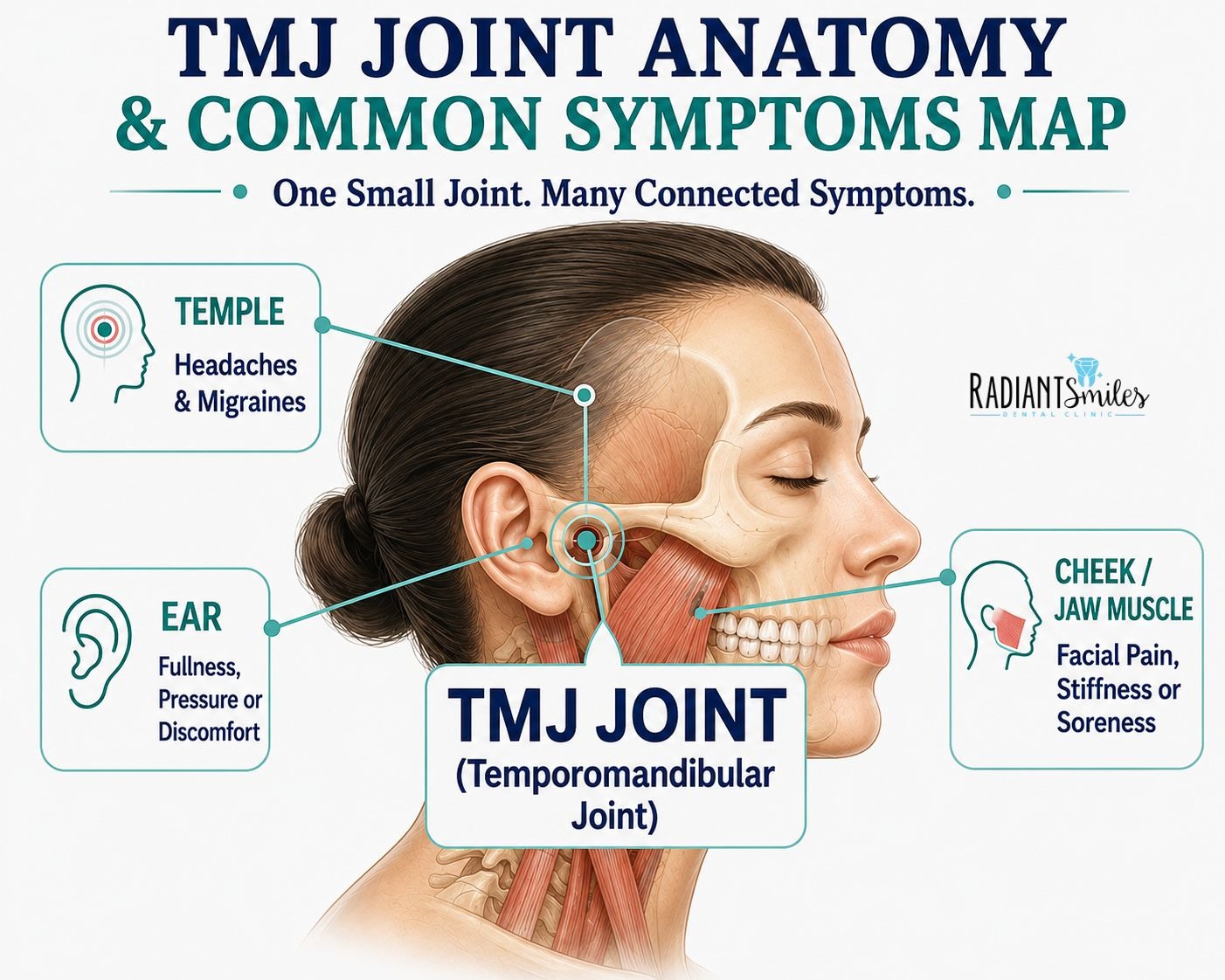
TMJ disorder, also called temporomandibular joint disorder (TMD), affects the joint that connects the lower jaw (mandible) to the skull. This joint allows speaking, chewing, yawning, and normal jaw movement.
Where Is the TMJ Located?
- In front of each ear
- Connects the jawbone to the skull
- Works together with muscles, ligaments, and a small cushioning disc
Why TMJ Problems Cause Multiple Symptoms
- Joint inflammation
- Muscle tension
- Disc displacement
- Bite imbalance
- Joint wear over time
What Are the Symptoms of TMJ Disorder?
TMJ disorder commonly causes jaw pain, clicking or popping sounds, facial muscle tension, headaches, and difficulty opening or closing the mouth.
Common Symptoms
- Jaw joint pain
- Clicking, popping, or grinding sounds
- Pain while chewing
- Difficulty opening the mouth fully
- Jaw stiffness
- Facial pain
- Ear discomfort or a feeling of fullness
- Headaches, especially around the temples
- Neck or shoulder tension
When Is Jaw Clicking Normal and When Is It a Problem?
Occasional painless jaw clicking may not always indicate a serious problem, especially when there is no pain or limitation in jaw movement. However, persistent clicking accompanied by pain may indicate an underlying TMJ disorder and should be evaluated. Jaw locking or restricted movement, swelling, or difficulty opening the mouth can be signs that the joint or surrounding structures need professional attention. Similarly, if jaw symptoms make it difficult to chew or eat comfortably, it is advisable to consult a dentist or TMJ specialist for proper evaluation.
Why Does the Jaw Click While Opening or Closing the Mouth?
A clicking jaw often occurs when the cushioning disc inside the TMJ moves out of its normal position and snaps back during jaw movement.
Common Causes of Jaw Clicking
- Teeth grinding (bruxism)
- Clenching due to stress
- Bite problems
- Missing teeth
- Jaw injury
- Arthritis
- Connective tissue changes
What Causes Jaw Pain and TMJ Problems?
TMJ disorders usually develop from a combination of muscle strain, bite imbalance, stress, and joint dysfunction rather than a single cause.
Teeth Grinding and Clenching
- Night-time grinding
- Daytime clenching
- Increased muscle tension
- Patients with bite-related grinding may benefit from orthodontics and bite correction treatment.
Bite Misalignment
- Uneven tooth contact
- Missing teeth
- Correct your bite problems that contribute to TMJ discomfort with braces and orthodontic treatment
Stress and Muscle Tension
- Emotional stress
- Long working hours
- Concentration-related clenching
Joint Conditions
- Osteoarthritis
- Rheumatoid arthritis
- Previous trauma
- Disc disorders
How Is TMJ Disorder Diagnosed by a TMJ Dentist?
Diagnosis involves a detailed dental examination, jaw movement assessment, muscle evaluation, and imaging when necessary.
What Happens During a TMJ Evaluation?
- Medical and dental history
- Jaw movement assessment
- Joint sound examination
- Muscle tenderness evaluation
- Bite analysis
- X-rays or CBCT imaging if required
When Is Imaging Needed?
- Severe pain
- Jaw locking
- Trauma
- Suspected joint degeneration
- Surgical planning
What Is the Best TMJ Treatment for Jaw Pain and Clicking?
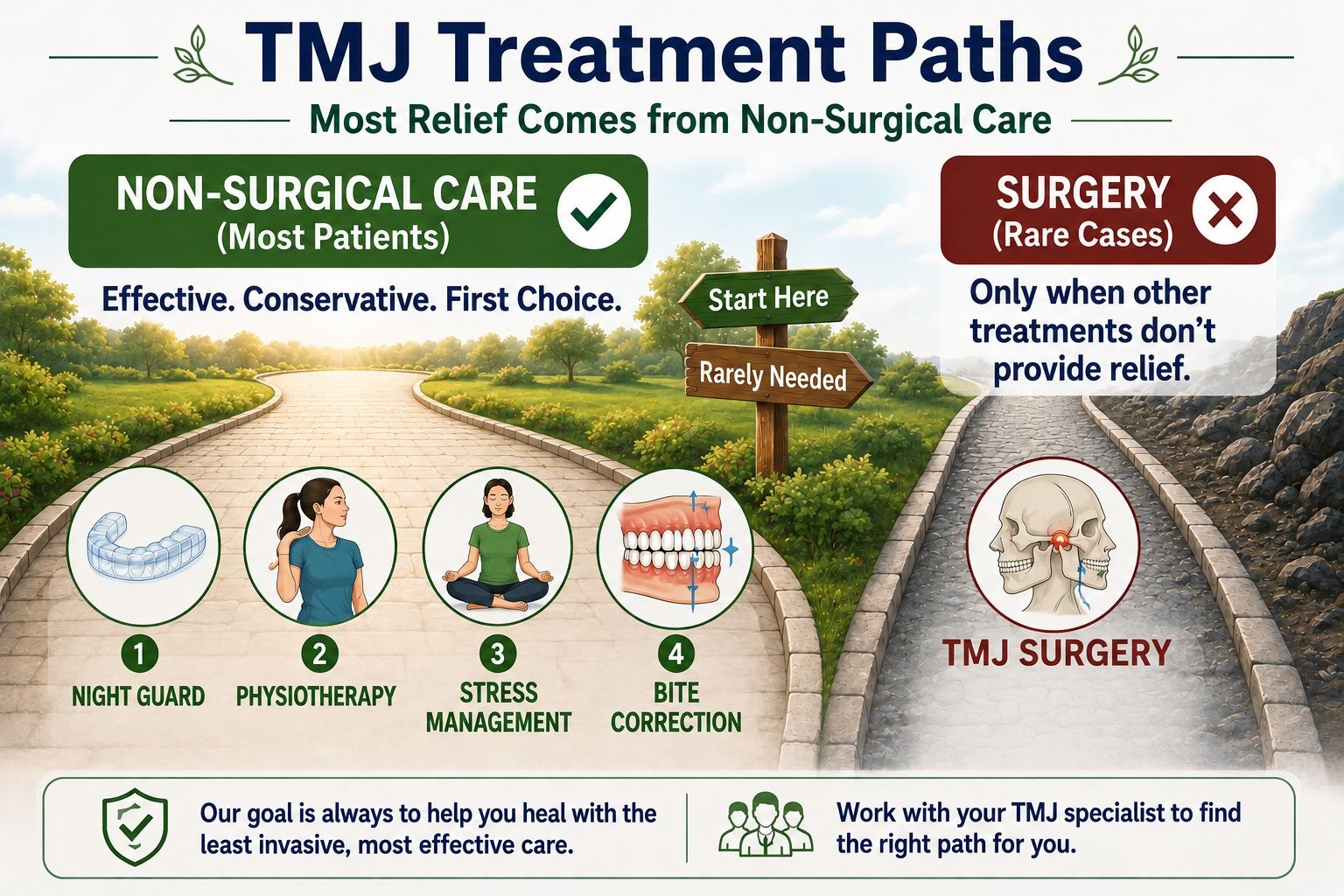
The best TMJ treatment depends on the underlying cause. Most patients respond well to conservative treatments that reduce muscle tension, protect the joint, and improve jaw function.
TMJ Treatment Without Surgery
Emphasize that TMJ treatment without surgery is usually the first and most successful approach.
Common Non-Surgical Treatments
- Jaw rest
- Soft diet
- Warm compresses
- Bite correction
- Oral splints or night guards
- Stress management
- Medication when appropriate
- TMJ physiotherapy
Severe bite collapse or worn teeth may require full mouth rehabilitation treatment.
Can TMJ Physiotherapy Help?
Yes. TMJ physiotherapy is often recommended to improve jaw mobility, reduce muscle tension, and restore normal joint function.
Common TMJ Physiotherapy Techniques
- Gentle jaw mobilization
- Stretching exercises
- Muscle relaxation techniques
- Posture correction
- Neck and shoulder therapy
- Ultrasound or manual therapy when indicated
Who Benefits Most from Physiotherapy?
- Muscle-related TMJ pain
- Jaw stiffness
- Limited mouth opening
- Post-injury rehabilitation
- Chronic jaw tension
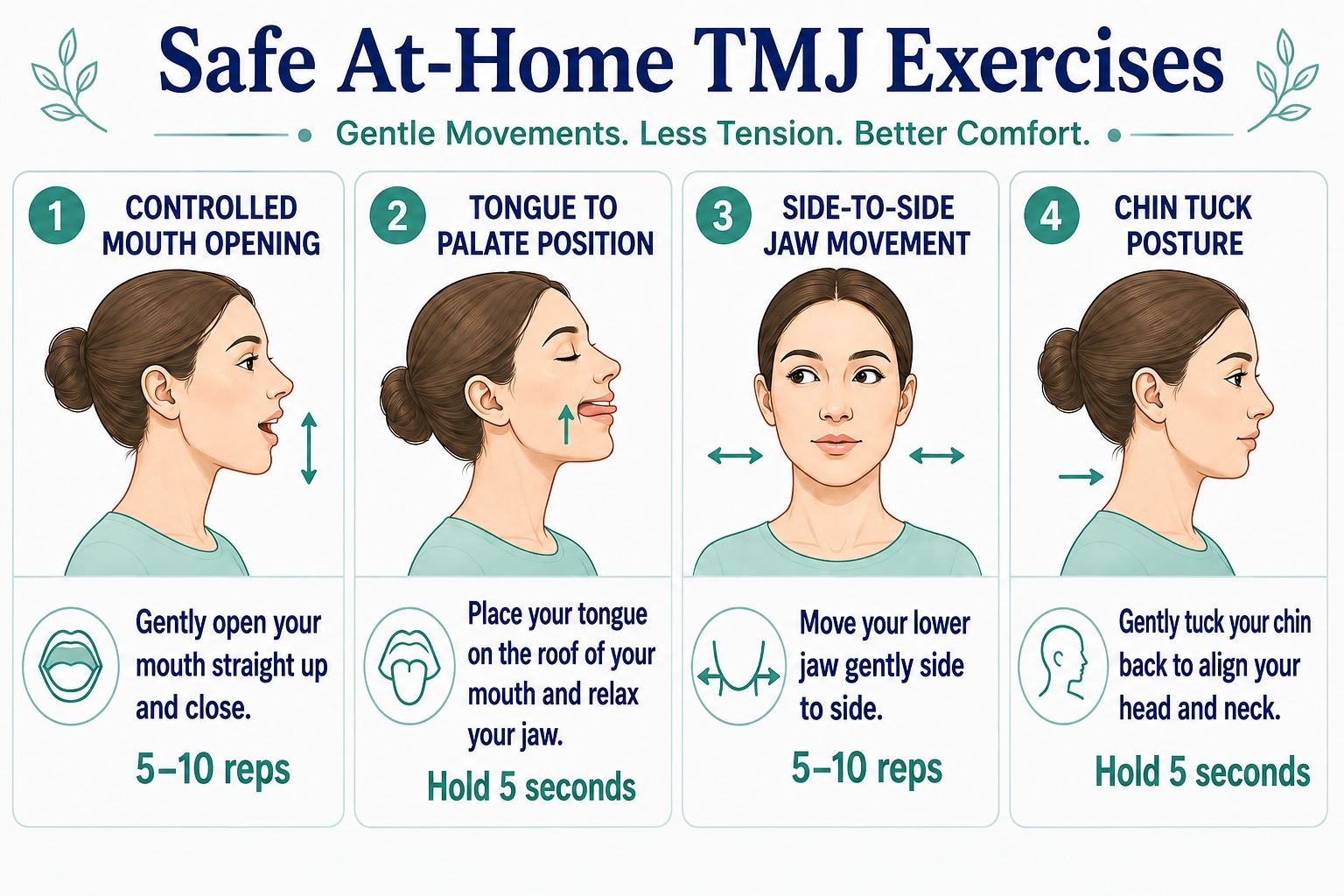
Which TMJ Exercises Are Safe to Try at Home?
Gentle TMJ exercises may help reduce stiffness and improve jaw movement, but they should be performed only after a dental evaluation confirms that exercises are appropriate.
Simple TMJ Exercises
- Controlled mouth opening
- Tongue-to-palate exercise
- Side-to-side jaw movement
- Chin tuck posture exercise
Important Safety Advice
- Stop if pain worsens
- Avoid forceful stretching
- Do not continue exercises during acute jaw locking
- Seek professional guidance if symptoms persist
TMJ Treatment Without Surgery: What Patients Can Expect
Most TMJ patients improve within several weeks to a few months with conservative treatment and habit correction.
Typical Treatment Timeline
Treatment Timeline | What Patients May Experience |
First 1–2 Weeks | • Pain reduction • Reduced muscle tension • Dietary modifications |
3–6 Weeks | • Improved jaw movement • Less clicking • Better chewing comfort |
2–3 Months | • Stabilized symptoms • Reduced flare-ups • Long-term management planning |
When Is Surgery Needed for TMJ Disorder?
Surgery is considered only when significant joint damage, persistent locking, severe structural problems, or failure of conservative treatment is present.
Situations Where Surgery May Be Considered
- Persistent jaw locking
- Severe disc displacement
- Joint degeneration
- Trauma-related structural damage
- Failure of prolonged non-surgical treatment
Reassure that most patients do not require surgery.
TMJ Treatment in India: What Affects the Cost?
The cost of TMJ treatment in India varies depending on the diagnosis, imaging requirements, splint therapy, physiotherapy, and the complexity of the condition.
Cost Factors
- Consultation
- Diagnostic imaging
- Night guard or splint
- Physiotherapy sessions
- Follow-up visits
- Corrective dental treatment if needed
Avoid specific price claims unless the clinic chooses to publish them.
Common Habits That Make TMJ Pain Worse
- Chewing gum frequently
- Eating hard foods
- Nail biting
- Clenching teeth while working
- Resting the chin on the hand
- Poor neck posture
- Excessive phone use with head bent forward
Practical Tips for TMJ Pain Relief at Home
Do | Avoid |
Eat soft foods temporarily | Hard or crunchy foods |
Apply a warm compress | Wide yawning |
Keep lips together and teeth slightly apart | Chewing gum |
Practice stress reduction | Teeth grinding |
Maintain good posture | Forcefully cracking the jaw |
Follow prescribed TMJ exercises | — |
TMJ vs Dental Pain: How Can Patients Tell the Difference?
Symptom | TMJ Disorder | Dental Problem |
Jaw clicking | Common | Rare |
Pain near the ear | Common | Uncommon |
Tooth sensitivity | Usually absent | Common |
Pain while chewing | Common | Common |
Limited mouth opening | Common | Rare |
Facial muscle tenderness | Common | Uncommon |
Swelling around a tooth | Rare | Common |
When Should Someone See a TMJ Specialist?
A dental evaluation is recommended when jaw pain, clicking, or restricted movement persists for more than a few weeks or begins affecting eating, speaking, or daily activities.
Seek Professional Care If
- Jaw pain lasts more than 2–3 weeks
- Clicking becomes painful
- The jaw locks
- Mouth opening becomes limited
- Headaches are associated with jaw movement
- Teeth grinding is suspected
- Chewing becomes difficult
- general dentistry consultationcan help determine whether the problem is TMJ-related or caused by another dental condition.
Conclusion
TMJ disorders can make everyday activities such as eating, speaking, and yawning surprisingly uncomfortable, but most cases are treatable without surgery. Jaw pain, clicking sounds, stiffness, and restricted movement often improve significantly when the underlying cause is identified early and treated appropriately. A careful dental examination, combined with jaw exercises, physiotherapy, bite correction, stress management, or a custom night guard, can provide meaningful long-term relief.
If you are experiencing persistent jaw pain, painful clicking, jaw locking, or difficulty opening your mouth, don’t ignore the symptoms. Radiant Smiles Dental Care can help you understand the underlying cause and explore an appropriate TMJ treatment plan tailored to your needs. Early evaluation can help prevent symptoms from becoming chronic and support comfortable, healthy jaw function.
FAQs
1. What is the best TMJ treatment for jaw pain?
The best TMJ treatment depends on the cause of the problem. Most patients improve with non-surgical treatments such as a night guard, jaw exercises, TMJ physiotherapy, stress reduction, and bite correction.
2. Can a clicking jaw be treated without surgery?
Yes. Many cases of clicking jaw treatment involve conservative care such as physiotherapy, jaw exercises, oral splints, and habit modification. Surgery is usually considered only for severe structural joint problems.
3. How long does TMJ treatment take?
Mild TMJ disorders may improve within a few weeks, while moderate cases often require 6–12 weeks of treatment. Chronic conditions may need ongoing management and periodic follow-up.
4. Which doctor should be consulted for TMJ problems in India?
A TMJ dentist or TMJ specialist with experience in temporomandibular joint disorders is usually the most appropriate professional for evaluation and treatment.
5. Can TMJ exercises help reduce jaw pain?
Gentle TMJ exercises can help reduce muscle tension, improve jaw movement, and support recovery when they are recommended after a proper dental evaluation. They should not be performed aggressively or during severe jaw locking episodes.
Dr. Shalini Sharma
MDS (Conservative Dentistry & Endodontics) — Endodontist
Dr. Shalini, a distinguished endodontist, completed her post-graduation in Conservative Dentistry and Endodontics from HNB University. Her dedication and expertise have made her an integral part of Apollo Dental Clinics and a sought-after consultant across South Bombay, Navi Mumbai, and Thane.
She excels in painless root canal therapy, often completing treatments in a single sitting, with specialisations in curved canals, re-root canal treatments, post and core restorations, apicoectomies, and complex root surgeries. She is also highly skilled in esthetic dentistry and smile designing. Since 2022, Dr. Shalini has been a valued member of the Radiant Smiles team, known for combining technical proficiency with genuine, compassionate care.
Book an Appointment with Dr. Shalini Sharma