


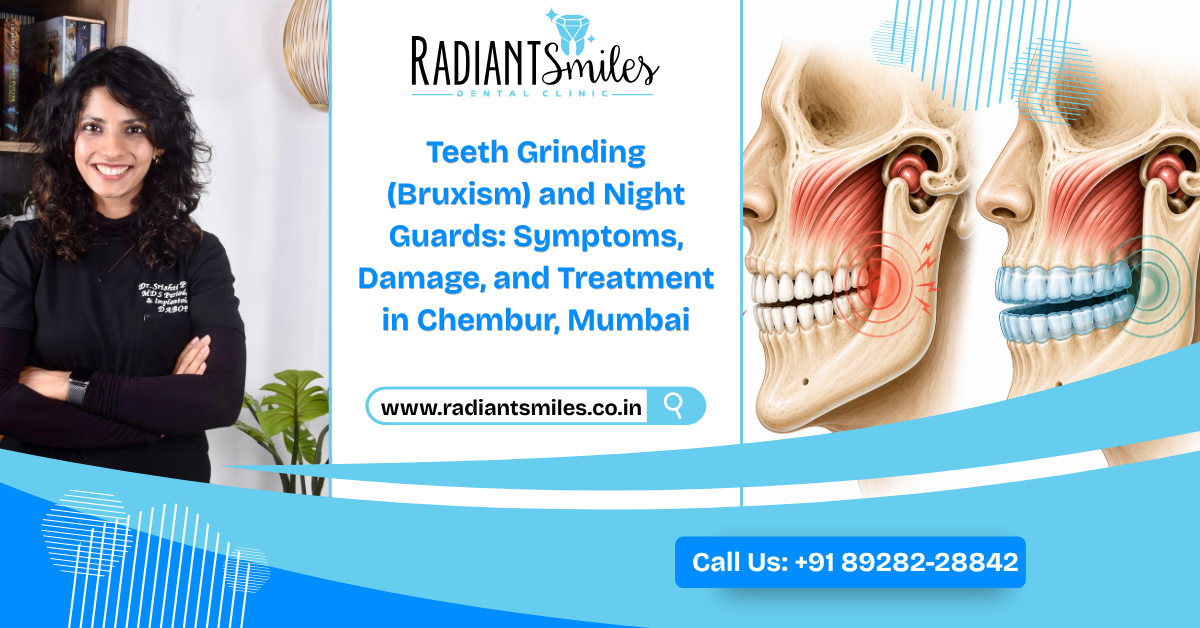
Teeth Grinding & Night Guards: Signs and Treatment, Mumbai

Quick Answer
Bruxism, teeth grinding and clenching, often happens without anyone realizing it, especially overnight. Left unmanaged, it wears down enamel, cracks teeth, and puts real strain on the jaw joint. The good news: a custom-fit night guard combined with a bit of stress management usually keeps it completely under control.
- Two types exist: awake bruxism and sleep bruxism
- Common signs: morning headaches, a sore jaw, flattened or chipped teeth, tooth sensitivity
- Main triggers: stress, caffeine or alcohol, certain medications, genetics
- Gold-standard fix: a custom, dentist-made night guard
- Cutting back on evening caffeine and alcohol genuinely helps
- Left untreated: cracked teeth, TMJ trouble, and even gum recession further down the line

Introduction
Waking up with a jaw that feels locked shut and a dull ache pressing into the temples is confusing when nothing happened the night before, at least as far as memory goes. Then a partner mentions hearing a grinding sound sometime around 3 a.m., and suddenly the picture starts to make sense.
That's bruxism, and it shows up constantly in patients across Chembur, Ghatkopar, Kurla, and Wadala who had absolutely no idea it was happening. Mumbai's pace doesn't help. Long commutes, back-to-back meetings, deadlines that follow people home on their phones, all of it builds tension that has to go somewhere, and for a lot of people, that somewhere is the jaw, at night, while they're fast asleep and completely unaware. This guide breaks down what bruxism actually looks like, what's driving it, and what real treatment involves.
What Is Bruxism (Teeth Grinding)?
Bruxism is the clenching, grinding, or gnashing of teeth, and it usually happens without the person realizing it's occurring at all. It can show up during the day or at night, and while the action looks the same either way, the two versions behave quite differently and call for different responses.
Awake Bruxism vs. Sleep Bruxism
Awake bruxism
This is the daytime version, jaw clenching while concentrating hard on a spreadsheet, gritting teeth during a stressful call, or tightening up without noticing while stuck in traffic. Once someone becomes aware it's happening, simple awareness and stress reduction often manage it well without needing a device at all.
Sleep bruxism
This one's trickier precisely because there's no awareness involved. It happens during sleep, sometimes loud enough for a partner to hear, and it's often linked with other sleep disruptions like snoring or sleep apnea. Since there's no way to consciously stop something happening during sleep, this version usually needs an actual treatment plan rather than just willpower.
Signs of Teeth Grinding
A few of these tend to show up together, and most patients only connect the dots once several appear at once:
- Flattened, chipped, cracked, or loose teeth
- Worn enamel exposing the sensitive inner layer of the tooth
- Morning headaches or facial pain, often felt at the temples
- Sore, tight, or tired jaw muscles
- Jaw clicking, popping, or difficulty opening the mouth fully
- Occasional earache or ringing in the ears, even though the ear itself is fine
- A sleep partner mentioning grinding sounds at night
What Causes Teeth Grinding?
Bruxism rarely comes down to one single cause. It's usually a mix of a few things working together:
- Stress and anxiety. The single biggest driver, and one that shows up constantly in high-pressure corporate lifestyles common across Mumbai's working professionals.
- Genetics and family history. Sleep bruxism tends to run in families.
- Caffeine and alcohol. Having more than six cups of coffee a day roughly doubles the likelihood of grinding, and evening cutting chai habits or a nightcap can quietly extend into the night's clenching.
- Smoking.
- Certain medications, including some antidepressants like SSRIs, occasionally list bruxism as a side effect.
- Daytime mouth habits, like nail-biting, cheek-biting, or chewing gum for long stretches, can increase awake bruxism specifically.
In the clinic, the pattern that comes up most often among patients from this part of Mumbai is long commute stress paired with late-night screen scrolling right before bed, a combination that keeps the nervous system a little too switched on even after the lights go off.
The Damage Left Untreated Grinding Can Cause
Grinding puts serious, sustained pressure on teeth and the jaw joint, and over time that pressure adds up in ways that are hard to reverse.
- Enamel loss. One to two millimeters of enamel can wear away, leaving teeth visibly shorter than before.
- Cracked teeth and broken restorations. Existing fillings and crowns aren't immune either; grinding is a common reason a tooth cap needs replacing sooner than expected.
- TMJ disorder. Clicking, popping, or a jaw that won't fully open or close.
- Gum recession. The lateral, side-to-side force of grinding can flex teeth right at the gumline, and this is actually one of the recognized causes of receding gums covered in more detail separately.
How Is Bruxism Diagnosed?
Diagnosis usually starts with a straightforward conversation: when does the grinding happen, has a sleeping partner noticed it, and are there symptoms like jaw soreness or headaches worth flagging. A physical exam follows, checking teeth and jaw muscles for wear, tenderness, or damage. In cases where a sleep-related cause is suspected, a referral for a sleep study may be recommended to get a clearer picture of what's happening overnight.
Treatment Options for Teeth Grinding
1. Custom night guards
This remains the gold standard, and for good reason. A dentist-made guard is molded precisely to the individual bite, unlike the generic boil-and-bite versions sold at a pharmacy. It sits comfortably, keeps upper and lower teeth from grinding against each other, and can even help relax overactive jaw muscles overnight.
2. Stress management
Since stress sits at the root of most cases, addressing it directly makes a real difference. Meditation, yoga, and cognitive behavioral therapy have all shown genuine benefit for reducing bruxism symptoms.
3. Lifestyle adjustments
Cutting back on evening caffeine, alcohol, and nicotine can meaningfully reduce nighttime jaw muscle activity. That second cutting chai after dinner might be worth swapping for something calmer.
4. Dental restoration
For teeth already worn down or cracked from grinding, crowns or onlays restore both function and appearance, and protect against further damage going forward.
5. Muscle relaxants or Botox for severe cases
In more stubborn or severe cases, a short course of muscle relaxants before bed, or Botox injections to relax the jaw muscles, may come up as an option worth discussing. These tend to be maintenance-based rather than one-time fixes, with Botox typically needing to be repeated every few months to sustain results.
Dr. Tanvi Patil
BDS, MDS — Prosthodontist
Dr. Tanvi Patil is a highly skilled and compassionate Prosthodontist with advanced expertise in prosthetic dentistry. After completing her Bachelor of Dental Surgery (BDS), she pursued a Master of Dental Surgery (MDS) specialising in the design, restoration, and replacement of teeth. Her clinical practice is driven by precision, aesthetics, and patient-centric care.
With extensive experience in crowns, dentures, and dental implants, Dr. Patil is known for creating natural-looking, functional restorations that enhance both oral health and confidence. Her areas of expertise include fixed and removable dentures, single and full-mouth implant rehabilitation, crown and bridge restorations, smile design, and management of complex restorative cases.
Book an Appointment with Dr. Tanvi Patil