


Receding Gums Treatment in Chembur, Mumbai: Causes, Options, and Whether Gums Actually Grow Back

Quick Answer
Receding gums happen when the gum tissue pulls away from a tooth, exposing the root underneath. That lost tissue cannot grow back on its own, but treatment ranging from a simple deep cleaning to a gum graft can stop the recession in its tracks and restore how the gumline looks.
- Gum tissue does not regrow once it's lost, no exceptions
- Common causes: hard brushing, gum disease, genetics, tobacco, teeth grinding
- Early clue: teeth start looking a little longer, sipping hot chai suddenly stings
- Mild cases: scaling and root planing sorts it out
- Advanced cases: gum grafting or the pinhole surgical technique
- Healing after grafting: roughly one to two weeks for the initial phase
That first sip of chai that used to feel like nothing now sends a sharp little zing straight up the tooth. Brushing has started to feel like a balancing act, too gentle and nothing gets clean, too firm and pink shows up in the sink. And somewhere along the way, a glance in the mirror reveals something odd: the teeth look longer than they used to.
That gum recession quietly made itself known. It doesn't announce itself with pain or drama. It just shows up in small, easy-to-dismiss ways, until one day the sensitivity or the appearance becomes hard to ignore. Patients walking into the clinic in Chembur describe almost the exact same progression, and the good news is that catching it at this stage makes all the difference. This guide covers what's actually happening under the gumline, what typically causes it, and what real treatment looks like for patients across Chembur, Ghatkopar, Kurla, Govandi, and Wadala.

What Are Receding Gums?
Gum recession is when the gum tissue surrounding a tooth pulls back, exposing the root that's normally tucked safely underneath. That exposed area isn't protected by hard enamel the way the visible part of the tooth is, and it creates tiny pockets where bacteria happily set up shop. Left alone, that bacteria buildup can cause even more recession, which is exactly why this tends to snowball if it's ignored.
Signs That Gums Are Receding
A few of these tend to show up quietly, one at a time, before anyone connects the dots:
- Teeth appearing noticeably longer than before
- Sharp sensitivity to hot tea, cold water, or sweets
- Tenderness or soreness right at the gumline
- Bleeding while brushing or flossing
- A visible notch or dip where the gum meets the tooth
Anyone noticing two or more of these is due for a proper gum check, not a wait-and-see approach.
Can Receding Gums Grow Back?
No. Once gum tissue pulls away and is lost, it does not regenerate on its own, unlike skin, which heals and regrows after a cut. The tooth root left exposed is covered by a much softer material called cementum instead of enamel, which is part of why it feels so sensitive to temperature and touch.
That said, this isn't a reason to panic. While the original tissue can't regrow naturally, treatment can absolutely stop the recession from getting worse, and in many cases, a graft can rebuild the gumline and cover the exposed root completely. The goal shifts from "undo the damage" to "stop it here and restore what's visible," and that's a genuinely achievable outcome.
What Causes Gums to Recede?
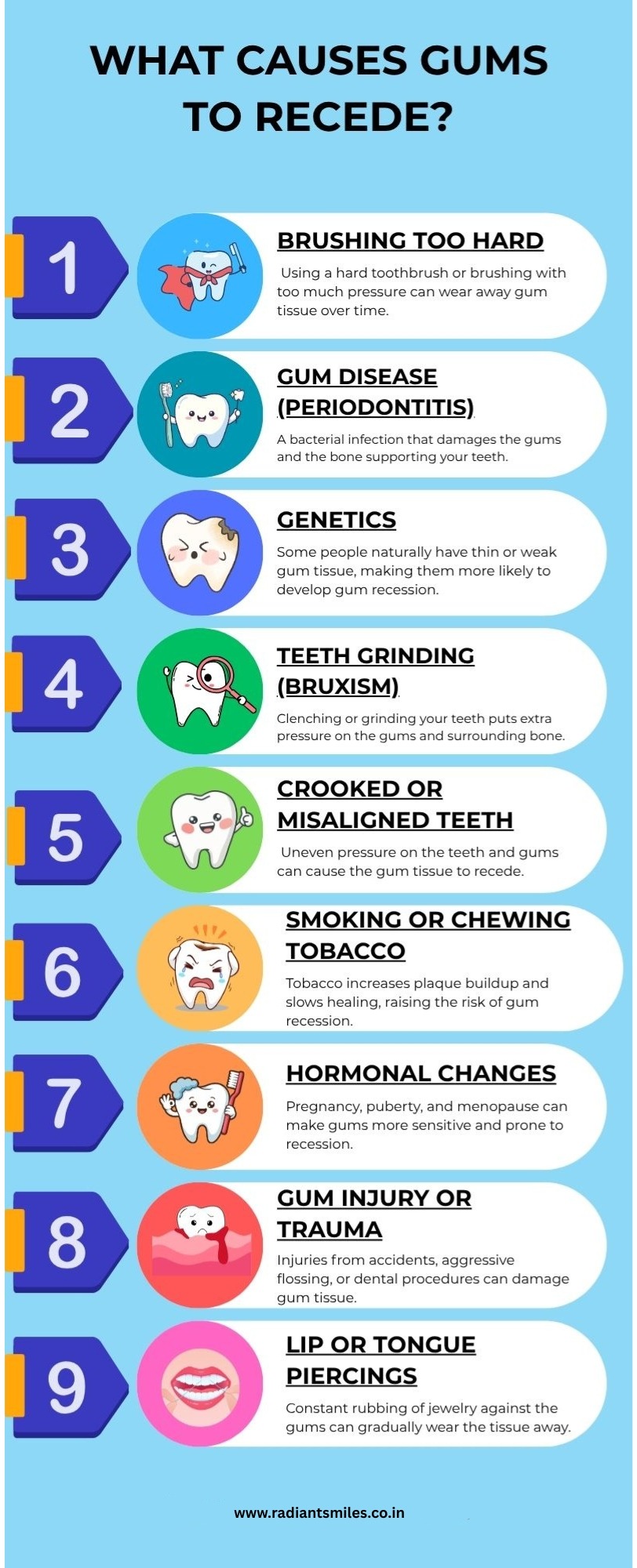
Quite a few things can push gums into retreat mode, and most patients are surprised to learn it's rarely just one cause:
- Brushing too hard. A stiff-bristled brush and a heavy hand wear down gum tissue faster than most people realize.
- Gum disease (periodontitis). Bacterial infection breaks down the tissue and bone supporting the teeth, making this the single biggest driver of recession.
- Genetics. Some people are simply born with thinner, more delicate gum tissue, no amount of gentle brushing changes that starting point.
- Teeth grinding (bruxism). Clenching through a stressful workday, or through sleep without realizing it, puts steady pressure on the gums.
- Misaligned teeth or an uneven bite. Crowded or crooked teeth put uneven force on the gum and bone around them.
- Tobacco use. Smoking or chewing tobacco weakens the tissue's ability to heal and encourages plaque buildup.
- Hormonal shifts. Pregnancy, menopause, and other hormonal changes can make gums more vulnerable.
- Trauma or injury to the gum tissue, from anything sharp or an old dental mishap.
- Lip or tongue piercings, which physically rub against the gum over time.
In the clinic, two causes show up again and again among patients from this part of Mumbai: aggressive brushing habits picked up from childhood, and undiagnosed night-time grinding, often tied to long, high-pressure work hours that never quite switch off even after office hours end.
How Is Gum Recession Diagnosed?
Diagnosis starts with a periodontal probe, a small instrument used to measure the depth of the pocket around each tooth. Healthy pockets measure just a few millimeters. Deeper pockets point toward more advanced gum disease and greater recession risk. This is the same measurement used when evaluating pyorrhea and periodontitis, since the two conditions are closely linked, recession is often one of the visible signs that periodontal disease has already been at work beneath the surface.
Treatment Options for Receding Gums
Non-surgical options
For milder cases, treatment often doesn't need to go anywhere near a surgical table.
- Scaling and root planing. A thorough deep cleaning that clears plaque and tartar from below the gumline and smooths the root surface so gum tissue has a cleaner base to reattach to.
- Antibiotic therapy. Topical gels or oral antibiotics to knock out any lingering infection.
- Desensitizing treatment. Fluoride varnish or a prescribed desensitizing toothpaste to calm down that sharp, zingy sensitivity in the meantime.
Surgical and minimally invasive options
When recession has progressed further, a few different approaches can restore the gumline itself.
- Gum grafting. Tissue, usually taken from the roof of the mouth or a processed donor source, is placed over the exposed root and stitched into position. This remains the most predictable, long-lasting fix for significant recession.
- Pinhole surgical technique. A modern, minimally invasive alternative. Instead of cutting and stitching, a small pinhole is used to gently loosen and reposition the existing gum tissue over the exposed root, no sutures required.
- Laser-assisted treatment. Laser therapy can clean out infected tissue and encourage the gums to reattach, often with less discomfort than traditional surgical methods.
Treatment | Best For | What It Involves | Recovery Time |
Scaling & Root Planing | Mild recession and early gum disease | Deep cleaning below the gumline to remove plaque, tartar, and bacteria from tooth roots | A few days |
Gum Grafting | Moderate to advanced gum recession | Healthy tissue is placed and stitched over the exposed root surface to restore gum coverage | Initial recovery: 1 to 2 weeks; Full healing: 4 to 6 weeks |
Pinhole Surgical Technique (PST) | Moderate recession and patients seeking a minimally invasive option | A small pinhole is created, and existing gum tissue is gently repositioned over the exposed roots without stitches | Typically faster than traditional grafting, usually within a few days to 2 weeks |
Laser Treatment | Mild to moderate recession with active infection or inflammation | Laser technology removes infected tissue and promotes gum reattachment and healing | Generally quicker than traditional surgical procedures, often within a few days to 1 week |
For patients wanting more detail on what surgical treatment actually involves day to day, the gum surgery page walks through the process.
Managing Sensitivity While Treatment Is Underway
That sting from hot chai or cold water doesn't have to be endured while waiting for a fix. A few things help immediately:
- Switch to a desensitizing toothpaste with ingredients like potassium nitrate or stannous fluoride
- Ask about an in-clinic fluoride varnish application for faster relief
- Go lukewarm rather than piping hot or ice-cold for a while, especially with tea and cold beverages during Mumbai's humid stretches when cold drinks feel tempting
- Avoid very acidic foods that can aggravate an already-sensitive root surface
Not sure whether this needs a simple cleaning or something more involved? A quick gum health check settles that faster than guessing.
Do Natural Remedies Actually Help?
Salt water rinses, oil pulling, and aloe vera gel come up constantly in this conversation, and there's some truth to their supporting role. Salt water can calm mild inflammation. Some early research suggests oil pulling and aloe vera may help reduce bacteria and swelling around the gums. None of this, however, brings back gum tissue that's already receded, and none of it replaces an actual dental evaluation. Think of these as helpful additions alongside professional care, not a substitute for it.
Preventing Further Recession
- Use a soft-bristled brush and gentle, circular strokes instead of scrubbing side to side
- Floss once a day, every day, not just before a dental visit
- Rinse with an antimicrobial mouthwash to keep bacteria in check
- Get a night guard if grinding or clenching is part of the picture
- Keep up with cleanings every six months, or more often if recommended
None of this reverses existing recession, but it's exactly what keeps it from creeping further.
The Bottom Line on Receding Gums
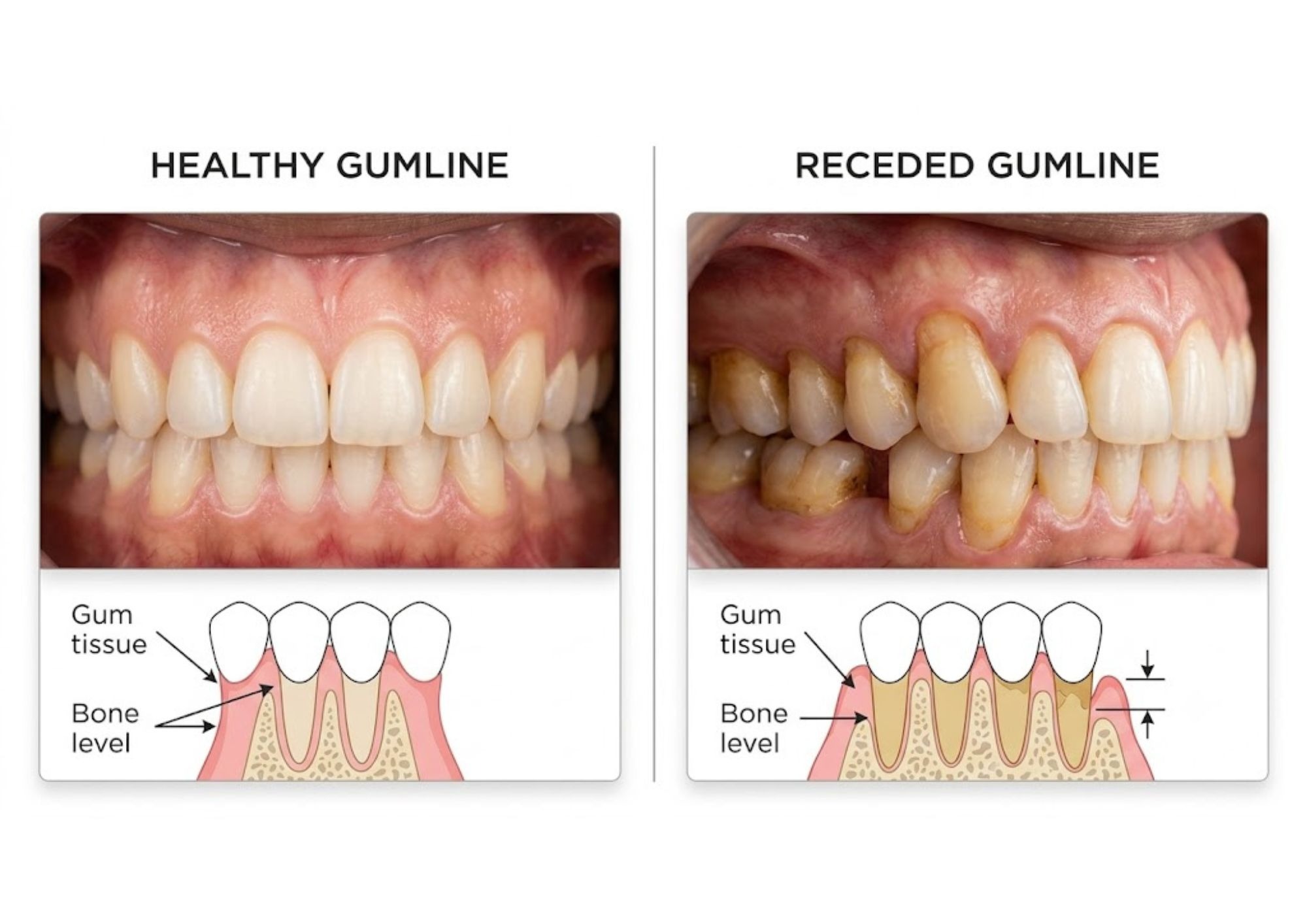
Gum recession is not reversible in the sense that the original gum tissue grows back on its own, but it is absolutely manageable and, in many cases, treatable enough that patients can protect their teeth and remain symptom-free for years. The earlier it is diagnosed, the simpler, less invasive, and more affordable the treatment usually becomes.
A professional evaluation can quickly determine whether your receding gums are related to plaque buildup, gum disease, aggressive brushing, or other underlying factors, and whether a simple deep cleaning is sufficient or more advanced treatment, such as gum grafting or the pinhole surgical technique, may be beneficial.
If you have noticed tooth sensitivity, teeth appearing longer than before, or bleeding and receding gums, do not wait for the symptoms to worsen. Scheduling an early assessment can help prevent further gum and bone loss and improve long-term oral health.
At Radiant Smiles Dental Clinic, Chembur, Dr. Srishti Parekh and the team provide personalised evaluations and evidence-based treatment options for gum recession and periodontal concerns. Booking a consultation today could be the first step toward protecting your smile and avoiding more extensive treatment in the future.
Frequently Asked Questions
1. Can receding gums grow back naturally?
No. Gum tissue doesn't regenerate the way skin does, so once it recedes, it stays receded without treatment. Procedures like gum grafting or the pinhole technique can rebuild the gumline and cover the exposed root, even though the original tissue itself won't grow back on its own.
2. What is the pinhole surgical technique for gums?
It's a minimally invasive way to treat gum recession without cutting or stitching. A small pinhole is made, and the existing gum tissue is gently loosened and repositioned to cover the exposed root, often with a quicker recovery than traditional grafting.
3. How long does it take to recover from a gum graft?
Most patients feel largely back to normal within one to two weeks for the initial healing, with full healing typically taking around four to six weeks depending on how much area was treated.
4. Is receding gums always caused by poor brushing?
Not always. Brushing too hard is a common factor, but gum disease, genetics, teeth grinding, misaligned teeth, tobacco use, and hormonal changes all play a role too. Often it's a combination rather than one single cause.
5. Can receding gums lead to tooth loss if left untreated?
Yes, if the underlying cause is ongoing gum disease. As recession progresses, the bone and tissue supporting the tooth can weaken further, eventually leading to looseness and tooth loss. Catching it early makes that outcome very avoidable.
Dr. Srishti Parekh
BDS, MDS (Periodontology & Implantology), Fellow in TMD, Orofacial Pain & Sleep Medicine — Periodontist & Implantologist
Dr. Srishti Parekh obtained both her Bachelor in Dental Surgery and Master in Dental Surgery in Periodontology and Implantology from the prestigious Maharashtra University of Health Sciences (MUHS). She has received her Fellowship in TMD, Orofacial Pain and Sleep Medicine from Roseman University of Health Sciences (USA).
She is a Life member of the Indian Dental Association, the Indian Academy of Aesthetic & Cosmetic Dentistry, the Indian Society of Oral Implantologists, and the Indian Society of Periodontology.
Dr. Srishti strongly believes in constantly updating her knowledge and takes great pride in staying up-to-date with the latest in dental techniques, materials, and technology in order to provide the highest quality care. She has attended a number of courses such as Enhanced Course in Aesthetic Dentistry, A to Z of Smile Design, Complete Implant Prosthodontics, and Surgical Extravaganza — Hard and Soft Tissue Augmentation Procedures, among many others, and continues to stay active in furthering her professional education.
Book an Appointment with Dr. Srishti Parekh