


Periodontitis (Pyorrhea) Treatment in Chembur, Mumbai: Symptoms, Stages and What It Actually Costs
Quick Answer
Periodontitis, widely known as pyorrhea or pyria, is a progressive gum infection that eats away at the bone and tissue holding teeth in place, and treatment ranges from a straightforward deep cleaning to surgical procedures depending on how far it has advanced.
- Four stages: gingivitis, mild, moderate, and advanced periodontitis
- Early warning signs: bleeding gums, bad breath, gum swelling
- Late-stage signs: loose teeth, pus discharge, receding gums, deep pockets
- Non-surgical treatment: scaling and root planing, roughly ₹1,500 to ₹3,000 per quadrant
- Surgical treatment: flap or laser surgery, roughly ₹10,000 to ₹25,000 or more per quadrant
- Gingivitis can be reversed; advanced periodontitis is managed for life, not cured
Introduction
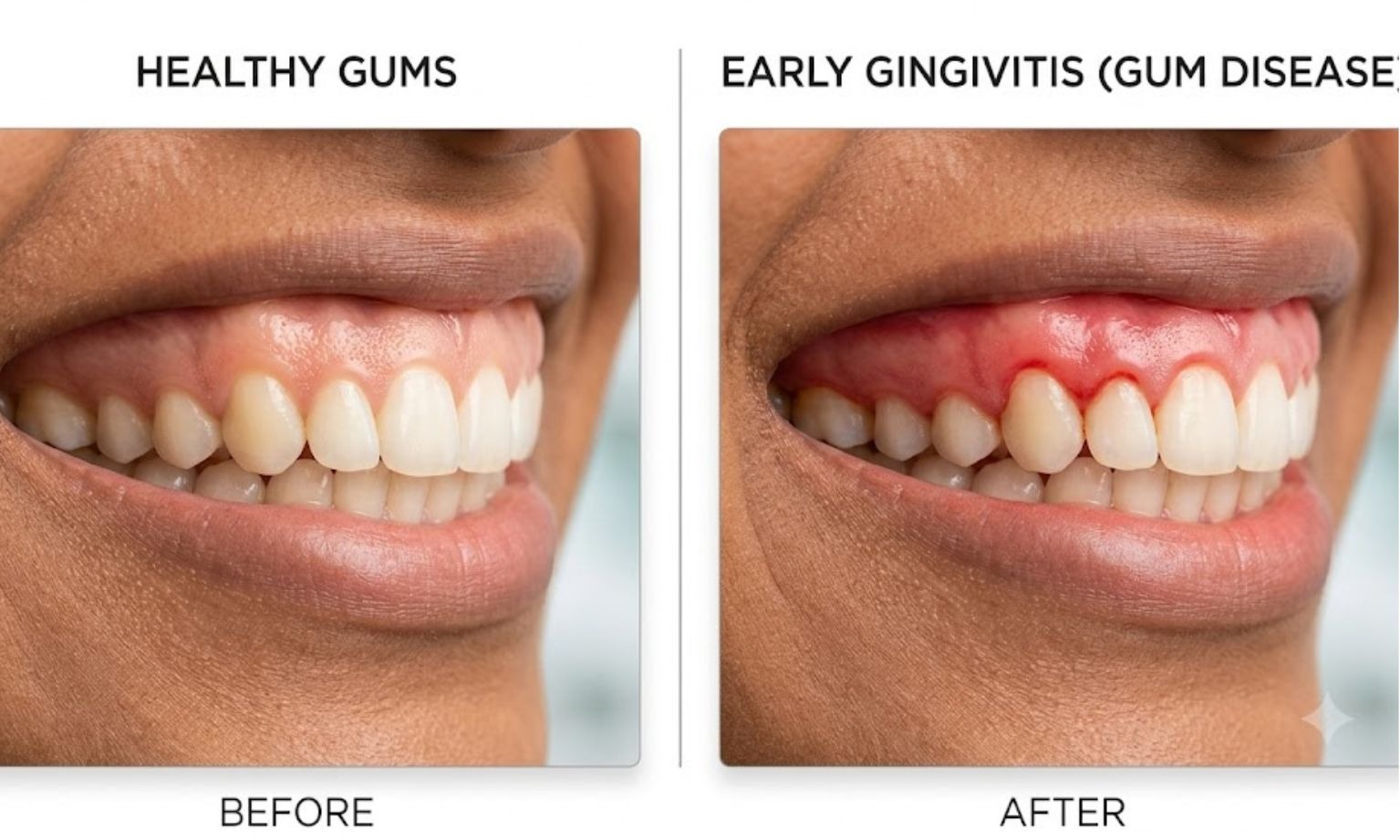
Most people pay attention to a toothache immediately. Bleeding gums, on the other hand, are often ignored. A pink tinge in the sink after brushing, occasional bad breath, or gums that seem slightly swollen rarely feel like reasons to schedule a dental appointment. Unfortunately, these seemingly minor symptoms are often the earliest signs of gum disease.
At our Chembur clinic, it is common to meet patients who are surprised to learn that their bleeding gums are not caused by brushing too hard but by an infection that has been quietly progressing for months or even years. By the time discomfort, loose teeth, or visible gum recession appear, the disease may have already damaged the supporting bone around the teeth.
Periodontitis, commonly known as pyorrhea or pyria, is one of the leading causes of tooth loss in adults. Studies suggest that nearly half of Indian adults experience some form of periodontal disease, yet many remain undiagnosed because the condition develops gradually and often without significant pain in its early stages.
Understanding the warning signs early can make all the difference. This guide explains what periodontitis is, why it develops, how it progresses through different stages, and what treatment options and costs patients in Mumbai can expect in 2026.
What Is Periodontitis (Pyorrhea)?
Periodontitis is a bacterial gum infection that starts as gingivitis and, left unchecked, spreads below the gumline to destroy the bone and connective tissue anchoring teeth in the jaw. Once that support structure is compromised, teeth loosen, shift, and in advanced cases, fall out entirely. Whether a patient calls it pyorrhea, pyria, or periodontitis, the underlying disease process is identical.
Signs and Symptoms of Gum Disease
The early signs that get ignored
Most patients dismiss these because they seem minor:
- Gums that bleed while brushing or flossing
- Bad breath that mouthwash only masks temporarily
- Gums that look puffy, red, or tender to the touch
- Mild discomfort while chewing
The signs that mean it has already progressed
By the time these show up, the infection has usually moved past the reversible stage:
- Pus visible between the teeth and gums
- Gums pulling back, making teeth look longer than before
- Teeth that feel loose or have visibly shifted
- Deep pockets forming between the gum and tooth
- Persistent bad breath that does not go away with brushing
Anyone in Chembur, Ghatkopar, Kurla, or Govandi noticing even two or three of the early signs should get a periodontal check done rather than wait for the second list to show up.
The Four Stages of Periodontitis
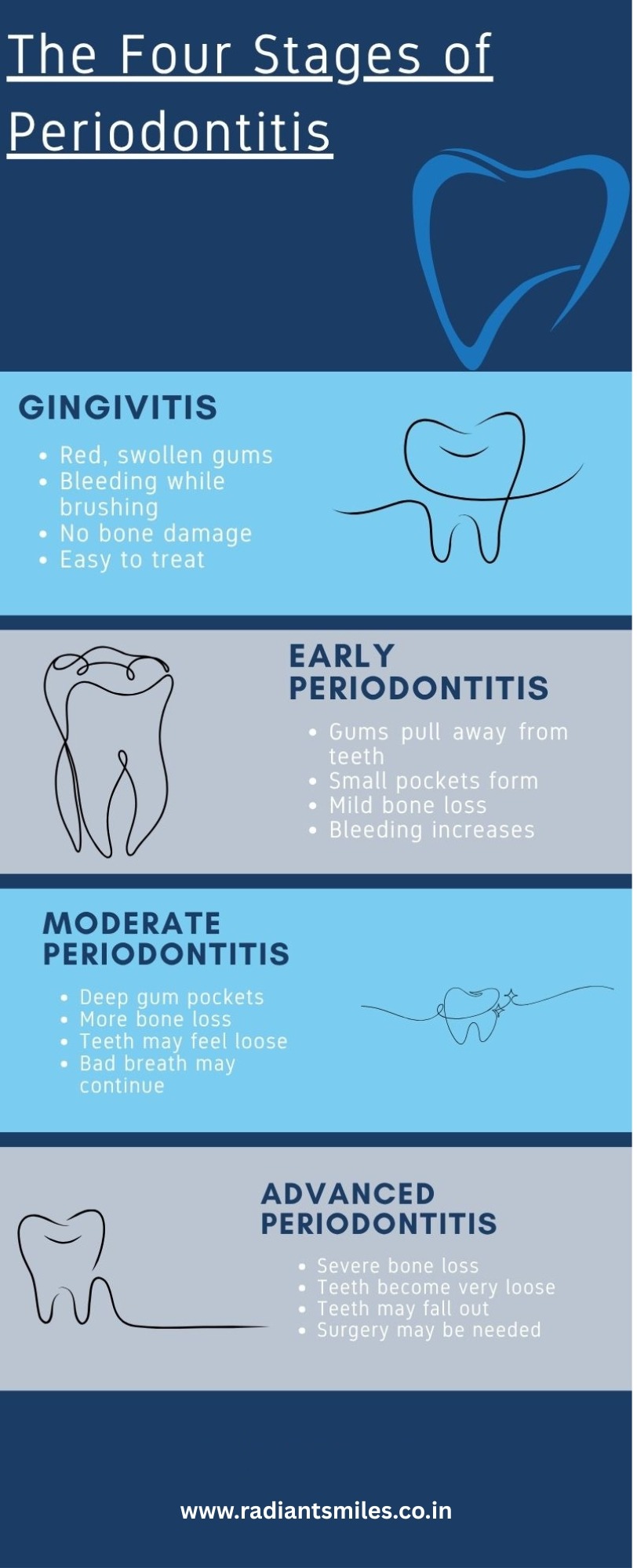
Stage 1: Gingivitis
This is the only fully reversible stage. Plaque buildup irritates the gums, causing redness, swelling, and occasional bleeding, but no bone loss has happened yet. A professional cleaning combined with better home care typically resolves it completely.
Stage 2: Early or Mild Periodontitis
Bacteria start working beneath the gumline. Small pockets begin forming as the gum pulls slightly away from the tooth. Bleeding becomes more frequent, and mild bone loss becomes visible on an X-ray.
Stage 3: Moderate Periodontitis
Pockets deepen to somewhere between 4 and 6 millimeters, and the bone supporting the tooth starts taking noticeable damage. Tooth mobility often becomes apparent to the patient for the first time at this stage.
Stage 4: Advanced Periodontitis
Severe bone loss sets in. Teeth become visibly loose, may shift position on their own, and in many cases require extraction or surgical reconstruction to save what remains of the supporting structure.
What Causes Periodontitis?
Plaque and tartar buildup sit at the root of nearly every case, but a few other factors show up again and again in patients walking into the clinic:
- Skipping or rushing through brushing and flossing
- Smoking or chewing tobacco, both of which slow healing and mask early bleeding
- Uncontrolled diabetes, which raises infection risk significantly
- Hormonal shifts during pregnancy or menopause
- A family history of gum disease
- Weakened immunity from conditions like HIV or ongoing cancer treatment
A fair number of patients in this part of Mumbai come in with a paan or gutkha habit that has quietly accelerated gum damage for years before any pain shows up. Diabetes is the other big one locally, since it is common and often under-monitored on the dental side even when blood sugar is being tracked elsewhere.
How Is Periodontitis Diagnosed?
Diagnosis starts with a periodontal probe, a small instrument used to measure pocket depth around each tooth. Anything beyond 3 millimeters raises a flag, and depths of 4 to 6 millimeters or more point toward moderate to advanced disease. X-rays confirm how much bone has actually been lost, and a review of medical history helps identify contributing factors like diabetes or smoking.
Periodontitis Treatment Options and Cost in Mumbai (2026)
Treatment cost depends entirely on how advanced the disease is at the time of diagnosis, which is exactly why catching it early saves both teeth and money.
Non-surgical treatment
- Consultation and X-rays: ₹500 to ₹1,000
- Scaling and root planing (deep cleaning): ₹1,500 to ₹3,000 per quadrant, used for mild to moderate cases to clear tartar and smooth root surfaces
- Antibiotic therapy: topical gels or oral antibiotics added alongside cleaning to control residual infection
This is also a good point to understand what separates a routine cleaning from a deep cleaning. Regular scaling and polishing addresses surface staining and plaque above the gumline, while root planing goes below it to treat the infection itself. A breakdown of the difference between whitening and scaling and polishing covers this distinction in more detail for anyone confused about which one they actually need.
Surgical treatment
- Flap surgery or laser-assisted surgery: ₹10,000 to ₹25,000 per quadrant, or ₹30,000 and above for full-mouth treatment, involving lifting the gum to clean deep pockets and sometimes placing bone or tissue grafts
- Gingivectomy: reshaping and removing damaged gum tissue in cases where the gum itself has been badly affected
- Bone grafting and guided tissue regeneration: used in advanced cases to rebuild lost bone and encourage new tissue growth
Anyone facing the surgical route naturally has questions about what the procedure actually involves day to day. The gum surgery walks through what to expect before, during, and after the procedure.
Stage | Common Symptoms | Typical Treatment | Approx. Cost | Reversible? |
Gingivitis | Red, swollen, bleeding gums | Professional cleaning and improved home care | ₹500 to ₹1,500 | Yes, fully reversible |
Mild Periodontitis | Slight bleeding, early gum pockets | Scaling and root planing | ₹1,500 to ₹3,000 per quadrant | Managed, partly reversible |
Moderate Periodontitis | Deeper gum pockets, visible tooth mobility | Deep cleaning plus antibiotics | ₹3,000 to ₹10,000 | Can be managed, but existing damage cannot be reversed |
Advanced Periodontitis | Loose teeth, pus discharge, significant bone loss | Flap surgery, bone grafting, and possible tooth extraction | ₹10,000 to ₹30,000+ | Not reversible, requires long-term management |
For patients weighing this cost against other dental work planned for the same visit, the Mumbai dental treatment cost guide lays out pricing across other common procedures for comparison.
Is Periodontitis Curable?
Gingivitis, caught early, reverses completely. Periodontitis at any later stage cannot be undone in the sense of regrowing lost bone from scratch, but it can absolutely be controlled. With consistent treatment and maintenance cleanings, most patients keep their remaining teeth stable for years, sometimes decades. The goal past stage one shifts from cure to control, and that distinction matters when setting realistic expectations.
For patients who have already lost one or more teeth to advanced disease, tooth replacement becomes part of the conversation. Recent advances covered in this piece on dental implant innovations have made restoring function and appearance far more predictable than it used to be.
Preventing Pyorrhea Before It Starts
- Brush twice daily for two full minutes, angling the brush gently along the gumline rather than scrubbing straight across
- Floss once a day to clear the spaces a brush cannot reach
- Replace the toothbrush every three to four months
- Cut back on sugary and starchy snacking between meals
- Quit smoking or chewing tobacco, since both interfere with gum healing
- Keep diabetes under control if it applies, since blood sugar and gum health are closely linked
- Book a dental check-up every six months, even without visible symptoms
None of this requires a complicated routine. It just requires doing the basics consistently instead of only remembering them after the gums start bleeding.
Ready to Get Gum Health Back on Track?
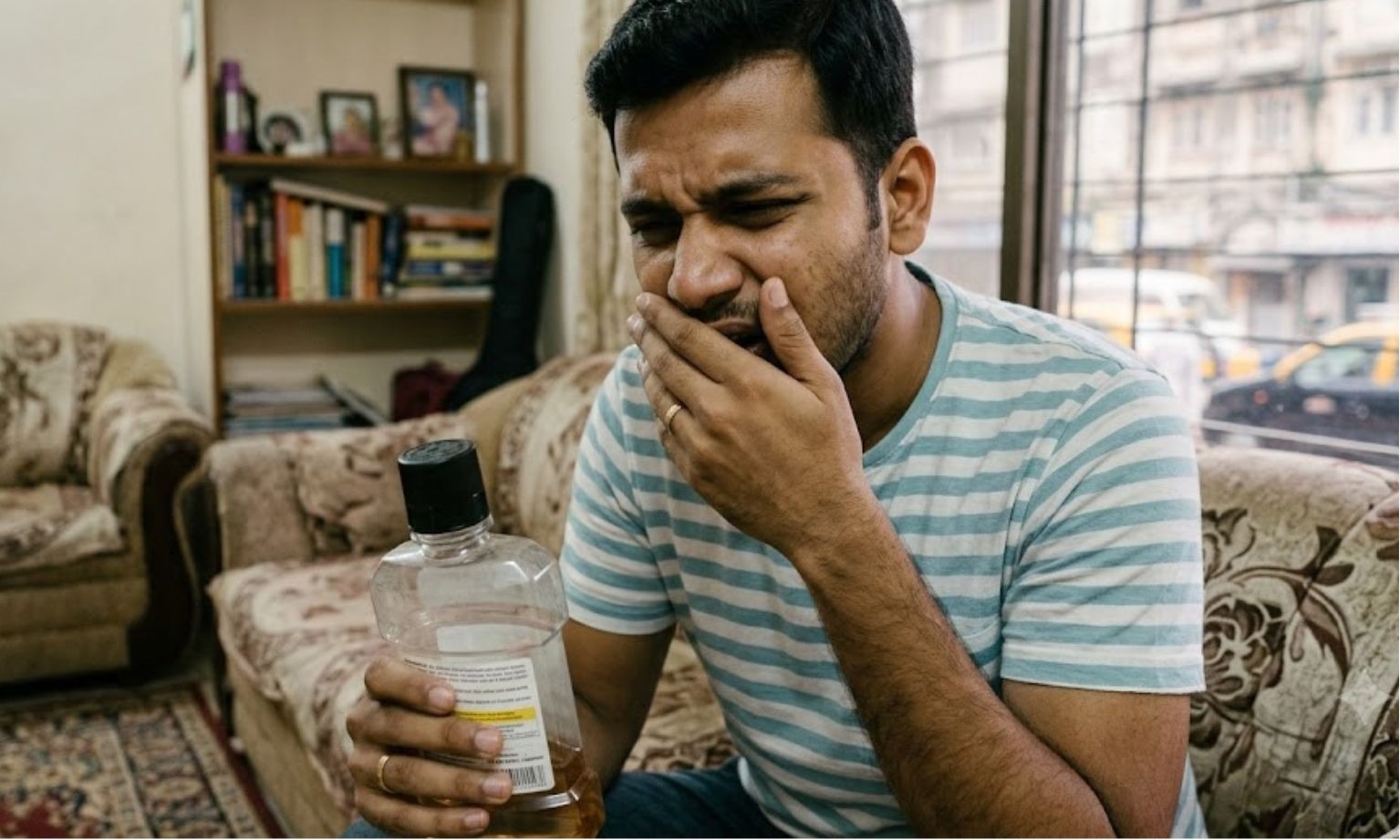
Bleeding gums are not something to wait out. A short consultation can tell within minutes whether it is early-stage gingivitis or something further along, and catching it early is always the cheaper, simpler path. Book a check-up at the Chembur clinic, or send a quick message on WhatsApp to get a cost estimate before committing to anything.
Frequently Asked Questions
1. Can periodontitis be reversed?
Gingivitis, the earliest stage, reverses completely with professional cleaning and better home care. Once it progresses into periodontitis, treatment focuses on stopping further damage and managing the condition rather than undoing it entirely.
2. How much does pyorrhea treatment cost in Mumbai?
Cost depends on severity. Non-surgical deep cleaning typically runs ₹1,500 to ₹3,000 per quadrant, while surgical treatment for advanced cases can range from ₹10,000 to ₹30,000 or more.
3. Is pyorrhea surgery painful?
Flap surgery and related procedures are done under local anesthesia, so discomfort during the procedure itself is minimal. Mild soreness for a few days afterward is normal and manageable with prescribed medication.
4. How long does gum disease treatment take to heal?
Non-surgical treatment like scaling and root planing usually settles within one to two weeks. Surgical procedures need a longer healing window, often several weeks, with follow-up visits to track progress.
5. Can periodontitis come back after treatment?
Yes, if oral hygiene slips or regular maintenance cleanings are skipped. That is why patients treated for periodontitis are usually advised more frequent cleanings than the standard six-month schedule.
Dr. Ligi Elsa John
BDS, MDS — Periodontist, Implantologist & Smile Designing Specialist
Dr. Ligi has established herself as a remarkable periodontist, implantologist, and smile design specialist. She holds a Bachelor of Dental Surgery (BDS) from Bharati Vidyapeeth Deemed University, Navi Mumbai, and pursued her post-graduate studies at Terna Dental College, Navi Mumbai. With over 12 years of experience, she has become a respected name in her field.
Since 2019, Dr. Ligi has been a dedicated Senior Associate Dentist at Radiant Smiles Dental Clinic, where her role extends beyond clinical excellence into administration and day-to-day patient care coordination. Known for her patient-centric approach, she is passionate about creating beautiful, confident smiles for every patient who walks through our doors.
Book an Appointment with Dr. Ligi Elsa John