


How to Prevent Yellow Teeth: Dentist Tips for Avoiding Stains from Tea, Coffee & Indian Foods

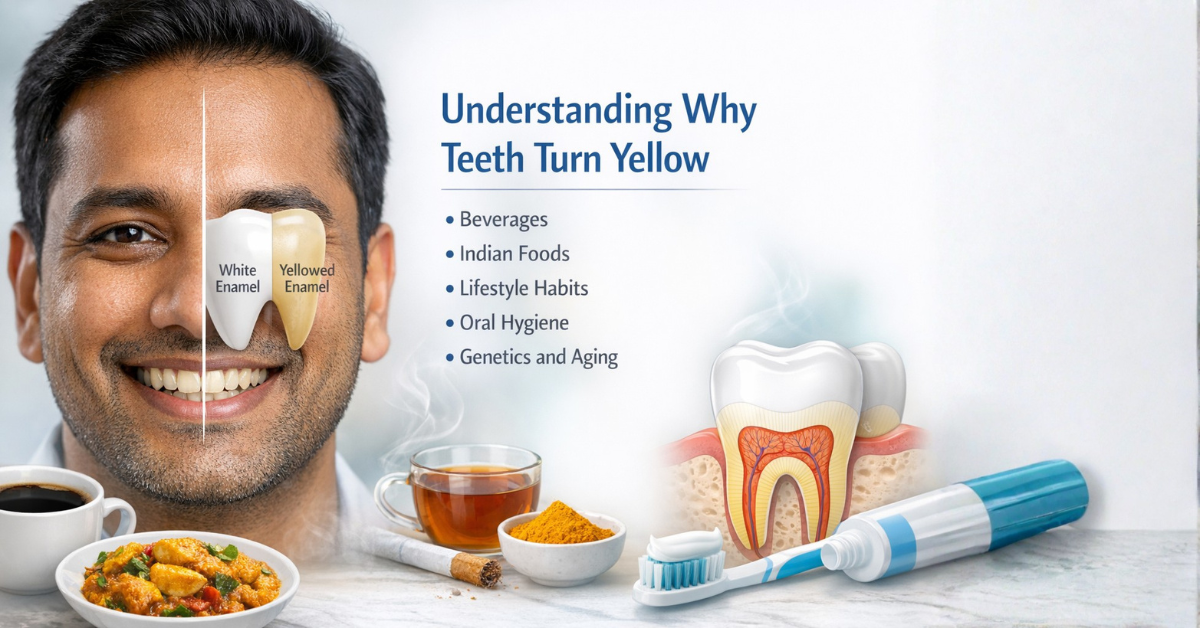
A bright, white smile is often the first thing people notice, and yellowing teeth can quickly dent confidence. In India, where chai, coffee, and spice-rich meals are daily staples, teeth gradually lose their natural shine. Studies show that over 70% of Indian adults notice some discoloration by their 30s, even with regular brushing. The good news is that simple daily habits combined with professional guidance can prevent and manage yellowing.
This guide explains how to prevent yellow teeth, safe home strategies, and when to seek professional care.
Understanding Why Teeth Turn Yellow
Enamel and Dentin: The Basics
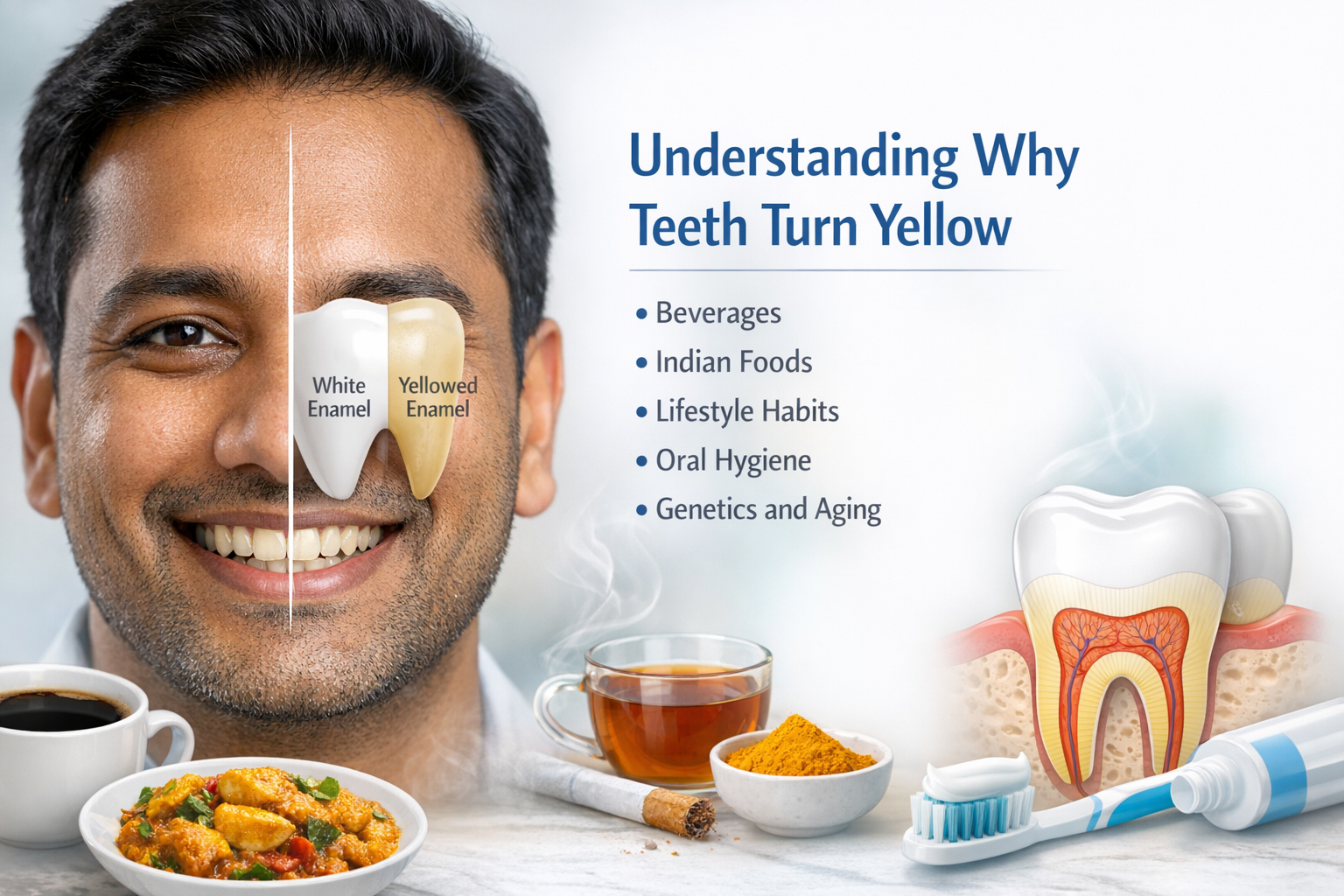
Teeth have a hard outer layer called enamel that protects the softer, naturally yellow dentin beneath. Enamel isn’t completely smooth, it’s porous, which allows pigments from food and drinks to settle over time. As enamel thins with age or acid exposure, the yellow dentin becomes more visible, giving teeth a darker or yellowish appearance.
Common Causes of Yellow Teeth
- Beverages: Regular tea, coffee, and carbonated drinks are key contributors to staining. Simple habits like rinsing after drinking can help.
- Indian Foods: Curries, turmeric, and masala-rich dishes leave lasting pigments on enamel.
- Lifestyle Habits: Smoking, chewing tobacco, and prolonged sipping of colored drinks accelerate yellowing.
- Oral Hygiene: Plaque and tartar buildup from irregular brushing or flossing trap stains.
- Genetics and Aging: Some individuals naturally have darker dentin, and enamel wears down over decades.
Consultation Insight: A 35-year-old chai lover noticed gradual yellowing of her teeth. After reviewing her daily habits, preventive steps such as rinsing with water after tea, using a straw for cold beverages, and regular professional cleanings were recommended. These simple measures helped minimize further staining and maintain a brighter smile.
How Tea, Coffee, and Indian Foods Stain Teeth
Coffee and Tea
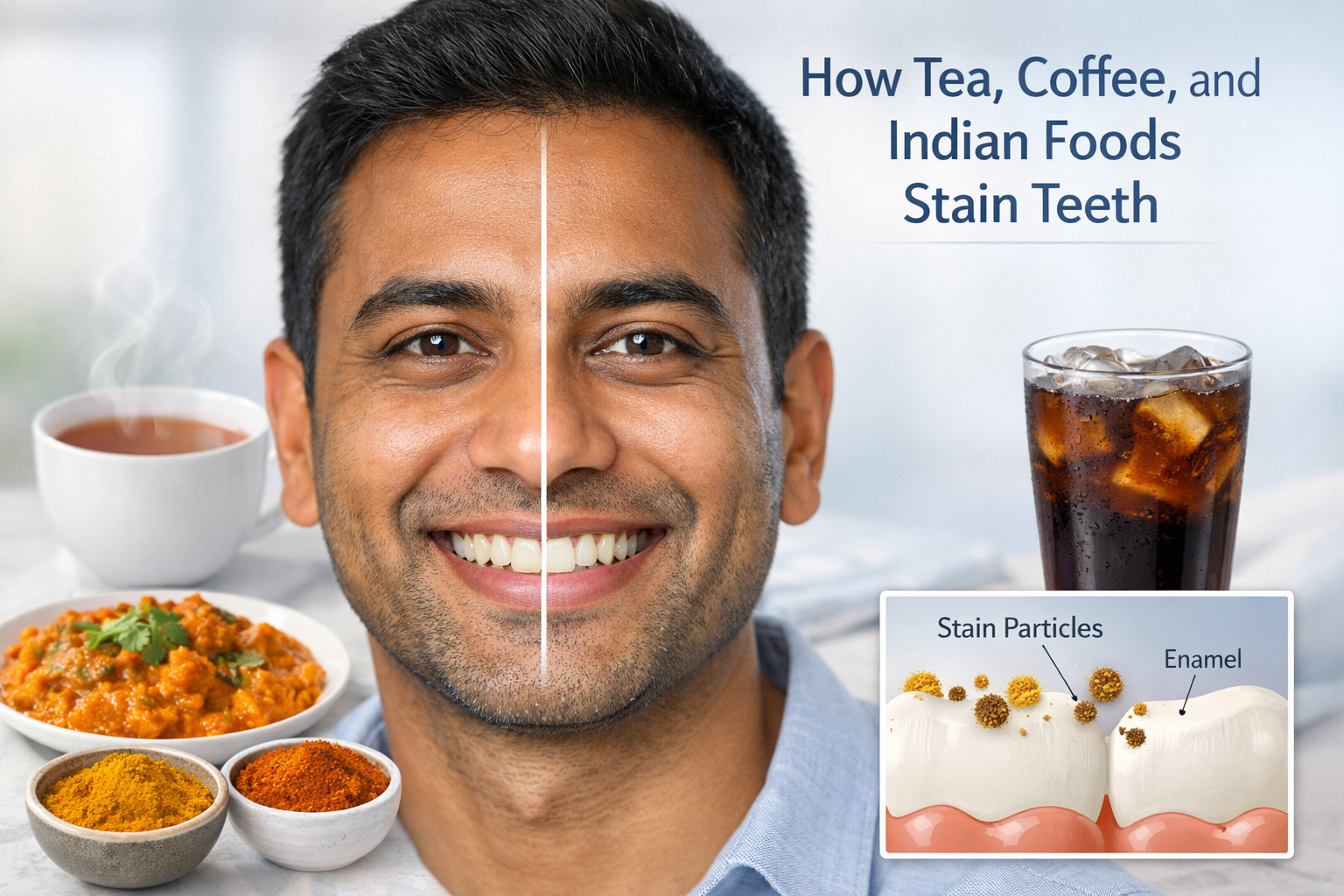
Tea and coffee contain tannins, compounds that give these drinks their rich color and flavor but also adhere to tooth enamel. Over time, tannins bond with teeth, forming yellow or brown layers. Both drinks are mildly acidic, softening enamel and allowing pigments to penetrate more easily. Black tea stains more than coffee due to higher tannin content, while herbal and green teas are gentler but still require care with frequent consumption.
Tip: Rinse your mouth with water immediately after drinking tea or coffee to wash away pigments.
Spices and Indian Foods
Turmeric, curry powders, tomato-based sauces, and other deeply colored spices are staples in Indian diets. These can leave visible yellow stains, especially if enamel isn’t protected. Oils in cooking can cling to teeth, making pigment removal more difficult.
Practical Habit: Sip water after meals or include crunchy foods like carrots, apples, or cucumbers. They act as natural scrubbing agents to help remove surface stains.
Sugar and Acid Effects
Sugar feeds plaque, while acids from foods and beverages erode enamel. This combination accelerates yellowing and can increase sensitivity. Even with regular brushing, prolonged exposure to pigments and acids raises the risk of noticeable staining over time.
Practical Dentist-Approved Tips to Prevent Yellow Teeth

1. Immediate Care After Staining Foods and Drinks
- Use a Straw: For cold tea, coffee, or carbonated drinks, a straw helps reduce direct contact with front teeth, minimizing visible stains.
- Rinse After Meals: Drinking water or rinsing the mouth after tea, coffee, or spice-heavy Indian dishes helps wash away pigments.
- Wait to Brush: After acidic or stain-rich foods, wait 30 minutes before brushing to protect enamel from erosion.
2. Daily Oral Hygiene Routine
- Brush twice daily with fluoride toothpaste or a mild whitening toothpaste.
- Floss daily to remove plaque and debris between teeth.
- Safe natural options, like a baking soda and water paste, can gently remove surface stains.
3. Dietary Adjustments
- Include crunchy vegetables and fruits such as carrots, apples, or cucumber to naturally scrub teeth.
- Limit prolonged sipping of tea or coffee; consuming in one sitting reduces staining.
- Adding milk to tea or coffee helps, as milk proteins bind tannins and reduce pigment adherence.
4. Professional Dental Care
- Schedule professional cleanings every six months, lighter stains are easier and more comfortable to remove.
- For persistent discoloration, in-office teeth whitening is safe and effective when performed by a dentist.
Real-World Dentist Consultation Insights
A regular tea drinker in their 40s noticed persistent yellowing despite brushing twice daily. During a professional consultation, they were advised to:
- Rinse with water after every cup of chai
- Limit tea consumption to a short period instead of prolonged sipping
- Use a straw for cold beverages
- Maintain regular six-month dental cleanings
Within a few months, their teeth regained noticeable brightness without altering cultural habits, demonstrating a practical, sustainable approach to managing yellowing.
Natural Remedies vs. Professional Treatments
Approach | What It Involves | Effectiveness |
Natural Methods | Rinsing, gentle baking soda paste, chewing crunchy vegetables | Prevents surface stains; does not remove deep discoloration |
Professional Care | Scaling, polishing, in-office whitening treatments | Effectively restores brightness; treats stubborn stains |
Balanced Approach | Combine daily preventive habits with regular dental visits | Provides long-lasting results and maintains overall oral health |
Lifestyle Habits for Maintaining White Teeth
- Quit or limit smoking and tobacco products.
- Avoid prolonged sipping of colored beverages.
- Rinse or drink water after meals to wash away pigments.
- Maintain regular dental visits for professional cleanings and enamel monitoring.
Conclusion
Yellowing teeth are common, especially with daily tea, coffee, and spice-rich Indian meals. The good news is that a bright, healthy smile is achievable with simple, consistent habits. Rinsing after drinks, using a straw, eating crunchy fruits and vegetables, and keeping up with regular dental cleanings all make a noticeable difference over time.
Take Action: Don’t wait for stains to take over, schedule a professional cleaning at Radiant Smiles Dental Clinic today and get expert guidance to keep your smile naturally white and confident.
See how this works in practice by watching the Instagram reel below:
https://www.instagram.com/reel/DF-siMDIcda/?igsh=MWRicm4yYzN3aThuNQ==
Frequently Asked Questions
How can I prevent yellow teeth from tea and coffee?
Use a straw, rinse your mouth after drinking, avoid prolonged sipping, and maintain daily brushing and flossing.
Can yellow stains on teeth be removed naturally?
Surface stains can be minimized with baking soda, rinsing, and chewing raw vegetables. Deeper stains usually require professional cleaning.
How can I prevent coffee stains without quitting coffee?
Rinse after drinking, use a straw, add milk to coffee, and wait 30 minutes before brushing to protect enamel.
Do Indian foods cause yellow teeth?
Yes, turmeric, curry, and tomato-based dishes can stain enamel. Rinse after meals and include crunchy vegetables to help reduce staining.
When should I consult a dentist for yellow teeth?
If stains persist despite good oral hygiene or if professional whitening is needed to achieve lasting results.
Dr. Tanvi Patil
BDS, MDS — Prosthodontist
Dr. Tanvi Patil is a highly skilled and compassionate Prosthodontist with advanced expertise in prosthetic dentistry. After completing her Bachelor of Dental Surgery (BDS), she pursued a Master of Dental Surgery (MDS) specialising in the design, restoration, and replacement of teeth. Her clinical practice is driven by precision, aesthetics, and patient-centric care.
With extensive experience in crowns, dentures, and dental implants, Dr. Patil is known for creating natural-looking, functional restorations that enhance both oral health and confidence. Her areas of expertise include fixed and removable dentures, single and full-mouth implant rehabilitation, crown and bridge restorations, smile design, and management of complex restorative cases.
Book an Appointment with Dr. Tanvi Patil