


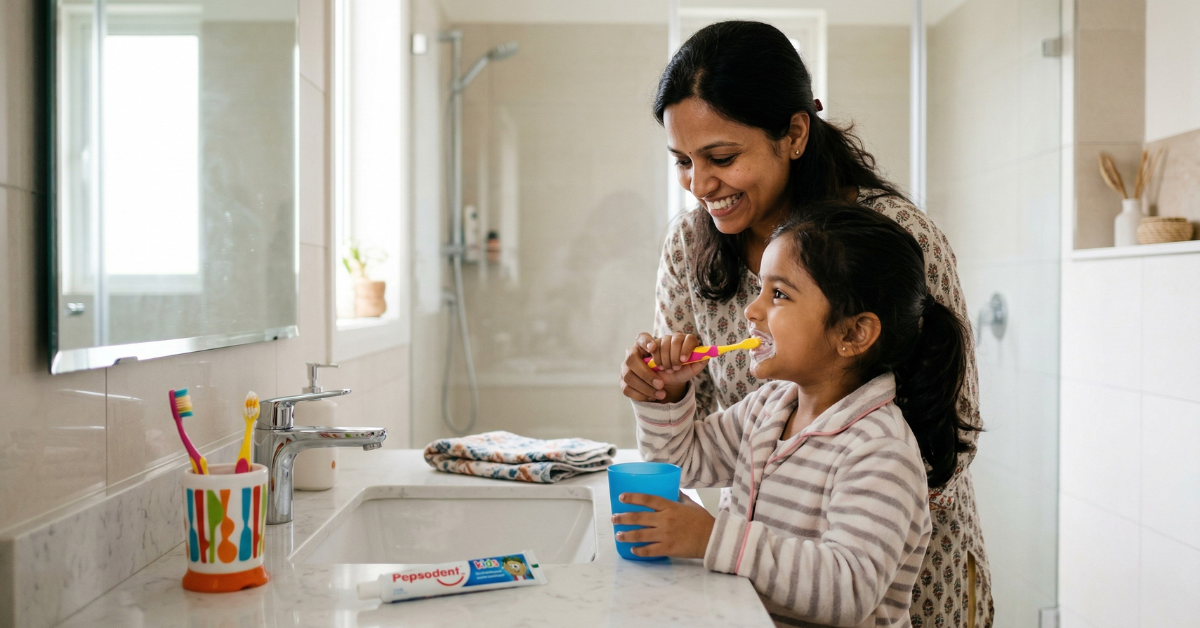
How to Get Your Child to Brush Their Teeth: 5 Dentist-Approved Tips That Work (2026 Guide)

Helping your child build a brushing habit doesn’t have to feel like a daily battle. The key is making it fun, simple, and consistent. When children understand why brushing matters and feel involved, like choosing their toothbrush or brushing with parents, they’re more likely to cooperate. Small tricks like using music, turning it into a game, or sticking to a routine can make a big difference. Start early, keep things gentle, and focus on building a habit rather than forcing it. With the right approach, brushing becomes an easy part of your child’s daily routine, and a big step toward a healthy smile.
Getting a child to brush their teeth can feel like a daily struggle. Many parents walk into the dentist clinic with the same concern: “My child won’t brush teeth. What should I do?”
This is not just about brushing. It is about building a habit that shapes long-term oral health.
Tooth decay remains one of the most common health issues in children, and in India, dentists are seeing cavities at increasingly younger ages. The reasons are simple: frequent snacking, sugary foods, and inconsistent brushing routines.
The good news is that with the right approach, brushing does not have to be a battle. It can become a routine your child actually enjoys.
Why Children Resist Brushing?
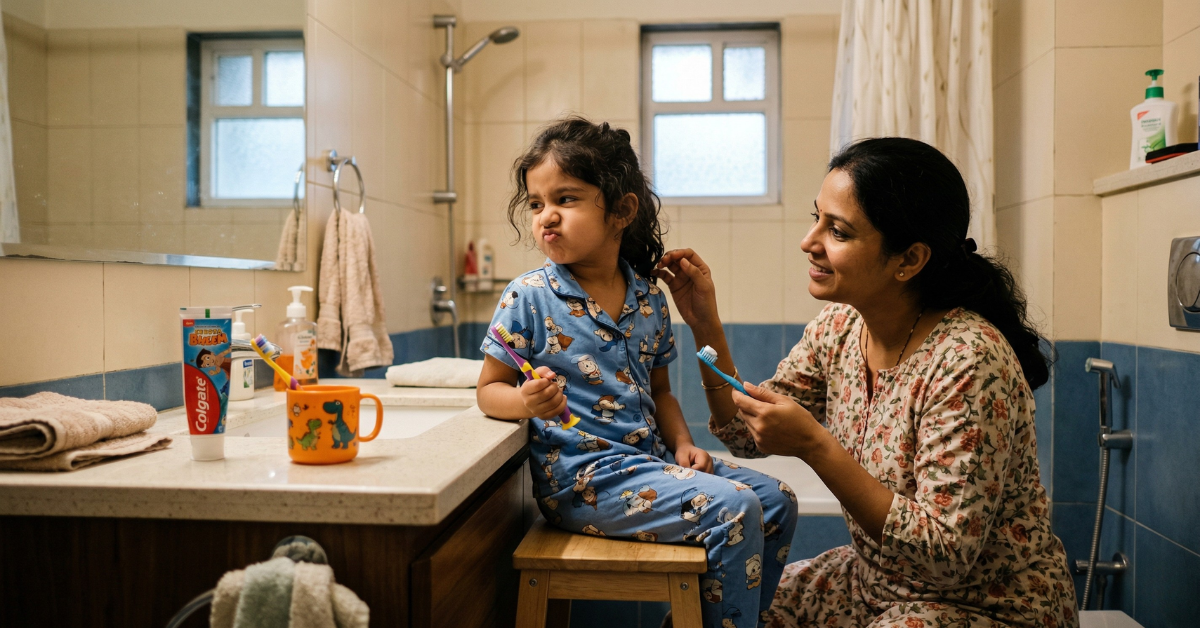
Before fixing the habit, it helps to understand the behavior.
Young children are naturally resistant to anything that feels forced. Toddlers are still adjusting to new sensations, while older children often test boundaries. A toothbrush in the mouth can feel uncomfortable, unfamiliar, or simply unnecessary from their point of view.
Many parents also notice patterns like:
- Refusing to open their mouth
- Brushing for a few seconds and stopping
- Night-time resistance due to tiredness
Another important factor is awareness. Children often do not understand why brushing matters. But even a two-year-old can begin to understand simple explanations.
Instead of saying “just brush,” try explaining:
Food gets stuck in teeth. Germs grow there. If we don’t clean them, teeth can get holes or turn black.
Children are smarter than they seem. When they understand the “why,” cooperation improves.
5 Dentist-Approved Tips That Actually Work
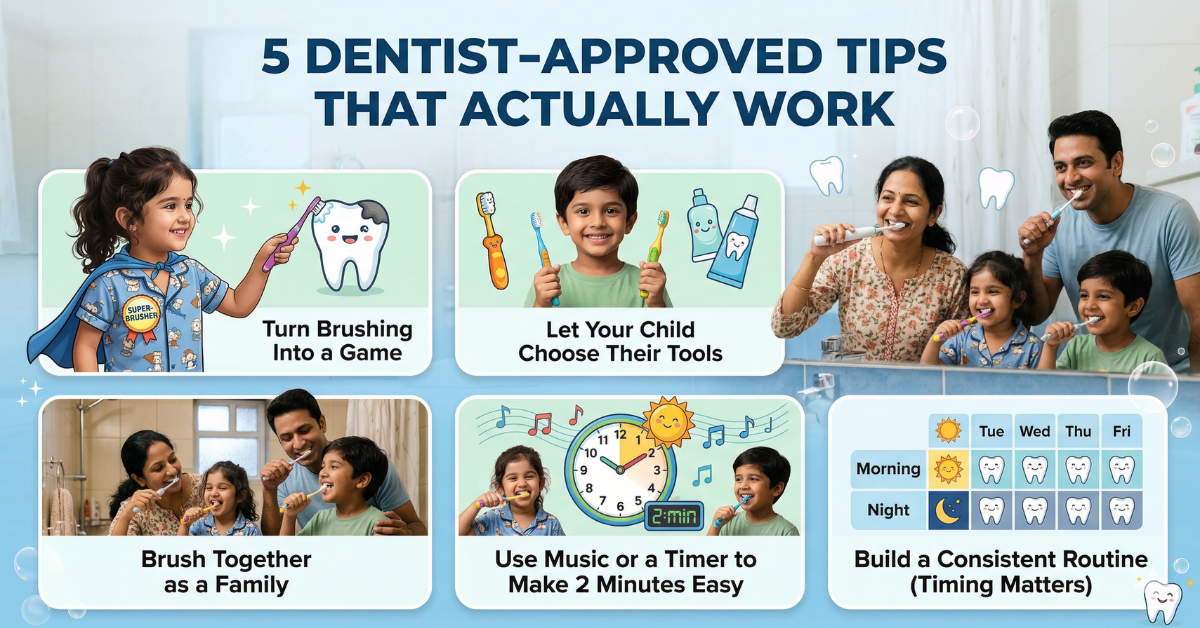
1. Turn Brushing Into a Game
The easiest way to change resistance is to change the experience.
Instead of treating brushing like a task, make it playful:
- “Let’s chase the sugar bugs away”
- “Who can make more bubbles?”
- “Let’s clean every tooth before the timer ends”
This simple shift works especially well for younger kids. It keeps them engaged and helps them brush longer without feeling forced.
For parents looking for brushing tips for toddlers, this is often the most effective starting point.
2. Let Your Child Choose Their Tools
Children respond better when they feel a sense of control.
Take them along and let them choose:
- A toothbrush with their favourite cartoon character
- A bright colour or fun light-up brush
- A toothpaste flavour they actually enjoy
This small decision builds ownership. Brushing no longer feels like something they are being told to do. It becomes their activity.
A simple shift like this often makes a noticeable difference. Children who are involved in choosing their tools tend to be more cooperative and consistent with brushing routines.
3. Brush Together as a Family
Children learn more from what they see than what they are told.
If brushing is a shared activity, it becomes normal. When parents brush alongside their child, it sends a strong message: this is something everyone does.
Think of it like family mealtime. Everyone sits together and eats. Brushing can follow the same pattern.
Stand in front of the mirror and brush together. Show them:
- Gentle up and down strokes
- How to reach back teeth
- How to clean the gums softly
Over time, the child starts copying naturally. This is one of the most powerful ways to solve the problem of a child who won’t brush teeth.
4. Use Music or a Timer to Make 2 Minutes Easy
Most children brush for less than 30 seconds unless guided.
Dentists recommend brushing for two full minutes, but for a child, that can feel long. The solution is to make time invisible.
Use:
- A favourite rhyme or song
- A two-minute timer
- A brushing app
Music works especially well because it turns brushing into a routine rather than a task. Once the song ends, brushing ends. No arguments needed.
This approach helps parents who are constantly reminding their child to “keep brushing.”
5. Build a Consistent Routine (Timing Matters)
Consistency is where most families struggle.
Brushing should happen twice daily:
- Once in the morning
- Once in the evening
One practical tip that works well is brushing earlier in the evening instead of waiting until the child is extremely tired. Late-night brushing often leads to resistance or skipped routines.
You can link brushing to daily habits:
- After breakfast
- Before bedtime stories
When brushing becomes part of a predictable routine, resistance reduces naturally.
Brushing Tips Based on Age
Age Group | Toothpaste Amount | Brushing Approach | Key Focus |
Toddlers (1–3 Years) | Very small smear | Parent-assisted brushing; gentle guidance | Control movement and ensure coverage |
Children (3–7 Years) | Pea-sized amount | Let child try; supervise closely | Focus on back teeth where cavities are common |
When Home Care Isn’t Enough
Even with consistent brushing and good daily habits, regular dental visits remain essential for a child’s oral health. Professional care plays a key role in early cavity detection, preventive treatments, and monitoring how teeth and jaws are developing over time.
At Radiant Smiles Dental Clinic, the focus is on creating a calm, child-friendly environment so children feel comfortable and positive about dental visits from the beginning.
The first dental visit is recommended when the first tooth appears or by the child’s first birthday. Starting early helps reduce fear, builds familiarity, and gives parents the right guidance to support healthy habits from the start.
Safety and Technique That Parents Should Know
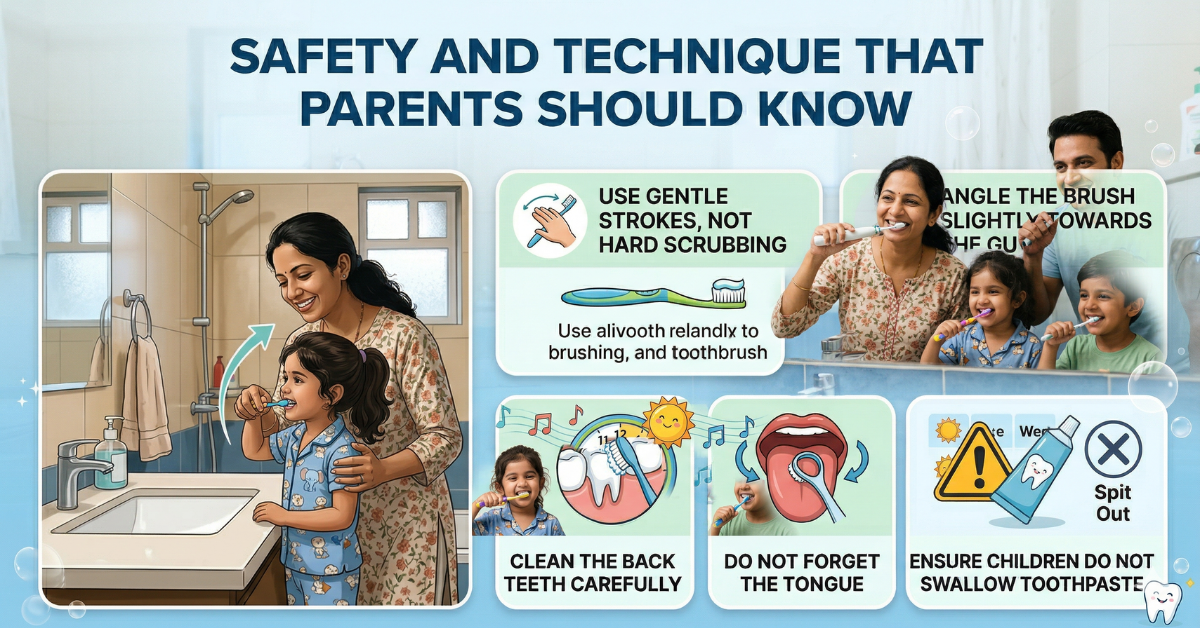
Good technique matters just as much as frequency.
- Use gentle strokes, not hard scrubbing
- Angle the brush slightly towards the gums
- Clean the back teeth carefully
- Do not forget the tongue
- Ensure children do not swallow toothpaste
These small details make a big difference in preventing cavities.
Final Thoughts
Teaching a child to brush does not have to feel like a daily battle. With the right mix of fun, consistency, and guidance, brushing can become a natural part of their routine. These small habits, when built early, go a long way in preventing cavities, discomfort, and long-term dental problems.
Give your child the confidence of a healthy smile. Book a consultation with Radiant Smiles Dental Clinic and get practical, personalized guidance that works for your child.
Frequently Asked Questions
1. What should I do if your child refuses to brush their teeth?
Avoid forcing the habit. Focus on making brushing fun, explain its importance in simple terms, and try brushing together to build a routine your child can follow.
2. How can you get kids to brush without crying?
Use games, music, or small rewards like stickers. Keep the experience positive and consistent so it feels like a normal part of their day rather than a task.
3. What are the best brushing tips for toddlers?
Use a soft-bristled toothbrush, a very small smear of toothpaste, and guide their brushing. Keep sessions short, gentle, and engaging.
4. How long should children brush their teeth?
Children should brush for two minutes, twice a day, with adult supervision to ensure proper technique.
5. When should my child first visit a dentist?
The first dental visit should be by the child’s first birthday or when the first tooth appears. Early visits help prevent problems and build comfort with dental care.
See this explained in a quick and easy way in the Instagram reel below:
Dr. Pooja Balgi
BDS, MDS (Pediatric & Preventive Dentistry), FIAPD — Pedodontist
Dr. Pooja Balgi is a highly qualified Consultant Pediatric and Preventive Dentist, bringing her expertise to our clinic since 2023. She graduated with a BDS from Sinhgad Dental College and Hospital in 2014 and completed her post-graduation in Pediatric and Preventive Dentistry at Terna Dental College in 2018. She is also a Fellow of the International Association of Pediatric Dentistry (FIAPD).
Dr. Pooja specializes in full mouth rehabilitation for children, adolescents, and individuals with special needs, with a strong emphasis on caries prevention. She is an active member of the Indian Society of Pedodontics and Preventive Dentistry, the IAPD, and the Foundation for Orofacial Myotherapy (FOM), where she serves as Joint Editor for Myo Probe. She has coauthored two books: 'Dental Caries and Traumatic Injuries in Pediatric Dentistry: Current Concepts in Clinical Practice' and 'Smile Shine Sparkle: A children's activity book for dental awareness.'
Book an Appointment with Dr. Pooja Balgi