


Dental Checkup in Mumbai: How Often, What's Included, Cost

Quick Answer
A dental checkup helps detect dental problems early and maintain healthy teeth and gums.
- Frequency: Most people should visit a dentist every 6 months. Some may need more frequent visits depending on their oral health.
- What it includes: Examination of teeth and gums, checking for cavities, plaque, tartar, and other dental issues.
- Cleaning: Professional teeth cleaning may be recommended to remove plaque and tartar buildup.
- X-rays: May be taken if needed to identify hidden dental problems.
- Cost in Mumbai: A routine dental checkup may cost around ₹300–₹1,500, depending on the clinic and services included.
- First visit: The dentist reviews your dental history, examines your teeth and gums, and recommends treatment if necessary.
- Best time to visit: Book a checkup even if you have no pain, as early detection can help prevent more serious dental problems.
Introduction
A dental checkup is one of those appointments that's easy to keep postponing, right up until a twinge of pain forces the issue. This guide covers the three questions most people actually have before booking one: how often a checkup is really needed, what's included once in the chair, and what it costs in Mumbai so there's no guesswork involved before the first visit.
How Often Should You Get a Dental Checkup?
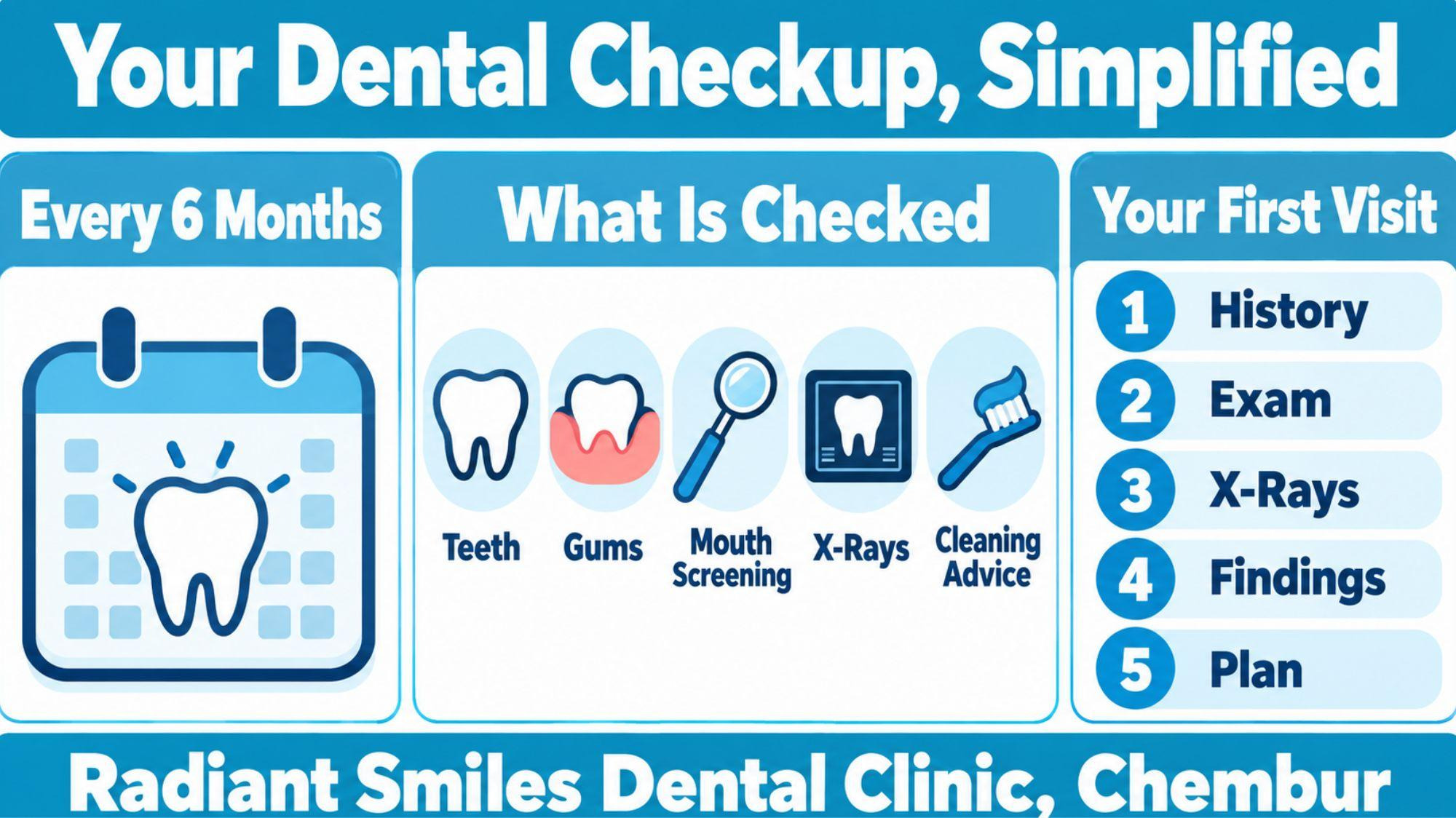
Most patients benefit from a dental checkup every six months, though the right frequency depends on individual risk factors like gum health, history of cavities, and habits like smoking. Patients with a history of gum disease, frequent cavities, or conditions like diabetes may be advised to come in more often, sometimes every three to four months while those with consistently good oral health and low risk may be fine, extending slightly beyond six months.
The six-month guideline is a sound general starting point, not a rigid rule, and the treating dentist can offer a more tailored recommendation after the first visit based on what's actually found during the exam.
What Is Included in a Dental Checkup
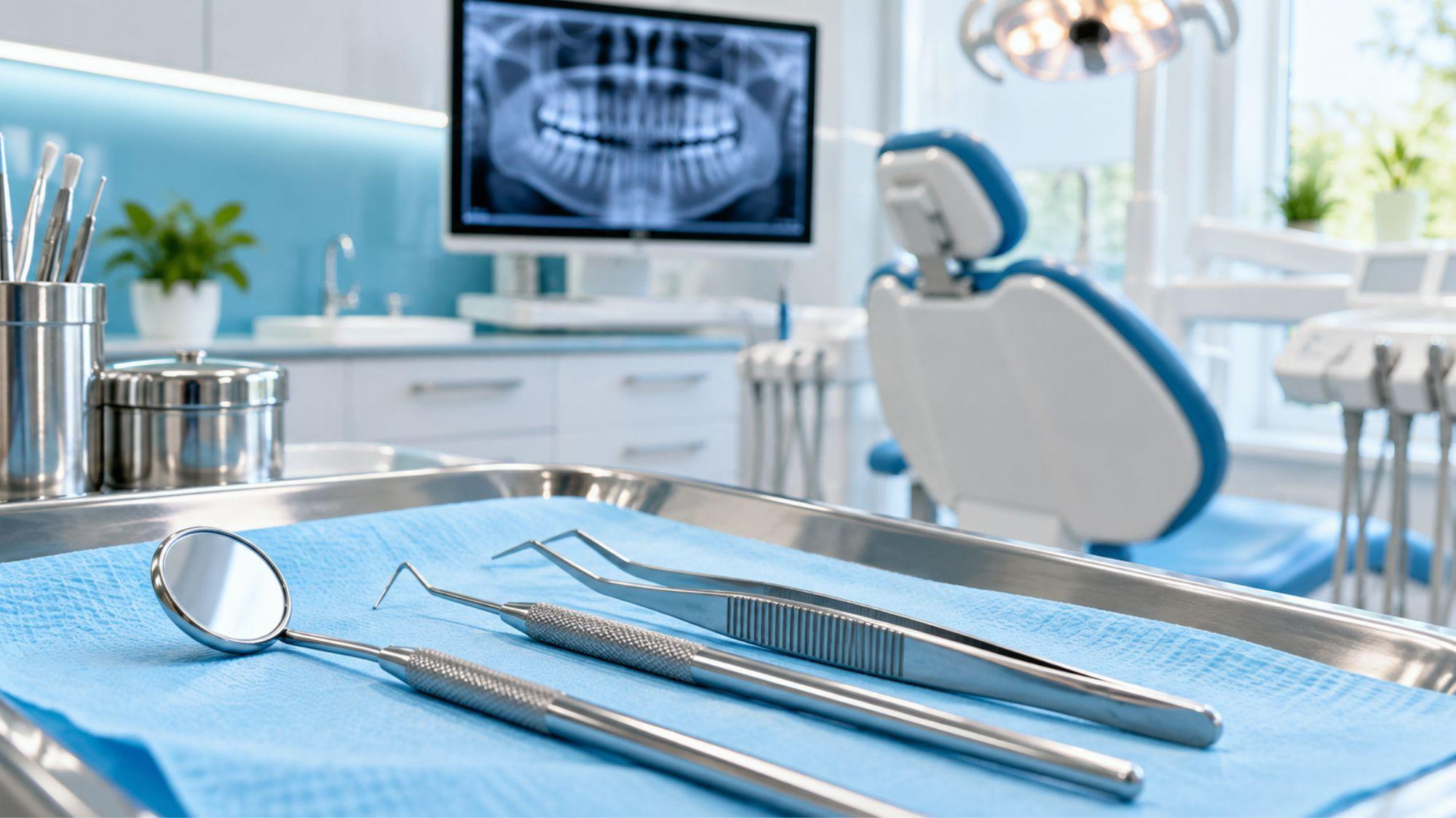
A dental checkup covers more ground than most patients expect, it's not just a quick look and a nod of approval.
| What's Included | What It Covers |
|---|---|
| Oral Examination | Visual check of teeth, gums, tongue, and soft tissue for visible issues |
| Gum Health Check | Assessment for inflammation, bleeding, or early signs of gum disease |
| Oral Cancer Screening | A routine check of the mouth and throat for unusual changes |
| X-Rays (when needed) | Used to spot decay or issues not visible to the eye, not taken at every single visit |
| Cleaning Advice | Guidance on whether a cleaning is recommended at this visit or can wait |
Teeth Cleaning Price by Type
Not all cleanings are priced the same, the type of cleaning needed depends on how much plaque and tartar has built up, and whether the gums show any signs of irritation.
| Type of Cleaning | What It Involves |
|---|---|
| Scaling and Polishing (Routine) | Standard plaque and tartar removal, surface polish |
| Deep Cleaning (Root Planing) | For heavier tartar buildup or early gum disease, cleans below the gumline |
| Cleaning with Polishing and Fluoride | Exam plus a Standard cleaning plus a protective fluoride application cleaning |
What Affects Dental Checkup Cost
A few factors explain why dental checkup cost isn't identical for every visit or every patient:
✔ X-Rays — Adding diagnostic X-rays to a visit increases the cost compared to a visual exam alone.
✔ Scaling Add-On — A checkup that includes scaling and polishing costs more than an exam-only visit.
✔ Clinic — Technology, location, and the range of services offered can all factor into how a clinic prices a checkup.
✔ First Visit vs Follow-Up — A first visit often takes longer and may involve more thorough documentation than a routine follow-up, which can affect pricing.
What Happens at Your First Visit to Radiant Smiles
A first visit tends to feel less uncertain once it's clear what to actually expect:
- Registration and Medical History — A brief conversation about any existing conditions, medications, or specific concerns.
- Oral Examination — A thorough visual check of teeth, gums, and soft tissue.
- X-Rays, If Needed — Taken in-house using digital imaging or OPG, when the exam suggests they're useful.
- Discussion of Findings — A clear explanation of what was found, in plain language rather than clinical jargon.
- Personalised Recommendations — A suggested plan for cleaning, treatment, or follow-up, based specifically on what was observed.
What a Checkup Can Catch Early
This is where a routine checkup earns its value catching small issues before they become expensive ones.
✔ Cavities — A small cavity caught early needs a simple filling; left unchecked, it can progress to needing a root canal once it reaches the nerve.
✔ Gum Disease — Early gum inflammation is far easier and less costly to manage than advanced periodontal disease.
✔ Cracked or Failing Fillings — Old fillings can crack or wear down without obvious symptoms, and a checkup catches this before deeper decay sets in underneath.
✔ Alignment Issues — A checkup can flag early signs of shifting or crowding worth discussing further, covered in more depth in options for correcting misaligned teeth.
Checkups for Children, Adults and Seniors
Children benefit from checkups roughly every six months once baby teeth begin coming in, helping catch early decay and monitor how permanent teeth are developing.
Adults generally follow the standard six-month guideline, adjusted based on individual risk factors like gum health and cavity history.
Seniors may need more frequent attention to gum health and existing dental work, particularly for those with dentures, crowns, or a longer history of dental treatment that needs ongoing monitoring.
Signs You Should Not Wait for Your Next Checkup
Some signs are worth acting on immediately rather than waiting for a scheduled visit:
✔ Bleeding Gums — Especially if it happens regularly during brushing, not just occasionally.
✔ Lingering Sensitivity to hot or cold that doesn't fade can signal something worth checking sooner, covered further in why teeth feel sensitive and what helps.
✔ Lasting Pain — Any tooth or gum pain that persists for more than a day or two shouldn't wait for the next routine slot.
Book a Checkup in Chembur
Radiant Smiles Dental Clinic, located in Chembur East, Mumbai, welcomes new and returning patients for routine checkups throughout the week. Anyone searching for a dentist in Chembur can book directly by phone or online, with morning and evening slots generally available to fit around work and school schedules.
Conclusion
A dental checkup is simpler, and usually less expensive, than the problems it helps catch early. A routine visit every six months is one of the easiest ways to prevent more complex and costly dental treatments down the line. Knowing what to expect and what it costs can make your first visit feel much easier.
Take the first step towards a healthier smile with Radiant Smiles Dental Care. Book your dental checkup today and give your smile the care it deserves.
Frequently Asked Questions
How often should I really get a dental checkup?
Every six months is the standard guideline for most patients, though those with gum disease, frequent cavities, or certain health conditions may benefit from more frequent visits the treating dentist can advise based on individual risk.
What is the average dental checkup cost in Mumbai?
Dental checkup cost in Mumbai depends on whether X-rays or cleaning are included.
Do I need X-rays at every checkup?
No, X-rays aren't required at every single visit. The dentist typically recommends them based on what the visual exam shows or how much time has passed since the last set.
Is a dental checkup painful?
A routine checkup itself is not painful, it's a visual exam and discussion. Any discomfort would come from treatment recommended afterward, like a filling, which is handled separately and with appropriate anesthesia.
What should I mention to the dentist during a checkup?
Any sensitivity, bleeding, pain, or changes noticed since the last visit are worth mentioning upfront, along with any changes in medication or health conditions that might affect dental care.
Dr. Srishti Parekh
BDS, MDS (Periodontology & Implantology), Fellow in TMD, Orofacial Pain & Sleep Medicine — Periodontist & Implantologist
Dr. Srishti Parekh obtained both her Bachelor in Dental Surgery and Master in Dental Surgery in Periodontology and Implantology from the prestigious Maharashtra University of Health Sciences (MUHS). She has received her Fellowship in TMD, Orofacial Pain and Sleep Medicine from Roseman University of Health Sciences (USA).
She is a Life member of the Indian Dental Association, the Indian Academy of Aesthetic & Cosmetic Dentistry, the Indian Society of Oral Implantologists, and the Indian Society of Periodontology.
Dr. Srishti strongly believes in constantly updating her knowledge and takes great pride in staying up-to-date with the latest in dental techniques, materials, and technology in order to provide the highest quality care. She has attended a number of courses such as Enhanced Course in Aesthetic Dentistry, A to Z of Smile Design, Complete Implant Prosthodontics, and Surgical Extravaganza — Hard and Soft Tissue Augmentation Procedures, among many others, and continues to stay active in furthering her professional education.
Book an Appointment with Dr. Srishti Parekh